Gyula Krudy - Sunflower
Здесь есть возможность читать онлайн «Gyula Krudy - Sunflower» весь текст электронной книги совершенно бесплатно (целиком полную версию без сокращений). В некоторых случаях можно слушать аудио, скачать через торрент в формате fb2 и присутствует краткое содержание. Город: New York, Год выпуска: 2007, Издательство: New York Review Books, Жанр: Классическая проза, на английском языке. Описание произведения, (предисловие) а так же отзывы посетителей доступны на портале библиотеки ЛибКат.
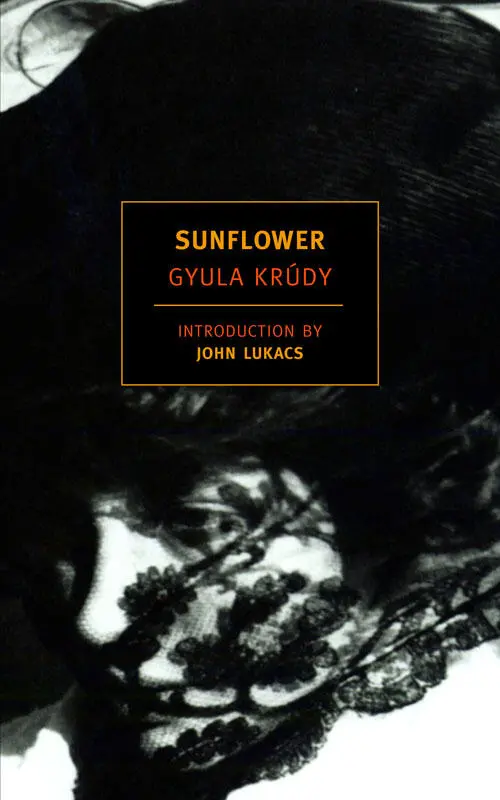
- Название:Sunflower
- Автор:
- Издательство:New York Review Books
- Жанр:
- Год:2007
- Город:New York
- ISBN:нет данных
- Рейтинг книги:4 / 5. Голосов: 1
-
Избранное:Добавить в избранное
- Отзывы:
-
Ваша оценка:
Sunflower: краткое содержание, описание и аннотация
Предлагаем к чтению аннотацию, описание, краткое содержание или предисловие (зависит от того, что написал сам автор книги «Sunflower»). Если вы не нашли необходимую информацию о книге — напишите в комментариях, мы постараемся отыскать её.
In
young Eveline leaves the city and returns to her country estate to escape the memory of her desperate love for the unscrupulous charmer Kálmán. There she encounters the melancholy Álmos-Dreamer, who is languishing for love of her, and is visited by the bizarre and beautiful Miss Maszkerádi, a woman who is a force of nature. The plot twists and turns; elemental myth mingles with sheer farce: Krúdy brilliantly illuminates the shifting contours and acid colors of the landscape of desire.
John Bátki’s outstanding translation of
is the perfect introduction to the world of Gyula Krúdy, a genius as singular as Robert Walser, Bruno Schulz, or Joseph Roth.
Sunflower — читать онлайн бесплатно полную книгу (весь текст) целиком
Ниже представлен текст книги, разбитый по страницам. Система сохранения места последней прочитанной страницы, позволяет с удобством читать онлайн бесплатно книгу «Sunflower», без необходимости каждый раз заново искать на чём Вы остановились. Поставьте закладку, и сможете в любой момент перейти на страницу, на которой закончили чтение.
Интервал:
Закладка:
Eveline, slightly sniffling in the manner of a grande dame, deigned to clink wine goblets (and maybe even believed one or two of these avowals, since the good man leaned so heavily on the table). Then she excused herself and vanished into some other part of the house.
Miss Maszkerádi now gave her guest a glance such as a white-clad temptress that haunts back alleys might bestow on a troubled wanderer.
“And tell me my young man, what sacrifice might you be willing to make for my sake?”
“I’d jump from a tower…”
“Drop the tired clichés. What I want to know is: could you, full of love and trust and faith, lie yourself down in a casket, as Álmos-Dreamer did for Eveline? You know, us women are children and like to envy those sisters for whom men make great sacrifices.”
“Upon my sacred word of honor…”
“And would you be able to drink my health till daybreak, match me drink for drink, and then not be ashamed to walk stark naked down the marketplace like some poor raggedy vagabond who’d been chucked out of the whorehouse without a stitch on?”
“You’re asking a lot.”
“Could you look into my eyes all night and next morning put everything up for sale, let it all go, everything you possess? Your respectability, your reputation, your manhood, let it all vanish like smoke? Be the village fool, the joke of the county, laughingstock of the nation, just because your jealous lover Malvina Maszkerádi asked you to? Just because she wished to destroy you for other women, the way you’d smash an Alt Wien cup, so they’d never again fool around with the man she’s made her own. Never again would a sly, lustful strumpet stretch her claws toward my man. He would be nobody’s, like the raggediest contrabass player in the land — except mine and mine alone. Would you be able to do that for me, my Prince Bluebeard?”
“At the madhouse people sometimes played pranks on each other. One postal official barked from morning to night, just like a kuvasz , and justified it as an attempt to get a rise out of the constantly shrieking colonel. You wouldn’t be laying some kind of trap for me, would you, lady of my heart?” inquired Mr. Pistoli, who thought he had long ago done with probing feminine mysteries. Shivering, he buttoned up his vest and yelled to rouse the slumbering Gypsy band. “Give me ‘Down the Street in Pápa Town!’” he commanded, and continued to gaze attentively at Miss Maszkerádi.
The Gypsies played softly, as if accompanying a dead colleague to the cemetery.
“I’ve decided to do away with you,” announced Miss Maszkerádi’s cold voice, even as her eyes wormed their way under Mr. Pistoli’s vest like an exotic dancer’s snake. “I’ll rid this region of your obnoxious personage and moral contagion! Why, in these parts one finds mostly fine, upright folks, just like in Crimea. On name days and anniversaries people like to hug and kiss, as if this watery region lay somewhere in Russia, if you will. Wide-eyed women, their willpower as fragile as birch twigs, undefended and defenseless, inhabit this land alongside melancholy, fraternal men ready to forget any letdown if you give them a single friendly word. I believe you are the one and only outlaw running loose around here, wily as a serpent and cunning as only the most venomous troublemaker can be. Have you ever in your life gone for the kill? Ever smash a goblet, stone sober, over somebody’s head? Ever kiss a red-hot stove, if that’s what you felt like? Here among men who weep when they fight, weep when they’re merry, and weep when they make love, you stick out as the frosty-footed rat that you are, in spite of all your masquerading. What we have here is a sober rake who never blurts out what he thinks. A coldhearted torturer who watches with quiet satisfaction when his pálinka -soaked Gypsies go up in flames. A tigerish, bloody-handed man capable of ripping off a woman’s breasts, who privately judges each woman to be nothing but a whore. A tin cup that cares not a whit whether wine or blood is poured into it. A foul-mouthed, disgraceful bag of filth with a jailbird’s opinion of womankind.”
Pistoli’s smile was as broad as if he’d been listening to houris warbling for his ears alone.
“Around here, every woman’s been my lover,” he said calmly.
“Me too?”
“Not yet, but you will be, by dawn.”
Maszkerádi shrugged.
“Perhaps.”
Now two elderly servitors appeared, rolling a small cask the size of a baby hippo onto the verandah. Hats held in hand, heads bared, they looked like Prince Rákóczi’s faithful serfs. They poured wine into a floral-ornamented jug, then soundlessly exited as if they were going straight to their rest in the nether world.
“I happen to know you well, Miss,” Mr. Pistoli began, his hands rising to his temples as if to put his thoughts in order. “You are the most proud and arrogant woman I have ever known. You would like to crush me underfoot like a maggot. And you’re perfectly right. I am the most worthless man in Hungary…So now you think you’ll get me drunk and humiliate me. Roll me in tar and feathers and send my carrion back to town on the meat wagon.”
“That’s exactly what I intend to do,” Miss Maszkerádi replied, her lips pressed together.
“Maybe so. But to me, you’re worth it. So, let’s drink up this devilish wine of yours.”
“Sip it, don’t swill it, buddy…You’re drinking my special reserve. Hegyalja’s best Tokay. It comes from a hillside the sun likes to make love to.”
Miss Maszkerádi bumped hers against his, almost smashing the goblet.
“I detest your eyes, they drive me crazy.” Her voice was a low murmur. “They’re full of shadow women whose hearts you’ve laid to waste, devoured, torn apart. I see them, the blondes, naive and innocent, the silly brunettes, sloe-eyed and bird-brained, the sanctimonious faces of sensuous hefty ones, the Slovak Virgin Marys and the doghaired, rough-and-tumble Hunnish descendants of The Birches. I can see my sisters clutched in your executioner’s grip, and then, after a kick from your brutal, shapeless boot, chanting prayers in the iron-barred nave of the prison church, or in the madhouse, wrapped in wet blankets, wildly craving death and suicide; or else solitary, sleepless companions of the moon, who consult fortune-teller’s cards. Yes, I can see how you turned them into witches, wild beasts with scraggly hair, foaming at the mouth. You are a tremendous scoundrel, Pistoli — but I love you.”
Pistoli placed his hand on the girl’s shoulder.
“I’ll tell you something that I would never admit to the pretentious, stay-at-home, down-at-the-heel squirelings around here. My ancestors happened to be mercenaries. And me too, I’m just another vagrant soldier of fortune who happened to pick this region for his theater of operations. I love no one. I could howl in pain and joy, for I am a solitary, I make no confessions or concessions, walk through life stubbornly alone, need no one’s friendship, scorn anyone’s hatred; shoulders back, chest out, I am all alone. The most they can take from me is my life…And madam, I sense that you, too, are proud of being able to be alone for long periods, and often.”
“Always…” The word escaped Miss Maszkerádi’s mouth, in spite of herself. She quickly regretted it, for she went on: “What business can you have with me when I refuse even to tread on you, when I avoid you like a dead cur lying belly up in a ditch…”
But Pistoli pretended not to have heard the young lady’s razor-edged words. He merely hummed and nodded at his wineglass:
“I drink wine to find my friends. They’re all here. My youth, my courage, my skepticism and superstitions. They’re all right here, everyone I’ve ever loved and hated. All those dear faces look at me from the glass of wine. They beg for mercy, but I still drink them up. Here they are, the women who went insane and now wait in the madhouse for the chance to steal a knife to plunge into their hearts — or mine. They stare at me, and call me, and promise me everything. My three crazy wives. One lies abed all day and her hair is shorn as short as a boy’s. She has no gray hairs — the hair of the insane does not turn gray. Her eyes never leave the window, she waits for my face to appear. She just lies there and never opens her mouth to speak, like an angel in eternity, the angel that carries omniscience in her apron. I become dazed, as if I gazed at a distant star, whenever I think of her. Whatever became of her, where did she go? For she never comes back to haunt.
Читать дальшеИнтервал:
Закладка:
Похожие книги на «Sunflower»
Представляем Вашему вниманию похожие книги на «Sunflower» списком для выбора. Мы отобрали схожую по названию и смыслу литературу в надежде предоставить читателям больше вариантов отыскать новые, интересные, ещё непрочитанные произведения.












Обсуждение, отзывы о книге «Sunflower» и просто собственные мнения читателей. Оставьте ваши комментарии, напишите, что Вы думаете о произведении, его смысле или главных героях. Укажите что конкретно понравилось, а что нет, и почему Вы так считаете.