Gabriel Chevallier - Fear
Здесь есть возможность читать онлайн «Gabriel Chevallier - Fear» весь текст электронной книги совершенно бесплатно (целиком полную версию без сокращений). В некоторых случаях можно слушать аудио, скачать через торрент в формате fb2 и присутствует краткое содержание. Город: New York, Год выпуска: 2014, Издательство: New York Review Books, Жанр: Классическая проза, на английском языке. Описание произведения, (предисловие) а так же отзывы посетителей доступны на портале библиотеки ЛибКат.
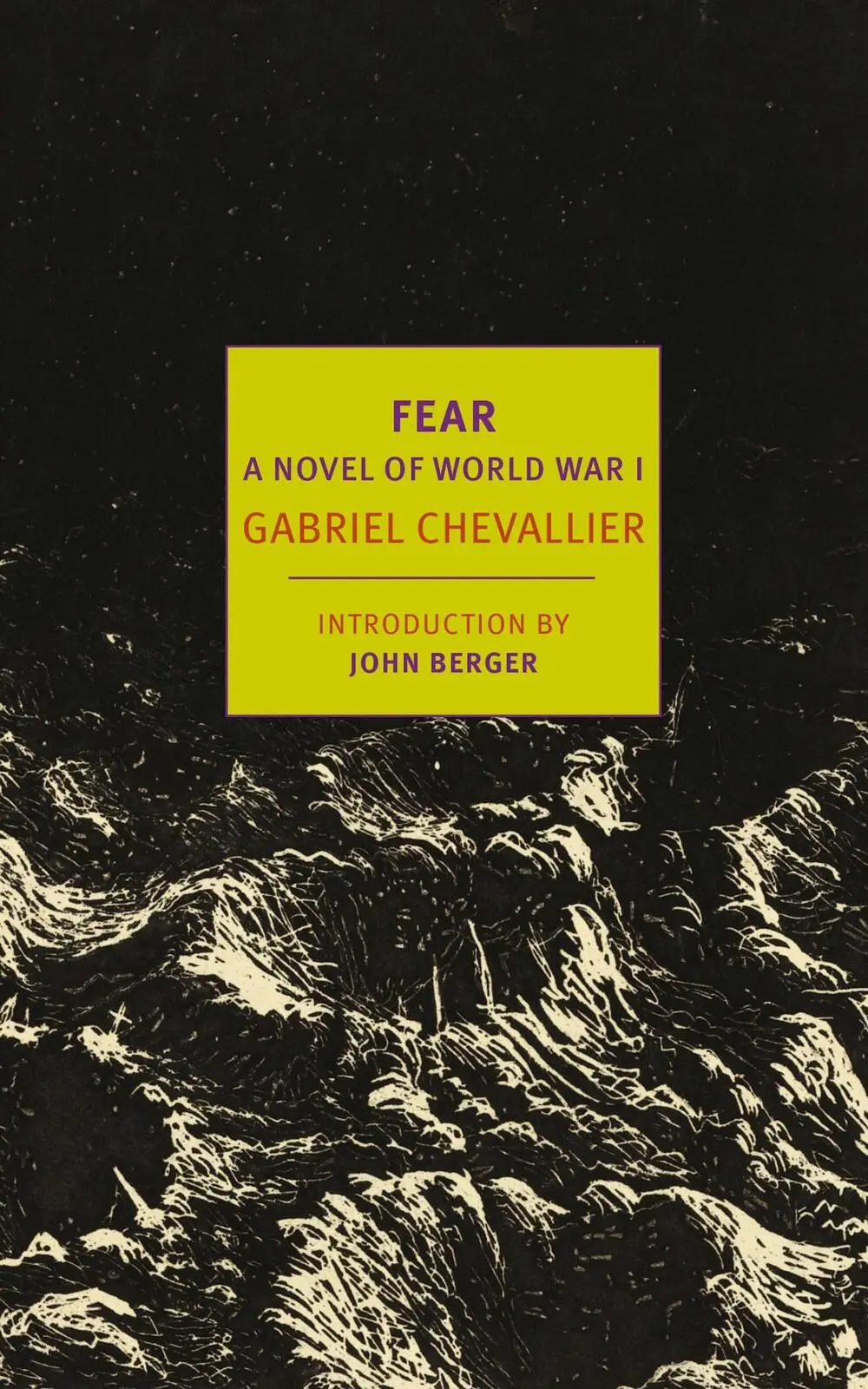
- Название:Fear
- Автор:
- Издательство:New York Review Books
- Жанр:
- Год:2014
- Город:New York
- ISBN:нет данных
- Рейтинг книги:3 / 5. Голосов: 1
-
Избранное:Добавить в избранное
- Отзывы:
-
Ваша оценка:
Fear: краткое содержание, описание и аннотация
Предлагаем к чтению аннотацию, описание, краткое содержание или предисловие (зависит от того, что написал сам автор книги «Fear»). Если вы не нашли необходимую информацию о книге — напишите в комментариях, мы постараемся отыскать её.
1915: Jean Dartemont heads off to the Great War, an eager conscript. The only thing he fears is missing the action. Soon, however, the vaunted “war to end all wars” seems like a war that will never end: whether mired in the trenches or going over the top, Jean finds himself caught in the midst of an unimaginable, unceasing slaughter. After he is wounded, he returns from the front to discover a world where no one knows or wants to know any of this. Both the public and the authorities go on talking about heroes — and sending more men to their graves. But Jean refuses to keep silent. He will speak the forbidden word. He will tell them about fear.
John Berger has called
“a book of the utmost urgency and relevance.” A literary masterpiece, it is also an essential and unforgettable reckoning with the terrible war that gave birth to a century of war.
Fear — читать онлайн бесплатно полную книгу (весь текст) целиком
Ниже представлен текст книги, разбитый по страницам. Система сохранения места последней прочитанной страницы, позволяет с удобством читать онлайн бесплатно книгу «Fear», без необходимости каждый раз заново искать на чём Вы остановились. Поставьте закладку, и сможете в любой момент перейти на страницу, на которой закончили чтение.
Интервал:
Закладка:
My mind came back first. Accompanied by a burning pain in my arm. And I could hear voices, make out what they were saying but as if they were in an antechamber of my self, for I was still wrapped in a thick web of sleep. The voices were saying: ‘He’s still out. Couldn’t wake him down there.’ I only had to open my eyelids, like shutters in the morning, to show them that my living soul was still inside. It was such a huge effort that I took some time deciding. At last I was gazing at faces leaning over me, I saw them light up, and closed my eyes again. All that remained of the chloroform was a nauseating taste that I exhaled through my lips in sickly bubbles. And fever wrapped me in its burning arms, shook me with its icy shivers and struck my temples with its hammer-blows.
After a fortnight, my temperature is back to normal, and there are no more reasons for concern about the consequences of my wounds. Only a few scars will remain, proof that I have indeed been through the great adventure of war, so that later, sated with pleasure, grateful and half-dreaming, women will feel pity and say ‘Oh, how you must have suffered, my darling!’ and their soft hands will gently caress those places once pierced by metal. Or so I imagine…
Sergeant Nègre from Limoges lies on my right. He must be about thirty-five. Small head, almost bald, a mischievous glint in his eyes and a little goatee beard. A typical French reserve NCO: quick to blame but slow to punish, taking charge of his little world but taking care of it too, even against orders if necessary, an obliging man with a wicked tongue. Like me he appreciates his good fortune and indeed has been even luckier than me. He has a hole in his calf; the wound isn’t at all serious but a tendon has been damaged. He will need treatment so he can walk normally again. When he gets out of bed, he hops along on his good leg, down our row of beds by the windows, holding on to the frames. He stops at each one to inquire: ‘So, my old pal, how’s it going? We’ve made it to the hospital. And that’s a bloody sight better than getting a medal, believe you me!’ To those in pain, he points his finger to the north, cocks his ear as if listening to the gunfire: ‘But they didn’t get us! Think of all those fine bloated corpses, my lad, and give thanks to the god of armies!’ To distract them from their pain he shouts: ‘On your feet, the lot of you! Volunteers for patrol, get in line! Who can’t wait to go and make a nice hole in the wire with a good pair of cutters?… One at a time, now, don’t all rush!’
One day when we were all laughing at his antics as he hopped about, he explained: ‘This war’s given me bloody cramp. It comes from chasing after Glory. I’ve been chasing her ever since this war began, and then the bitch went to find General Baron de Poculotte who was at that precise moment planning his seventy-third Final Offensive with coloured pencils and tracing paper and rapid-writing rifles in his forward command post forty kilometres behind the lines. And you know what he replied when they told him that Glory had come at last? “God damn it, I don’t like to be kept waiting, you old bat!” Oh yes, my lad, that’s exactly what he said. You don’t know the de Poculottes? A great family, from the old military aristocracy, so they say. A whole family of generals. These are the people who really know how to make decisions and counter-orders and manage the cavalry and the transport and supplies and the artillery and the engineers and sappers and mortars and the aeroplanes and the whole lot and how to really slaughter the infantry at zero hour, in industrial quantities. I mean, of course, the German infantry! Because your French infantryman is indestructible, as is well known in Perpignan… First military principle: one French soldier is worth two German soldiers. Second military principle: obstacles don’t bloody exist! Third military principle: one dead French soldier equals ten dead German soldiers, at least. Because the Germans attack in tight formations so as not to get lost in places they’ve never been before and to stop themselves being afraid. You only have to fire at them and you can knock down as many as you want. Any journalist will tell you. Don’t you know yet that those chaps can see a lot further than you, you little earthworms, you cannon fodder, you stupid war cripples, and you better believe them.
‘And now, you poor little moron, I’m going to teach you a whole load of good things. I got them from de Poculotte himself who was standing right next to me and explaining matters to a gentleman from parliament so that he in turn could explain them to the whole nation, which needs to see things clearly.
‘So, first of all, we’ve got the bayonet. You stick it on the end of a Lebel and you get yourself an infantryman driven by French furia . Opposite, you’ve got your Boche. Now, what cannot fail to happen? They either run for it or throw in the towel. Why do you think they stuck barbed wire in the front of their lines? Because of the bayonet, says de Poculotte.
‘Second, we’ve got our good French bread. The French hero stands up above the trench and shouts out in a scornful tone: “Hey, Fritz, want some nosh?” What cannot fail to happen? Fritz puts down his gun, says goodbye to his pals, and heads for the bread as fast as legs can carry him. Why do you think they stuck barbed wire in front of their lines? Because of our bread, with the sole purpose of stopping the whole lot of them running across at our dinner time leaving their crown-prince all on his own like an arsehole. We’d be in a right mess if this army of gluttons came over to stuff their faces with us! “They are pigs,” says Poculotte, sipping his Burgundy. “They lack moral fibre. We can take them whenever we want!”
‘And last but not least we’ve got the 75,[18] which flattens everything in a couple of shakes. Nothing’s more accurate and nothing’s faster. Why do you think they made Big Berthas? To hit back at our 75s, of course. Except that with our 75s, we always smash them. I can still hear Poculotte: “Races can be distinguished by their weapons. They have heavy artillery because they have heavy spirits, and we have light artillery because our spirits are light. Spirit over matter, my dear Minister. And war is the triumph of the spirit!” Don’t ever forget it, old chum, war is the triumph of the spirit!’
When he’s narrating the heroic deeds of General Baron de Poculotte, Nègre is unstoppable. That dashing superior officer has become a celebrity, a symbol, and we can all feel his presence among us. His resolute character rules over the ward; whenever we are surprised and confused by some new measure, we can turn to him for the correct military response. So, for example, someone who had just been reading the latest communiqué asks him:
‘ Mon général , how should we interpret “All quiet on the entire front”?’
‘The true military mind does not permit interpretation,’ replies the general through the mouth of Nègre. ‘Good patriots should understand that “All quiet” means exactly what it says, and this plain description is easy enough to understand.’
‘So should we understand that there were no dead or wounded?’
‘No dead or wounded!’ shouts the indignant general. ‘Who is this miserable wretch who dares to question the abilities of our leaders? What would a war be like without dead and wounded?’
‘Yes, mon général , but what about saving human lives?’
‘Be quiet, you horrible underling, war is not about saving human lives but destroying them and don’t you ever forget it. It is a noble mission and its goal is to deliver us from barbarism. Dismiss!’
It should be noted that the general normally makes his appearance after the departure of the nurses. Then we are all soldiers together and Baron de Poculotte can express himself without inhibition, knowing that his words of wisdom will not be heard by stupid civilians, people for whom he feels the deepest contempt.
Читать дальшеИнтервал:
Закладка:
Похожие книги на «Fear»
Представляем Вашему вниманию похожие книги на «Fear» списком для выбора. Мы отобрали схожую по названию и смыслу литературу в надежде предоставить читателям больше вариантов отыскать новые, интересные, ещё непрочитанные произведения.








Обсуждение, отзывы о книге «Fear» и просто собственные мнения читателей. Оставьте ваши комментарии, напишите, что Вы думаете о произведении, его смысле или главных героях. Укажите что конкретно понравилось, а что нет, и почему Вы так считаете.