Nescio - Amsterdam Stories
Здесь есть возможность читать онлайн «Nescio - Amsterdam Stories» весь текст электронной книги совершенно бесплатно (целиком полную версию без сокращений). В некоторых случаях можно слушать аудио, скачать через торрент в формате fb2 и присутствует краткое содержание. Год выпуска: 2012, Издательство: NYRB Classics, Жанр: Классическая проза, на английском языке. Описание произведения, (предисловие) а так же отзывы посетителей доступны на портале библиотеки ЛибКат.
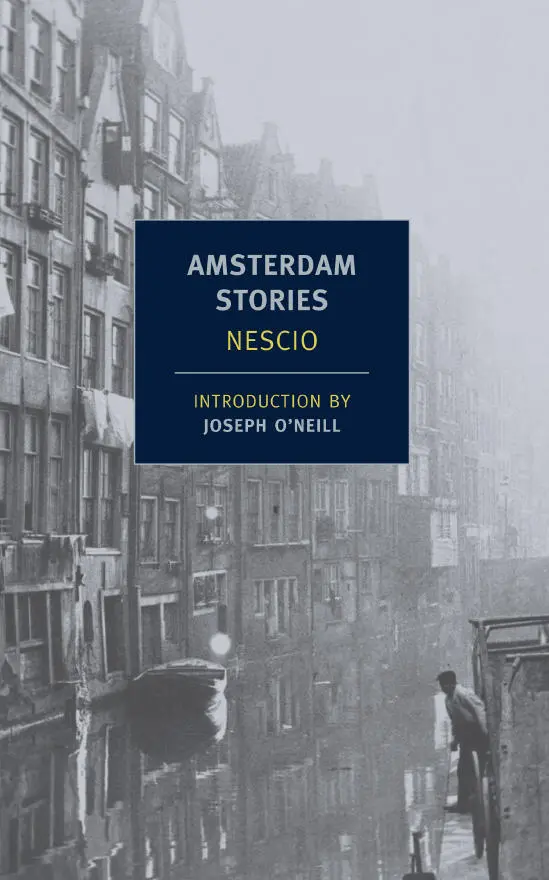
- Название:Amsterdam Stories
- Автор:
- Издательство:NYRB Classics
- Жанр:
- Год:2012
- ISBN:нет данных
- Рейтинг книги:5 / 5. Голосов: 1
-
Избранное:Добавить в избранное
- Отзывы:
-
Ваша оценка:
Amsterdam Stories: краткое содержание, описание и аннотация
Предлагаем к чтению аннотацию, описание, краткое содержание или предисловие (зависит от того, что написал сам автор книги «Amsterdam Stories»). Если вы не нашли необходимую информацию о книге — напишите в комментариях, мы постараемся отыскать её.
Who was Nescio? Nescio — Latin for “I don’t know”—was the pen name of J.H.F. Grönloh, the highly successful director of the Holland — Bombay Trading Company and a father of four — someone who knew more than enough about respectable maturity. Only in his spare time and under the cover of a pseudonym, as if commemorating a lost self, did he let himself go, producing over the course of his lifetime a handful of utterly original stories that contain some of the most luminous pages in modern literature.
This is the first English translation of Nescio’s stories.
Amsterdam Stories — читать онлайн бесплатно полную книгу (весь текст) целиком
Ниже представлен текст книги, разбитый по страницам. Система сохранения места последней прочитанной страницы, позволяет с удобством читать онлайн бесплатно книгу «Amsterdam Stories», без необходимости каждый раз заново искать на чём Вы остановились. Поставьте закладку, и сможете в любой момент перейти на страницу, на которой закончили чтение.
Интервал:
Закладка:
And Mom went along with it, she shared his new life as much as she could and didn’t let anything show, just like good old-fashioned moms from the old days. At night, alone by the lamp, she gazed at the paper over her glasses and thought about Linnaeusstraat in Amsterdam. She could never go to bed at nine. She used to see the streetcars moving across the square down by Mauritskade in the evening when she looked out from her upstairs apartment, see the lights gliding by. And the trees in the Muiderbosch, waving back and forth against the dark sky, bare of leaves, full of crows’ black nests. That’s when you really longed for summers in the country. And she thought about the shops on Saturday evening and the crowds shopping and how she herself used to walk down Van Swindenstraat with her shopping basket under her apron back when they weren’t doing so well.
You could really talk to people back then. Yes, oh, and Dapperstraat market with the two rows of carts, produce and fish and cheese and cups and saucers, and smoky oil lamps and serene white gaslight from homemade gas in little globes. People jostling and hurrying everywhere. After they had been posh a long time she still went on Saturday evenings to buy smoked eels from the cart with the tall black poles sticking up with the jaunty copper knobs on top. Until a girl in a big multicolored skirt and short hair with no hat on said, “Jeezus, the millionaires’re out buyin’ eels.” A tramp like that, with brown shoes on.
And then Mom began to drift off, in the whispering silence, and sat nodding off with her glasses in her right hand until she bent too far forward and woke herself up with a start. “Oh! I thought I heard the streetcar bell …”
Meanwhile, up in her bedroom, Dora was writing a short story about “Him” in a ten-cent schoolbook and she told herself that He was someone she didn’t know, someone still to come. And the notebook was shoved away into the back of a drawer that no one could get to, and she blushed even though she was alone and no one knew anything about it.
Em was engaged to a bookkeeper in Amsterdam and talked about her house, which they hadn’t found yet. She was thinking about having a baby. Weird, a boyfriend like that, who said “insofar as that is concerned” and “alternatively,” and stood with a sharp crease in his black worsted wool pants next to the henhouse, and always had something to say to Dad about “the Bovenkerks,” Mr. Bovenkerk the coal merchant and Mrs. Bovenkerk who summered in Zandvoort at the Mon Désir and Bovenkerk Junior who was about to take his final exams. And so on. Em got very angry when Dora once said, “Look, it’s the Bovenkerk.” She’d answered “Go make love to the IJsseldijk” and almost added “you old prune”— Dora was one year older — but luckily her upbringing kept the upper hand. Dora turned bright red but said nothing. “Could she have read one of my notebooks? But I never leave them lying around!” Yuck, what a brother-in-law. And when he wore that white sweater! And those eyes! A real gentleman, the kind who never looked at anything while he walked down the street except to see if someone he knew was coming in the other direction. And so spineless. How could Em stand a man like that! She would rather stand against a pine tree. No, Coba had done much better. A husband like an ocean! And suddenly she had a vision of white sand and sun and sea and surf and red and blue swimsuits and white dresses and white and red parasols. And of dunes with hollowed-out sides, with tufts of grass on top bowed down by the wind. And of a wave that knocked her down in the water. She could taste the salt.
Now Dad was dead and they were moving. Mom was planning to live back on Linnaeusstraat, across from Oosterpark. Em was going to get married the following year and Dora had to get a job. Just helping around the house and staying with people here and there and not actually doing anything only makes you restless. First she was planning to go visit a friend in Berg en Dal for a few weeks, to recover a little from the unpleasantness of the past few weeks, and then she’d be ready to join her mother in Amsterdam.
E. would bring her. It wasn’t easy to get another day off from the office but he would have to just do it.
Dora looked at him — how strangely he was talking!
In the train they were polite and obliging to each other but said very little. They rode over the IJssel and the Rhine and Dora looked out at the rivers with her big quiet eyes, sitting straight up in her black dress, hands in her lap, until she could no longer see them and still she sat there and looked out.
And he glanced at her face now and then and then back out the window so as not to bother her. Then he tried to see if he could picture her in his mind, bit by bit at first, her forehead, and how her hair lay above it, slightly wavy, and her eyelids and her long dark lashes and then her black eyebrows up above, and then all that together with her eyes, especially her eyes, he saw them floating above the cornfields, and her nose just the least bit upturned, so delicate, and her mouth, the pursed red lips, and the little ears pink and translucent, visible through the hair hanging over them, and the stray hairs in front of them and her jaw, so noble and long, with a sharp little chin with a dimple in it. And then he couldn’t keep himself from looking back at the two little vertical ridges under her nose.
He shut his eyes for a moment and saw her whole face clearly, her tan cheeks too now. And it was also visible perfectly clearly outside, in front of the row of poplars, which had only a very few leaves left on them. Since it was October already. He had to laugh at the people who thought he was a respectable, upstanding gentleman.
“Say, is it true you stay late at the office every day now?” He nodded. “Do you have to?” He shrugged. “Why do it then?” He laughed again. “To get ahead in the world. You don’t get it for free.” Didn’t sound like much fun to her. “What do you want to do, then?”
“Look at things … and think … and write …” she said, with the slightest hint of a blush …” at least if you can.”
He gave a nastily knowing smile. “Impossible, Dora. That won’t get you anywhere. The dumb animals are better off. Don’t you think Bovenkerk is a happy man?”
Her big eyes opened wide with quiet shock. “Oh, but to write what you think is so amazing — whoosh, whoosh, you don’t even know how you’re doing it and suddenly there it is, exactly the way it has to be. And when you read it later you’re right back in your own earlier life again and yet you don’t know if you’re yourself or someone else.” Her eyes sparkled, there were tears in them. She wasn’t blushing self-consciously anymore. She sat there with her head on her right hand and her elbow on the little shelf in front of the window and gazed out. And the little poet thought: “She’s the real thing,” and: “Now they think I’m a respectable, upstanding gentleman.”
But he stayed bitter and knowing. “God carries us up to the heights only to hurl us back down again. The path over the summit is short but the valleys are long. Anyone who has been to the mountaintop spends the rest of his days in misery.”
She shook her girlish head slowly, so sweetly, and at the same time so thoughtfully. “I’ll always live on the mountaintop.”
He wanted to say “Good!” but said nothing. She looked out at the Waal River. “Beautiful, huh?” And suddenly she stood up, took her hat off the rack, pinned it quickly in place, and, holding it with both hands, feet wide apart for balance, suddenly laughed a reckless laugh like a mischievous girl, her eyes locked with his: “No Bovenkerks for me!” Then she leaned her upper body out the window and looked toward Nijmegen spread across the hills along the river, so un-Dutch, so wanly romantic, house upon house and tree upon tree, and she sang into the wind and the clattering of the train over the bridge.
Читать дальшеИнтервал:
Закладка:
Похожие книги на «Amsterdam Stories»
Представляем Вашему вниманию похожие книги на «Amsterdam Stories» списком для выбора. Мы отобрали схожую по названию и смыслу литературу в надежде предоставить читателям больше вариантов отыскать новые, интересные, ещё непрочитанные произведения.

![Олеся Проглядова - Nomen nescio. Имя неизвестно [litres]](/books/391740/olesya-proglyadova-nomen-nescio-imya-neizvestno-lit-thumb.webp)




Обсуждение, отзывы о книге «Amsterdam Stories» и просто собственные мнения читателей. Оставьте ваши комментарии, напишите, что Вы думаете о произведении, его смысле или главных героях. Укажите что конкретно понравилось, а что нет, и почему Вы так считаете.