Nescio - Amsterdam Stories
Здесь есть возможность читать онлайн «Nescio - Amsterdam Stories» весь текст электронной книги совершенно бесплатно (целиком полную версию без сокращений). В некоторых случаях можно слушать аудио, скачать через торрент в формате fb2 и присутствует краткое содержание. Год выпуска: 2012, Издательство: NYRB Classics, Жанр: Классическая проза, на английском языке. Описание произведения, (предисловие) а так же отзывы посетителей доступны на портале библиотеки ЛибКат.
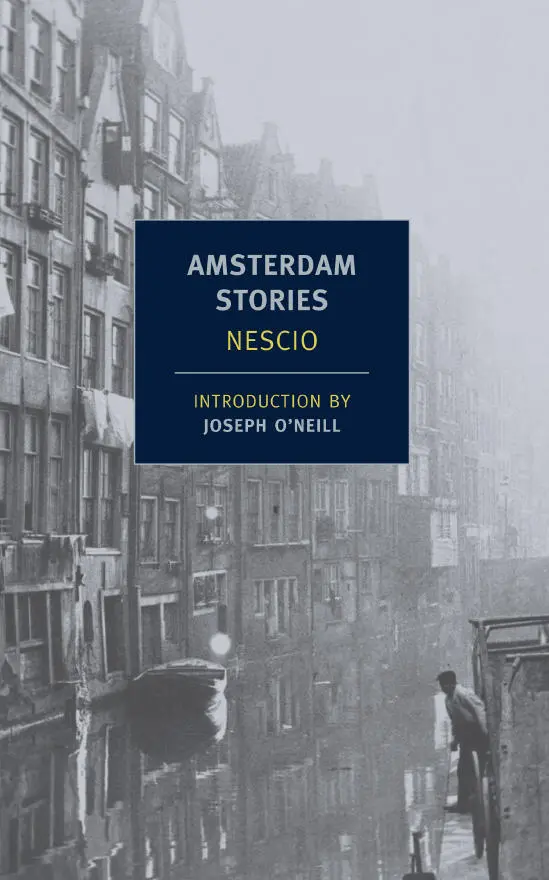
- Название:Amsterdam Stories
- Автор:
- Издательство:NYRB Classics
- Жанр:
- Год:2012
- ISBN:нет данных
- Рейтинг книги:5 / 5. Голосов: 1
-
Избранное:Добавить в избранное
- Отзывы:
-
Ваша оценка:
Amsterdam Stories: краткое содержание, описание и аннотация
Предлагаем к чтению аннотацию, описание, краткое содержание или предисловие (зависит от того, что написал сам автор книги «Amsterdam Stories»). Если вы не нашли необходимую информацию о книге — напишите в комментариях, мы постараемся отыскать её.
Who was Nescio? Nescio — Latin for “I don’t know”—was the pen name of J.H.F. Grönloh, the highly successful director of the Holland — Bombay Trading Company and a father of four — someone who knew more than enough about respectable maturity. Only in his spare time and under the cover of a pseudonym, as if commemorating a lost self, did he let himself go, producing over the course of his lifetime a handful of utterly original stories that contain some of the most luminous pages in modern literature.
This is the first English translation of Nescio’s stories.
Amsterdam Stories — читать онлайн бесплатно полную книгу (весь текст) целиком
Ниже представлен текст книги, разбитый по страницам. Система сохранения места последней прочитанной страницы, позволяет с удобством читать онлайн бесплатно книгу «Amsterdam Stories», без необходимости каждый раз заново искать на чём Вы остановились. Поставьте закладку, и сможете в любой момент перейти на страницу, на которой закончили чтение.
Интервал:
Закладка:
The next morning she sat in her nightie on the edge of the bed and looked down at her ankles and pondered. “That’s the way it is, I guess.” But the brilliant clarity was gone.
He didn’t want to think. As a proper, respectable gentleman he sat quiet and aloof on Line Two on his way to the office.
“Mornin’, ladies and gentlemen.” And he grimly went to his desk and started sorting his mail.
It was the end of March when the fullness of time arrived.
All day long they had corrected proofs, Dora and he. They were all business. Coba was with Bobi in The Hague visiting a rich cousin from the Indies. They had both taken a few days off from the office.
At five o’clock she had gone home to eat and afterwards she came back to finish their work. When twilight fell they were done, the stack of paper lay on the table with the letter to the publisher next to it, all it needed now was stamps.
It was in a room upstairs in the city but on the edge of the city— the canal in front of the house had an open field on the other side. Dora sat on a chair by the stove, in a coat and hat, and looked into the fire and thought about the fullness of time, a fullness that lay a long way off for her . He lay flat on the couch between the window and the stove, so flat that she could hardly see him in the dark room, and he looked at the yellow light of the streetlamps on the ceiling and the red glow from the stove on the floor.
Behind the house was the city, lamps lit in many of the windows, but they didn’t see them because they were sitting at the front of the house. When Dora looked up she saw the countryside where the high sky was losing its last light and darkness already lay across the earth.
The little poet had had enough, of everything. His book was finished, he had murdered his never-ending poem, his position in society was a farce. Coba and Bobi had enough to live on without him. God would console them; time heals all wounds. That was a proverb on the wall of his aunt’s house in Velp.
It was spring. It still looked like winter but it was spring. It still snowed here and there and it was a bit cold at night, with a frost sometimes, but that was just a little pleasantry, nothing to take too seriously.
The days were growing longer, people turned on their lights at seven o’clock. At six thirty the gas lamps were lit along the canal, they hung there pale and astonished. The snow swirled around them, in little spring snowflakes and melted before it fell onto the street.
And they both thought about the summer rains that would come, and their noses, the noses of incorrigible bohemians who couldn’t stifle their souls, smelled the fresh hay. He, grim as the title of his book, Genghis Khan , and as grim as the book itself, thinking that he would never smell that smell again, that this too he had forsaken in kingly abdication; she full of vague longings and so, so moved in her heart. She folded her hands on her skirt where it was stretched tight between her knees; she sat there like that, bent forward on her chair.
The cows had already been out in the fields, he and she had seen them one sunny day. The land had recognized them right away and they stood trustingly on it and the sun was happy to see them too. After that the days had grown colder again and the cows had had to go back inside for a time. But in the end the hail couldn’t stop the spring.
The birch trunks were silvery white, but prettier than silver. Language is poor, fatally poor. Anyone who knows the Father’s work knows that.
The meadows looked less waterlogged, the farmers had spread manure, the sun rose higher and set more slowly. And Dora thought about how the sun had been big and red and cold in the sky in December, and low near the horizon at four o’clock, and had passed into a cold mist and vanished, weak and defenseless. But that was a long time ago. And she thought about how in winter people turned on their lights at four o’clock and hoped that daylight would eventually return. But now she knew for certain that the sun would come up the next morning. And after that, well, what then?
Still they said not a word.
He thought back to the time when he had worked, “worked hard” as people like to say. And how his family had said that he was starting to become more reasonable now. That he’d complained once about all the pressure he was under and about all sorts of things going wrong at the office, he’d said he was dreaming about them at night, and that his aunt had replied: “Yes, my boy, life is a serious business.” She would surely read his book, and expect to receive a signed copy, and wait to see if it would be included in the subscription library. She would want to be horrified by it, but wouldn’t dare since so many other people had praised it. He saw himself already circulating among the library subscribers in Velp and that really made everything worthwhile.
“What now?” Dora thought. She had seen the snow melt once more and the buds grow bigger on the trees. Next the crowns of the tall trees would turn brown all over.
It seemed to her that she had seen the same things a very long time ago, the same way, with her hands folded on her skirt, knees apart, bent forward on her chair.
The sun was shining again, she saw the houses in the light and the trees and the golden glow on the pond. She saw the weeping willow turn yellow, its branches hung down and they reached for the water, they hung in deathly silent yellow adoration over the pond and they saw their own yellow light in the water. The woolly white clouds sailed in the pond, they skimmed across the blue sky but didn’t conceal it. And those were the weeping willows in the city in early spring, a material embodiment of God between the clog-like buildings, so tall, awakening a longing that is grace and misery at once. You turn the corner, a foul, disgusting corner next to a fish stall that stinks of marinated herring, and suddenly something blazes from your eyes into your heart, you see gold crash down like an ocean and you stand there and a little boy wipes his nose with the back of his hand and yells: “Fancypants!” That is Amsterdam, the capital of the Netherlands, in early spring.
It was almost night. The lumps of coal in the stove suddenly shifted with a thump and little flames shot up and their light filled the room.
“Dora,” he said without warning, “what do you think of Penning?” Penning was another friend from his youth. He hadn’t seen him in years and knew only that he’d become an engineer. And now he’d run into him two weeks ago and he had dropped by a few times while they were busy with the proofs, and each time he stayed and chatted for an hour. He was a big fresh-faced young man, well on his way to a fine career but still youthful outside of work. He’d told them that in a few months he was off to South America for a year or so, to dredge something somewhere or build a pier or something like that. The little poet had also brought him to see his mother-in-law, and she was instantly taken with him. Em didn’t like him.
“What do you think of Penning?” “He’s all right,” Dora said absently. Silence. In the light the streetlamp cast on the ceiling you could see the shadows of falling snowflakes. They were bigger now.
“Em’s getting married next month.” She looked up. He was talking so strangely again, it was like Bovenkerk with Em. She didn’t answer.
She suddenly saw before her eyes, like a long-forgotten thing, a wide river rushing toward the sea. Its waves propelled the sunlight toward the sea but the water and the light were without end. A little tugboat pulled a long train of boats along a blue and gold trail. The boat was tiny and insignificant, its steam pipe barely reached the sky and its smoke was only just visible, its hoarse cry was lost in space. For hours and hours it moved through the water, between the fields, under an awe-inspiring sky.
Читать дальшеИнтервал:
Закладка:
Похожие книги на «Amsterdam Stories»
Представляем Вашему вниманию похожие книги на «Amsterdam Stories» списком для выбора. Мы отобрали схожую по названию и смыслу литературу в надежде предоставить читателям больше вариантов отыскать новые, интересные, ещё непрочитанные произведения.

![Олеся Проглядова - Nomen nescio. Имя неизвестно [litres]](/books/391740/olesya-proglyadova-nomen-nescio-imya-neizvestno-lit-thumb.webp)






Обсуждение, отзывы о книге «Amsterdam Stories» и просто собственные мнения читателей. Оставьте ваши комментарии, напишите, что Вы думаете о произведении, его смысле или главных героях. Укажите что конкретно понравилось, а что нет, и почему Вы так считаете.