Nescio - Amsterdam Stories
Здесь есть возможность читать онлайн «Nescio - Amsterdam Stories» весь текст электронной книги совершенно бесплатно (целиком полную версию без сокращений). В некоторых случаях можно слушать аудио, скачать через торрент в формате fb2 и присутствует краткое содержание. Год выпуска: 2012, Издательство: NYRB Classics, Жанр: Классическая проза, на английском языке. Описание произведения, (предисловие) а так же отзывы посетителей доступны на портале библиотеки ЛибКат.
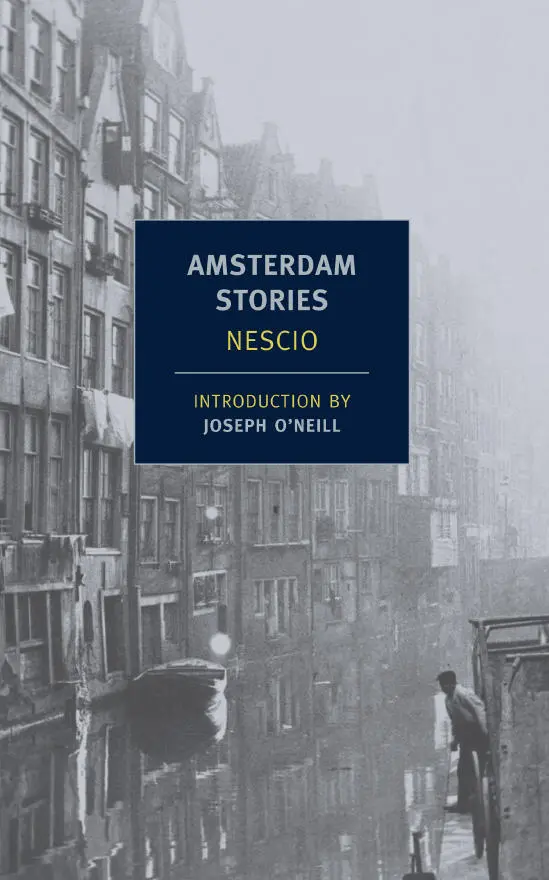
- Название:Amsterdam Stories
- Автор:
- Издательство:NYRB Classics
- Жанр:
- Год:2012
- ISBN:нет данных
- Рейтинг книги:5 / 5. Голосов: 1
-
Избранное:Добавить в избранное
- Отзывы:
-
Ваша оценка:
Amsterdam Stories: краткое содержание, описание и аннотация
Предлагаем к чтению аннотацию, описание, краткое содержание или предисловие (зависит от того, что написал сам автор книги «Amsterdam Stories»). Если вы не нашли необходимую информацию о книге — напишите в комментариях, мы постараемся отыскать её.
Who was Nescio? Nescio — Latin for “I don’t know”—was the pen name of J.H.F. Grönloh, the highly successful director of the Holland — Bombay Trading Company and a father of four — someone who knew more than enough about respectable maturity. Only in his spare time and under the cover of a pseudonym, as if commemorating a lost self, did he let himself go, producing over the course of his lifetime a handful of utterly original stories that contain some of the most luminous pages in modern literature.
This is the first English translation of Nescio’s stories.
Amsterdam Stories — читать онлайн бесплатно полную книгу (весь текст) целиком
Ниже представлен текст книги, разбитый по страницам. Система сохранения места последней прочитанной страницы, позволяет с удобством читать онлайн бесплатно книгу «Amsterdam Stories», без необходимости каждый раз заново искать на чём Вы остановились. Поставьте закладку, и сможете в любой момент перейти на страницу, на которой закончили чтение.
Интервал:
Закладка:
“He said he was filled with me. That used to be a given.”
God sighed. He’d have to talk it over with a real poet tomorrow. Maybe Potgieter. These days he had nothing but worries on his mind.
A girl was walking down there, on Leidsestraat. God looked down upon her with fatherly satisfaction. The girl was like hundreds of other girls that summer, all in white, silk blouse and short knit skirt and white stockings, delicate little ankles and flat white shoes, and she had lovely eyes like hundreds of other girls in Amsterdam. Eyes that looked like they knew something very special. They didn’t like that. Our Dear Lord had never thought about it before. But now it bothered him. It had started with a line of poetry about “knowing eyes,” then one of them said that it was all a trick, a pious trick of God’s. That they didn’t know anything, they just looked as though they knew, they couldn’t help it. God had never thought about that before.
Now they had gotten him thinking about everything. And just when it was so important to stay focused. The Kaiser himself had said it again, just recently: “ Der Tüchtigkeit ist die Welt. ”*
But once you start puzzling over something it’s not so easy to stop. Now that he was paying attention, he saw hundreds, thousands of those girls, each one different and every one the same. Sometimes he no longer knew if he had seen ten thousand girls or one girl ten thousand times. “God in Heaven, had he created all these girls? Or was it a trick of the devil, all those knowing eyes?”
Look, there goes the little poet. A handsome young man, you have to admit: thin, with a nicely shaved boyish face except for a pair of flying buttresses in front of his ears, and so suntanned. He greets someone, tilting his straw hat a fraction above his close-cut hair.
Bizarre — so little hair — but it definitely was a little poet because God couldn’t figure him out, or Potgieter either. And Professor Volmer wanted nothing to do with him.
And he suffered terribly from those knowing eyes, more than any decent upstanding person would. The devil had him in his clutches. He was a weak little poet and they drove him insane. He was respectable out of weakness. Another strange thing that God had never thought about before — respectable was respectable, full stop. The little poet didn’t know which one he should fall in love with, no sooner had he looked into one pair of knowing eyes than he saw another. He was so weak, so wonderfully weak. But after he saw the twenty-fifth girl he felt something strange in his brain. He had already spitefully kicked over a chair on the sidewalk while walking past a café. Because he knew perfectly well that they didn’t know a thing, that they burst out in stupid giggles whenever he doffed his hat to them, or just stared at him, stinking of bourgeois-young-lady conceitedness. And still he couldn’t leave them alone. Then he had to flee somewhere where there were no women, and he raged against God and the devil too, and he said that he’d end up as a lunatic at this rate and sit slobbering for years with his mouth hanging open wearing a leather bib without even realizing it. But the next day he would look again , and think: “ Mon âme prend son élan vers l’infini. ”*
Potgieter said that the guy was crazy and that back in Piet Hein’s day….
The little poet took his course through the wastelands of Amsterdam, poetizing all the way. Nothing but Dutch people as far as the eye could see. Again he greeted someone, a gentleman in a top hat and tails straight out of an Eduard Verkade play. They spoke briefly, there on the square in front of Centraal Station.
On the ground floor God came strolling by in his yellow Panama hat, with a silver-handled walking stick and a shabby coat of an indefinable brown color draped loosely across his back, dandruff on his collar, his trousers too wide and too long and bunched on the tops of his shoes. You could see his muttonchops from behind and when he slowly climbed the two steps up to the station hall, the evening sun, low in the sky, glowed in God’s polished left shoe.
“Who was that gentleman?” asked the little poet. “God,” said the devil, and the knobby bumps on his forehead grew bigger. The little poet said nothing. “Your God, your boss’s God and your father-in-law’s God and your boss’s accountant’s God and the manager of the Nieuwe Karseboom’s God. Your aunt’s, the one who told you you had to doff your hat when you walked past your boss’s house in Delft or Oldenzaal, or wherever it was, even if no one was there, because you never knew if someone might see. Your aunt who always makes your sister knit: ‘An idle woman is the devil’s plaything.’ The God of all those people who say ‘I never expected that from you’ when you try to live a little, and who say ‘I thought so, that was bound to end badly’ when you end up in the poorhouse later. The God who resents that you have Saturday afternoons off, the God of Professor Volmer, lecturer in accounting and business, who thinks you spend too much time looking up at the sky. The God of everyone who has no other option besides work or boredom. The God of the Netherlands, of all of the Netherlands, from Surhuis moor down to Spekholz heath, the patron and benefactor of the League of Heads of Large Families and of the Association for the Reclamation of Fallen Women. They call it falling. I’m fallen too.”
“It’s not a very accurate metaphor, you’re right,” the little poet said absently.
He had been looking all this time at a lady who was standing there waiting. At the wonderful sharp edges of the tendons on her ankles, right above her flat white shoes. Of course she was wearing white flats with a short skirt and stockings with a terribly open weave so that her white legs shimmered through. “Now’s not a bad time to fall,” the little poet thought.
“ Mon âme prend son élan vers l’infini ,” said the devil with an ironic smile, the way he had smiled for all eternity.
Then the little poet saw the square in front of the station again, and saw the devil, and heard what he had said.
“Devil,” he said, “don’t try to trick me.”
The devil just shrugged his shoulders and looked at the station clock. Ten past seven. He held his hand over his mouth and yawned. Eternity wasn’t going anywhere. And the fact is, he knew all too many little poets already. Why bother giving such big speeches?
The little poet set off for home and looked up at the wheel with little wings on it, on the railing of the high railroad bridge over the west passage, the wheel on a little iron post that wants to fly and never leaves its place and can be seen from the distant places it never reaches, even the Torensluis, looking up the Singel. The blue sky was still so hopelessly far above it. Even the lampposts at either end of the bridge hold their arc lights high above the little wheel. There’s not much you can do if you’re mounted on a little iron post on a railroad bridge. At best you can sit there and think, and that doesn’t get you anywhere. The little poet thought that it’s better to be a wheel on a post than a little poet. The wheel is made of iron, a little poet isn’t.
Meanwhile God sat by himself in a first-class compartment on the train to Delft and stared out the window and saw nothing. He had never been much for sightseeing. He held a report in his hand and files lay next to him on the seat.
The God of the Netherlands thought. These were strange times. God started reading again:
“Man’s fate is to feel regret when he fails to reach his goal and to feel regret when he succeeds.
“There is no consolation in virtue and no consolation in sin.
“Therefore, cheerfully renounce all expectations. Place your hope in eternity: there is no awakening from this dream.”
Читать дальшеИнтервал:
Закладка:
Похожие книги на «Amsterdam Stories»
Представляем Вашему вниманию похожие книги на «Amsterdam Stories» списком для выбора. Мы отобрали схожую по названию и смыслу литературу в надежде предоставить читателям больше вариантов отыскать новые, интересные, ещё непрочитанные произведения.

![Олеся Проглядова - Nomen nescio. Имя неизвестно [litres]](/books/391740/olesya-proglyadova-nomen-nescio-imya-neizvestno-lit-thumb.webp)






Обсуждение, отзывы о книге «Amsterdam Stories» и просто собственные мнения читателей. Оставьте ваши комментарии, напишите, что Вы думаете о произведении, его смысле или главных героях. Укажите что конкретно понравилось, а что нет, и почему Вы так считаете.