Vilhelm Moberg - The Emigrants
Здесь есть возможность читать онлайн «Vilhelm Moberg - The Emigrants» весь текст электронной книги совершенно бесплатно (целиком полную версию без сокращений). В некоторых случаях можно слушать аудио, скачать через торрент в формате fb2 и присутствует краткое содержание. Год выпуска: 1995, Издательство: Minnesota Historical Society Press, Жанр: Классическая проза, на английском языке. Описание произведения, (предисловие) а так же отзывы посетителей доступны на портале библиотеки ЛибКат.
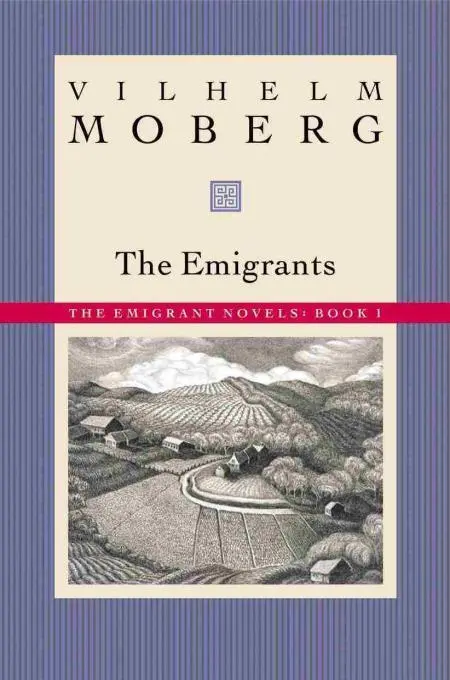
- Название:The Emigrants
- Автор:
- Издательство:Minnesota Historical Society Press
- Жанр:
- Год:1995
- ISBN:нет данных
- Рейтинг книги:3 / 5. Голосов: 1
-
Избранное:Добавить в избранное
- Отзывы:
-
Ваша оценка:
The Emigrants: краткое содержание, описание и аннотация
Предлагаем к чтению аннотацию, описание, краткое содержание или предисловие (зависит от того, что написал сам автор книги «The Emigrants»). Если вы не нашли необходимую информацию о книге — напишите в комментариях, мы постараемся отыскать её.
The Emigrants — читать онлайн бесплатно полную книгу (весь текст) целиком
Ниже представлен текст книги, разбитый по страницам. Система сохранения места последней прочитанной страницы, позволяет с удобством читать онлайн бесплатно книгу «The Emigrants», без необходимости каждый раз заново искать на чём Вы остановились. Поставьте закладку, и сможете в любой момент перейти на страницу, на которой закончили чтение.
Интервал:
Закладка:
From a clear sky the sun shone down on this multitude of golden grain. The sun shown down on a fertile field, a field to which had been given grain and kernel. The shocks were as innumerable as the billows on the sea; here surged a sea of golden grain, a tremendous granary of endless dimensions. It was the fruit of the earth that he saw here, an unmeasurable quantity of bread for man: “A Wheat Field in North America.”
A story could be invented, people’s word could be inaccurate, a description could be imaginary. But a picture could not be false, a picture could not lie. It could only show things as they were. What he saw must be somewhere before it could be pictured; what his eyes beheld was not illusion: this field of wheat existed. This ground without stones and hillocks was somewhere in the world. These potent sheaves, these golden heads of wheat, had grown; no one could step forward and deny it. Everything he saw in this picture, all this splendor to a farmer’s eye, it existed, it was somewhere — in another world, in the New World.
Karl Oskar Nilsson, owner of seven stony acres in stone-country Korpamoen, sat quietly for long, his eyes lingering upon the picture. His mind’s eye reveled in this grandeur. He held up the paper reverently before him, as if he were sitting on a church bench of a Sunday, following the hymn with the psalmbook in his hand.
It was in the Old World that God once had cursed the soil because of man; in the New World the ground still was blessed.
— 3—
A few words were printed under the picture: “It has been said that work-willing farmers have great prospects of future success in the United States.”
It happened the day when Karl Oskar plowed his rye stubble and broke the plowshare. That was the beginning; then it went on through many days and — as he lay awake — through the nights.
He wasn’t actually slow when it came to making up his mind; but this was the greatest decision of his life, and more than one day was needed for it; it must be made with “common sense and ripe consideration,” as is stated in bills of sale and other important documents. He needed a few weeks to think it over.
So far he had shown the picture of the North American wheat field only to Kristina, and she had looked at it casually. She could not know that her husband carried that picture in his mind wherever he went.
Through the long autumn evenings they sat in front of the fire, busy with their indoor activities. Karl Oskar whittled ax handles and wooden teeth for the rakes, and Kristina carded wool and spun flax. At last, one evening after the children had gone to sleep and it was quiet in the room, he began to talk. In advance he had thought over what he should say, and in his mind he had fought all the obstacles and excuses his wife might make.
As for himself, he had decided on the move and now he would like to hear what she thought of it.
She asked first: “Are you making fun of me?”
What was she to think? Here he sat and suddenly announced that he intended to sell his farm, and all he owned. Then with his whole family — a wife and three children and a fourth not yet born — he would move away; not to another village or parish, nor to another place in this country, or to any country on this continent. But to a new continent! He might just as well have stretched it a little further, it would have made no difference to her had he announced that he intended to move them all to the moon; he must be jesting with her.
But as he continued to talk, she realized he spoke in earnest. This new idea was exactly like Karl Oskar, like no one else. He never let well enough alone, he was not satisfied with what others considered sufficient. He was never satisfied with anything in this world; he reached for the impossible, the little-known. He had told her once before he would sell Korpamoen; then he wanted to be a timberman. Another time it had been a horse trader, and again, enlistment as a soldier. And when he decided to move, of course nothing less than North America would do — the other end of the world! If he had been satisfied with less he would not have been Karl Oskar.
But now Kristina must answer with innermost sincerity and let him know what she felt in her heart. So they talked, and exchanged their opinions, evening after evening, while the crackling fire alone interrupted their conversation and at times was even louder than they.
Why did Karl Oskar want to move?
For four years now they had lived in Korpamoen, and today they were several hundred riksdaler poorer than when they started. Four years they had spilled the strength of their youth here, to no purpose. If they remained they would have to continue struggling and slaving until they could move neither hand nor foot, until they finally sat there, worn out, worked out, limp and broken. No one would then thank them for having ruined themselves for no earthly good. They could mirror themselves in his father, who sat crippled in his room. In this place they had nothing more to look forward to than the reserved room; it would be ready for them one day, when they were able-bodied no more, and from then on they would sit there, like his father and mother now, and reproach themselves all through their old age; health and strength would be gone, but from all the work through all the years they would have naught to show but the reserved room with its meager bread.
However much they struggled and toiled, they could never improve their situation here in Korpamoen.
He didn’t know much about conditions in the United States, but he did know that once there he would be given, for next to nothing, fertile, stone-free soil which was now only waiting for the plowshare. Things which he had no money to purchase here could be obtained for very little in North America. They were both of them strong and healthy and accustomed to hard work, and that was all that they need bring along: their ability to work; it was all America asked of them. Perhaps they must face as much drudgery as here, but they would do it in another spirit, with another hope, another joy. Because the great difference between the two countries was this: In America they could improve their lot through their own work.
He for his part was weary of the struggle which led nowhere. Nonetheless he could continue his work with a happy heart if he believed he could improve the situation for himself and his. People liked to fight for a goal, at least while still young, as they both were. What else was there to live for? But one day their children would be grown and shifting for themselves, and what sort of future awaited them here? One child would inherit the farm, but what about the others? They would have to work as hired farmhands or become squatters. No third choice existed. There were already so many hired hands that they competed in offering their services to farmers; there were too many cottagers already, soon every opening in the forest would have its rotten, rickety shack with the black earth for floor. The people in these huts seldom had meat with their bread — and many days no bread. Karl Oskar and Kristina did not want their children to become hired farmhands or crofters; but they could do nothing better for them unless they took them from this impoverished place. If they felt responsibility for their children, they must move away.
On one point all information from North America agreed: the people had in every way more liberty in that country. The four classes were long ago abolished there, they had no king who sat on a throne and drew a high salary. The people themselves elected a President who could be thrown from office if they didn’t like him. They had no high officials who annoyed the people, no sheriff who came and took the farmers’ belongings. And at the community meeting everyone spoke as freely as his neighbor, for all had equal rights.
Читать дальшеИнтервал:
Закладка:
Похожие книги на «The Emigrants»
Представляем Вашему вниманию похожие книги на «The Emigrants» списком для выбора. Мы отобрали схожую по названию и смыслу литературу в надежде предоставить читателям больше вариантов отыскать новые, интересные, ещё непрочитанные произведения.








Обсуждение, отзывы о книге «The Emigrants» и просто собственные мнения читателей. Оставьте ваши комментарии, напишите, что Вы думаете о произведении, его смысле или главных героях. Укажите что конкретно понравилось, а что нет, и почему Вы так считаете.