Vilhelm Moberg - The Emigrants
Здесь есть возможность читать онлайн «Vilhelm Moberg - The Emigrants» весь текст электронной книги совершенно бесплатно (целиком полную версию без сокращений). В некоторых случаях можно слушать аудио, скачать через торрент в формате fb2 и присутствует краткое содержание. Год выпуска: 1995, Издательство: Minnesota Historical Society Press, Жанр: Классическая проза, на английском языке. Описание произведения, (предисловие) а так же отзывы посетителей доступны на портале библиотеки ЛибКат.
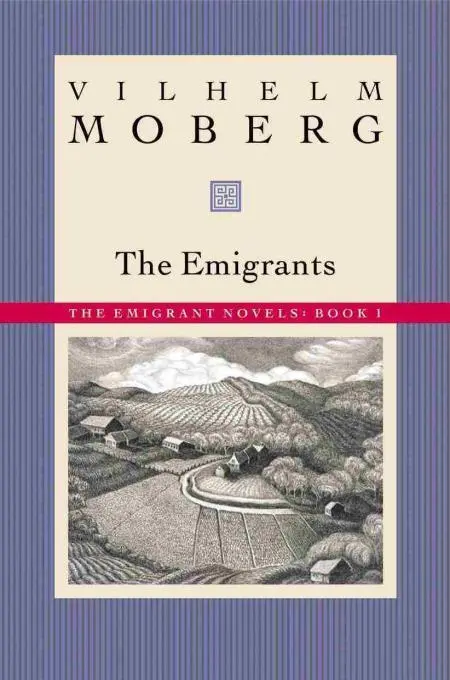
- Название:The Emigrants
- Автор:
- Издательство:Minnesota Historical Society Press
- Жанр:
- Год:1995
- ISBN:нет данных
- Рейтинг книги:3 / 5. Голосов: 1
-
Избранное:Добавить в избранное
- Отзывы:
-
Ваша оценка:
The Emigrants: краткое содержание, описание и аннотация
Предлагаем к чтению аннотацию, описание, краткое содержание или предисловие (зависит от того, что написал сам автор книги «The Emigrants»). Если вы не нашли необходимую информацию о книге — напишите в комментариях, мы постараемся отыскать её.
The Emigrants — читать онлайн бесплатно полную книгу (весь текст) целиком
Ниже представлен текст книги, разбитый по страницам. Система сохранения места последней прочитанной страницы, позволяет с удобством читать онлайн бесплатно книгу «The Emigrants», без необходимости каждый раз заново искать на чём Вы остановились. Поставьте закладку, и сможете в любой момент перейти на страницу, на которой закончили чтение.
Интервал:
Закладка:
If he now sold his farm with everything on it, chattels and kine included, Karl Oskar would have enough money to pay the transportation for all of them with some small part left over for the settling in the new country.
He had long turned it over in his mind, thought about it, weighed arguments for and against, but this conviction remained with him: a farm couple still in their youth, hale and hearty, could undertake nothing wiser than to emigrate to the United States of America.
Why Kristina wanted to remain at home:
Karl Oskar had drawn a beautiful and sanguine picture. If Kristina could believe it all as he painted it for her, she would not for one moment hesitate to follow him.
But she was afraid it might turn out to be a wild-goose chase. Her husband believed all he heard and saw about America. But who could guarantee its truth? What did they have to rely on? Who had promised them tillable soil in the United States? Those who ruled over there had not written him a letter or given him a promise. He had no deed to a piece of land that would await them on arrival. One taking such a journey needed written words and agreements before starting.
They had never met a single person who had been to North America; they knew of no one who had set foot in that country, no one who could tell them what the land was like. If a reliable human being who had seen the country with his own eyes had advised emigration, that would be different. In the printed words of newspapers and books she had no confidence.
If moving to North America was so advisable for young farm folk, then there must be some who had already done so. But they knew no such folk. He could not mention the name of a single farmer — young or old — who had emigrated with wife and children; the wisdom of such a move existed only in his head.
He had also forgotten to mention the fact that they must sail on a fragile ship across the ocean; he had said nothing about the dangerous voyage. How often had they heard about ships wrecked and sunk? No one knew if they would ever reach America alive. Even if exposing themselves to all these dangers were advisable, had they the right to venture the lives of their children on a voyage which wasn’t necessary, which they weren’t forced to undertake? The children were too young to consult, and perhaps they would rather remain at home, even as squatters, than be pulled down into the depth of the ocean; perhaps it were better to earn one’s bread as a farmhand, and live, than to be a corpse on the bottom of the sea, eaten by whales and other sea-faring monsters.
Karl Oskar wanted to emigrate because he felt responsibility for his children; Kristina wanted to remain at home for the same reason.
And what did he know about the children’s lot in the foreign country? Had someone there written him that Anna would become a lady, or that Johan would be a gentleman of leisure?
He hadn’t mentioned, either, that they must separate from their parents, brothers and sisters, relatives and friends — in short, all those they knew. Had he realized they would come to places where every human being they met was a stranger? They might have to live in communities where people were ill-natured and cruel; they were to live in a land where they would be unable to speak one word of the language, unable to ask a single soul for a drink of water if they needed it; where they might have to die without their tongues being able to cry for help. In such a land they would wander about like changelings, alien and lost. Had he never thought that their life might be lonely and bleak?
If she moved so far away she might never be able to return home; she might never see her nearest and dearest again; never meet parents, brothers and sisters. At once she would lose them all, and even though they lived they would be dead to her; they would be alive and yet dead.
True enough, things had gone backwards for them and they had had bad luck. But it might soon change, they might have a good year, they might have good fortune. At least they had the necessary food each day, and even though — as it looked for the moment — they might have to starve a bit this winter, they would most likely eat so much the better next year. They weren’t dressed in silk and satin, of course, but at least they were able to cover their bodies and keep their children warm. Surely they would gain their sufficiency at home in future as they had in the past, as other people did.
All wise and thoughtful men whose advice he might seek would answer him as she had.
Kristina wanted to remain at home.
— 4—
Through many autumnal evenings, while busy with their respective handiwork before the fire, the husband and wife in Korpamoen exchanged their divergent views on this decision which would determine their future. Karl Oskar held out the prospect of new advantages and possibilities through emigration; Kristina saw only drawbacks. When she came to the end of her objections, she always had this argument to fall back on: “If only someone we know had emigrated before. But none in these parts has ever gone.”
His answer was always the same: “Let us be the first; someone must be first, in everything.”
“And you’re willing to shoulder the responsibility?”
“Yes. Someone must be responsible, in all undertakings.”
She knew her husband by now: he had never relinquished what once he had decided upon, and hitherto he had always had his will, defying her and his parents. But this time he must fall in with her; this time she would not give in; this time he must change his mind.
She spoke to Nils and Märta: they must help her to dissuade Karl Oskar from this dangerous project.
But the parents only felt sorry for their foolhardy son and could give his wife no assistance. Nils said: Ever since Karl Oskar was able to button up his trousers alone in the outhouse, he had never asked advice or help from his parents. He would persist even more stubbornly if his father and mother tried to influence him.
Kristina began to realize that this time more than ever Karl Oskar knew what he wanted. And so did she.
— 5—
After the drought and crop failure came winter now, and famine. The summer had been short, had died in its youth; the winter would last so much longer with its starvation.
The sheriff’s carriage was seen more often on the roads. His errands concerned the poorest farms, and the carriage remained long at the gates. The sheriff’s horses were seldom in their stalls this winter: they were tied to gateposts, waiting for their master, who had much to do inside the houses; the horses were covered by blankets but still cold: they had to wait so long.
“Hurry up and hide your mittens!
The sheriff comes to take each pittance.”
Even before the snow had set in, little children could be seen along the roads, pale, with sunken cheeks, their running noses blue. Once arrived at a farm, they didn’t go to the main entrance; they went to the refuse pile near the kitchen door, where they remained awhile, scratching in the debris, searching. Then they went inside the house but stayed close to the door. The boys bowed, the girls would curtsy. With their forefingers they would try to dry their noses; then they would stand there, in the corner near the door, silent, timid.
They had no errand. They had already brought their message to anyone who looked closely: the mute testimony of hunger.
Parents sent their children begging, ashamed to be seen themselves. To the small ones, begging was no shame. For wretched, starving children begging was a natural occupation, the only one they were able to perform, their only help.
Perhaps some time might elapse before anyone in the house paid notice to the unknown children, huddling in their corner at the door. Perhaps the house folk sat at table; then the children waited until all had eaten, inhaling the smell of food, the savory odor of boiled potatoes, beef soup, fried pork. They stood there watching, their eyes growing big, their nostrils extended. The longer the meal lasted, the bigger grew their nostrils, and sometimes it happened, when they had stood there a long time, smelling the food, that one of them might faint and fall to the floor.
Читать дальшеИнтервал:
Закладка:
Похожие книги на «The Emigrants»
Представляем Вашему вниманию похожие книги на «The Emigrants» списком для выбора. Мы отобрали схожую по названию и смыслу литературу в надежде предоставить читателям больше вариантов отыскать новые, интересные, ещё непрочитанные произведения.









Обсуждение, отзывы о книге «The Emigrants» и просто собственные мнения читателей. Оставьте ваши комментарии, напишите, что Вы думаете о произведении, его смысле или главных героях. Укажите что конкретно понравилось, а что нет, и почему Вы так считаете.