Louis Couperus - Inevitable
Здесь есть возможность читать онлайн «Louis Couperus - Inevitable» весь текст электронной книги совершенно бесплатно (целиком полную версию без сокращений). В некоторых случаях можно слушать аудио, скачать через торрент в формате fb2 и присутствует краткое содержание. Год выпуска: 2013, ISBN: 2013, Издательство: Pushkin Press, Жанр: Классическая проза, на английском языке. Описание произведения, (предисловие) а так же отзывы посетителей доступны на портале библиотеки ЛибКат.
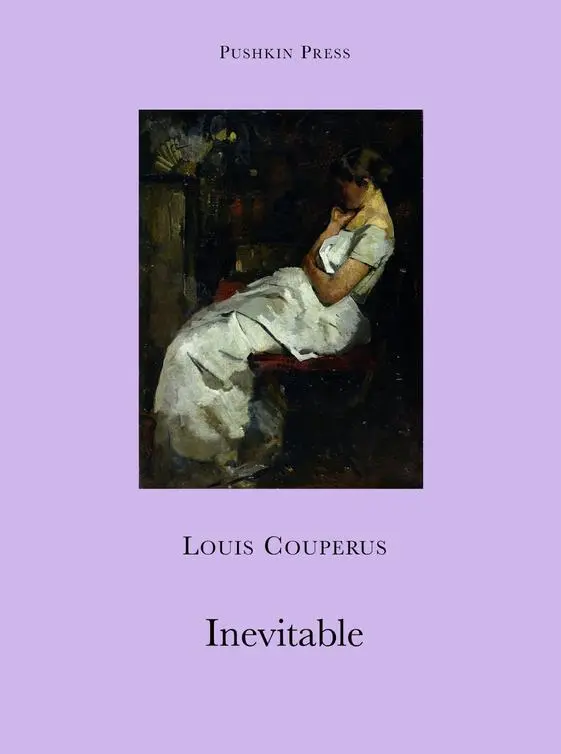
- Название:Inevitable
- Автор:
- Издательство:Pushkin Press
- Жанр:
- Год:2013
- ISBN:9781908968562
- Рейтинг книги:4 / 5. Голосов: 1
-
Избранное:Добавить в избранное
- Отзывы:
-
Ваша оценка:
Inevitable: краткое содержание, описание и аннотация
Предлагаем к чтению аннотацию, описание, краткое содержание или предисловие (зависит от того, что написал сам автор книги «Inevitable»). Если вы не нашли необходимую информацию о книге — напишите в комментариях, мы постараемся отыскать её.
Inevitable — читать онлайн бесплатно полную книгу (весь текст) целиком
Ниже представлен текст книги, разбитый по страницам. Система сохранения места последней прочитанной страницы, позволяет с удобством читать онлайн бесплатно книгу «Inevitable», без необходимости каждый раз заново искать на чём Вы остановились. Поставьте закладку, и сможете в любой момент перейти на страницу, на которой закончили чтение.
Интервал:
Закладка:
She went out for a little while that afternoon, but soon returned home, telling him that she had sold the bracelets and that he now need not worry. And she sang and moved cheerfully about the studio. She had bought some things: an almond cake, rusks, half a bottle of port. She had brought them home in a basket and sang as she unpacked them. Her liveliness roused him: he got up and suddenly positioned himself in front of Banners . He looked at the light and reckoned that he still had an hour left to work. A wave of delight rose in him as he surveyed the watercolour: there were lots of good, beautiful things in it. It had breath and delicacy; it was modern without the gimmicks of modernism: there was a thought in it and yet a purity of a line and grouping. And the colour had a calm distinction: purple and grey and white; violet and grey and white; dark, dusk, light; night, dawn, day. The day particularly, the day dawning up there on high, was full of a white, confident sun: a white certainty, in which the future became clear. But the streamers, flags and standards and banners were like a cloud, fanning out with heraldic pride over the ecstatic heads of the women fighters …He sought out his colours, sought out his brushes, and worked solidly until there was no light left. And he sat down beside her, happy, content. In the twilight they drank some of the port and ate some of the cake. He had an appetite, he said: he was hungry …
At seven there was a knock at the door. He started, went to the door, and the prince came in. Duco’s forehead clouded, but the prince saw nothing in the darkening studio. Cornélie lit a lamp.
“ Scusi , prince,” she said. “I’m embarrassed to say that Duco doesn’t feel like going out — he’s been working and is tired — I had no one to take a message to you to say we could not accept your invitation.”
“But you can’t be serious! I had so looked forward to seeing you both. What else am I to do with my evening …?”
And with his torrent of words, his complaints of a spoiled child wanting its own way, he began to persuade the reluctant, stiff Duco. Duco finally got up, shrugged his shoulders, smiled pityingly, almost insultingly, but gave way. But he could not suppress his feeling of reluctance; his jealousy at the swift repartee of Cornélie and the prince was still intense, like a pain. In the restaurant he was silent at first. Still, he made an effort to join in the conversation, remembering what Cornélie had said to him on that momentous day in the osteria : that she loved him , Duco; that she looked up to him, that she did not even compare the prince with him; but … that he was not cheerful and witty … And feeling his superiority because of that memory, despite his jealousy he smiled and rather talked down to the prince and tolerated his charm and flirtatiousness, because it amused Cornélie, that quick wordplay and those snappy sentences succeeding each other like the dialogue in a French play.
XXX
THE NEXT DAY the prince was due to go to San Stefano and early in the morning Cornélie wrote him the following note:
Dear Prince,
I come to you with a request. Yesterday morning you were kind enough to offer me your help. At the time I felt able to refuse your friendly offer. But I hope that you will not find it terribly whimsical if today I turn to you to ask you to lend me what you were prepared to offer yesterday.
Lend me two hundred lire. I hope to be able to return them to you as soon as possible. Of course you need not keep it secret from Urania, but do not let Duco know about it. Yesterday I tried to sell my bracelets, but only sold one, for very little. The goldsmith was offering too low a price, but I was forced to part with one for forty lire, as I hadn’t a sou! And now I am appealing to your friendship and asking you to put the two hundred lire in an envelope and allowing me to collect them PERSONALLY from the concierge. Please accept my sheerest thanks in advance.
What an entertaining evening you provided us with yesterday. An hour or two of friendly chat over an excellent dinner does me the world of good. However happy I feel, our present situation with its money worries sometimes oppresses me, though I keep up appearances for Duco’s sake. Fretting about money disturbs his work and undermines his energy. That is why I talk to him as little as possible about it, and so ask you expressly to keep this small secret from him.
CORNÉLIE DE RETZ
When she went out later that morning she headed immediately for Palazzo Ruspoli.
“Has his Highness already left?”
The concierge bowed respectfully, familiarly.
“An hour ago, signora . His Excellency left behind with me a letter and a package, to give to you if you should call. Allow me to fetch them …”
He went and soon returned and handed Cornélie the package and letter. She went off down a side street of the Corso, opened the envelope and among a number of banknotes found a letter:
My Dear Madam,
I am so happy that you turned to me and I’m sure Urania will approve. I believe I am acting entirely in her spirit in sending you not two hundred, but a thousand lire, with the most humble request that you accept them and keep them for as long as you choose. Since I do not of course dare say: accept them as a gift. Still, I am bold enough to send you a souvenir. For when I read that you had felt obliged to sell your bracelet, the news pained me so terribly that without a second thought I dropped into Marchesini’s and as best I could chose a bracelet, which I beg you on my knees to accept. You must not refuse your friend this. Keep my bracelet secret from both Urania and Van der Staal.
Once again accept my deepest thanks for deigning to accept my help and rest assured that I greatly appreciate this token of your favour.
Your very humble servant,
VIRGILIO DI F B
Cornélie opened the package: in a velvet case she saw a bracelet in Etruscan style: a slim gold band set with pearls and sapphires.
XXXI
IN THE HEAT OF MAY the spacious studio, facing north, was cool, while the city outside was scorching. Duco and Cornélie did not go out before nightfall when they started thinking about going for dinner somewhere. Rome was quiet: Roman society was away, the tourists had gone. They saw no one and their days flowed past. He worked hard; Banners was finished: the two of them, arms around each other’s waists, her head on his shoulder, sat in front of it, with swelling, smiling pride in those final days before the watercolour was to be sent to the International Exhibition in Knightsbridge, London. There had never been such pure harmony in their feelings for each other, such a unity of like-mindedness as now when his great project was finished. He felt that he had never done such noble work, so sure and unhesitating, with such strength in himself and yet so tender, and he was grateful to her. He admitted to her that he would never have been able to work in this way if she had not shared his thoughts and feelings in the hours spent reflecting, the hours spent staring at the procession, the women’s theory that developed from the night that crumbled down in columns to the City of nothing but new whiteness and glowing glass buildings. His soul was at rest now that he had done such great and noble work. And both of them felt pride: pride in their lives, in their independence, in that work of lofty and distinguished art. In their happiness there was a large element of conceit and of looking down at people, the crowd, the world. Particularly for him. In her there was something quieter and more humble, though outwardly she showed herself as proud as he was. Her article on the Social Situation of the Divorced Woman had appeared as a pamphlet and had been a success. Her name was applauded among progressive women. But what she had done did not make her as proud as Duco’s art made her, and proud of him, and proud of their life and happiness.
Читать дальшеИнтервал:
Закладка:
Похожие книги на «Inevitable»
Представляем Вашему вниманию похожие книги на «Inevitable» списком для выбора. Мы отобрали схожую по названию и смыслу литературу в надежде предоставить читателям больше вариантов отыскать новые, интересные, ещё непрочитанные произведения.



Обсуждение, отзывы о книге «Inevitable» и просто собственные мнения читателей. Оставьте ваши комментарии, напишите, что Вы думаете о произведении, его смысле или главных героях. Укажите что конкретно понравилось, а что нет, и почему Вы так считаете.