Louis Couperus - Inevitable
Здесь есть возможность читать онлайн «Louis Couperus - Inevitable» весь текст электронной книги совершенно бесплатно (целиком полную версию без сокращений). В некоторых случаях можно слушать аудио, скачать через торрент в формате fb2 и присутствует краткое содержание. Год выпуска: 2013, ISBN: 2013, Издательство: Pushkin Press, Жанр: Классическая проза, на английском языке. Описание произведения, (предисловие) а так же отзывы посетителей доступны на портале библиотеки ЛибКат.
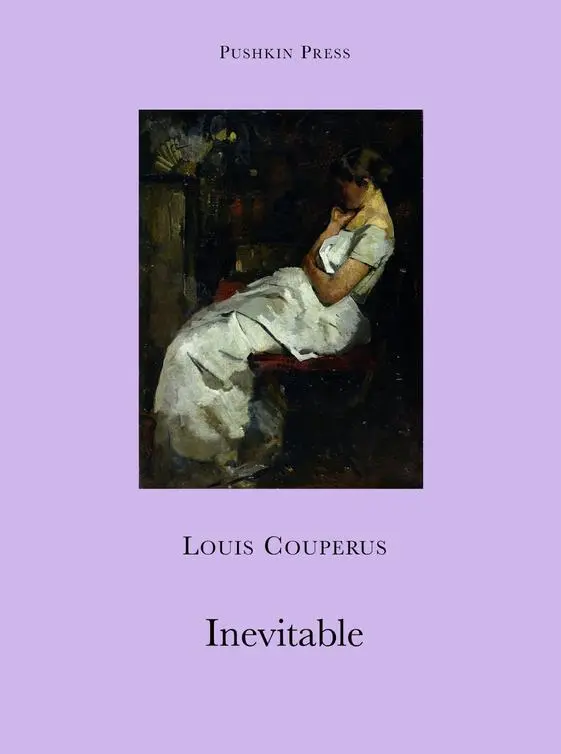
- Название:Inevitable
- Автор:
- Издательство:Pushkin Press
- Жанр:
- Год:2013
- ISBN:9781908968562
- Рейтинг книги:4 / 5. Голосов: 1
-
Избранное:Добавить в избранное
- Отзывы:
-
Ваша оценка:
Inevitable: краткое содержание, описание и аннотация
Предлагаем к чтению аннотацию, описание, краткое содержание или предисловие (зависит от того, что написал сам автор книги «Inevitable»). Если вы не нашли необходимую информацию о книге — напишите в комментариях, мы постараемся отыскать её.
Inevitable — читать онлайн бесплатно полную книгу (весь текст) целиком
Ниже представлен текст книги, разбитый по страницам. Система сохранения места последней прочитанной страницы, позволяет с удобством читать онлайн бесплатно книгу «Inevitable», без необходимости каждый раз заново искать на чём Вы остановились. Поставьте закладку, и сможете в любой момент перейти на страницу, на которой закончили чтение.
Интервал:
Закладка:
It was then that Cornélie, who had no thought of The Hague, received a letter from home. The letter was from her father and was several pages long, which surprised her, since he never wrote. What she read alarmed her greatly, but did not entirely discourage her, perhaps because she did not appreciate the full weight of her father’s news. He begged her for forgiveness. He had been in financial difficulties for quite some time. He had lost a great deal. They had to move, to a smaller house. The mood at home was bitter; mama was crying all day, the sisters squabbling; the family was giving advice; their friends were being unpleasant. And he begged her forgiveness. He had speculated and lost. And he had also lost her small amount of capital that he was administering, the legacy from her godmother. He asked her not to blame him too much. It might have turned out differently and then he would have been three times as rich. He admitted that he had acted wrongly — but he was still her father and he asked her, his child, to forgive him and return.
She was badly shaken at first, but soon regained her calm. She was in too happy a mood of harmonious existence for her father’s news to destroy it. She received the letter in bed, and stayed there for a little, thought it over, then got dressed, ate as usual and went to Duco. He received her enthusiastically and showed her three new sketches … She reproached him gently for allowing himself to be distracted too easily from his main idea, and said that these digressions would drain his energy and stamina. She urged him in particular to keep working on Banners . And she looked intently at the great watercolour, at the ancient, crumbling Forum-like city; the procession of the women towards the Metropolis of the Future, up there in the days of light … And suddenly it dawned on her that her past too had collapsed and that the crumbling arches were hanging threateningly over her head. She gave him her father’s letter to read. He read it twice, looked at her in bewilderment, and asked what she was going to do. She said that she had already thought about it, but that for the moment all she was sure of was what she would do immediately. Give up her rooms and move in with him in his studio. She had just enough to pay for her rooms. But then she would be penniless. Completely penniless. She had never wanted alimony from her husband. She was just waiting for the fee from her article. He immediately put out his hands to her, drew her to him, kissed her and said that he had immediately had the same idea. Move in with him. Live with him. He had enough: a trifling inheritance from his father; he was earning on top of that: he would have enough for both of them. And they laughed and kissed and looked around the studio. Duco slept in a small adjoining cubicle, rather like a long built-in wardrobe. And they looked round to see what they could do. Cornélie had the answer: here, drape a curtain over a cord and put the bed and washbasin behind it. That was all she needed. Just that little alcove; otherwise Duco would not have proper light. They were very cheerful and thought it was a very cosy idea. They immediately went out, bought an iron bed, a washstand, and hung up the curtain themselves. Then they both went to pack cases in Via dei Serpenti — and dined in the osteria . Cornélie suggested eating at home occasionally, as it was cheaper … When they got home she was delighted that her construction took up so little space, scarcely a couple of square metres, with the little bed behind it. They were very merry that evening. Their bohemian existence amused them. They were in Italy, the land of sunshine, beauty and lazzaroni , beggars dreaming on the steps of cathedrals, and they felt an affinity with that sunny poverty. They were happy, they didn’t need anything. They would live on nothing. On very little, at least. They faced the future smiling and lucid. They were closer now, they were living closer together. They loved each other and were happy, in a land of beauty, in an ideal world of symbols and life-embracing art.
The following morning he worked hard, without a word, lost in his dream, his work, and she too, silent, content, happy, carefully checked her blouses and skirts, and worked out that she would not need anything for a whole year, and that her old clothes were sufficient for their life of happiness and simplicity.
And she wrote a very short reply to her father, saying that she forgave him, felt sympathy for them all, but was not returning to The Hague. She would support herself, by writing. Italy was cheap. That was all she wrote. She did not mention Duco. She took leave of her family, in her mind and in life. She had not found any sympathy among any of them during her sad marriage, or during the agony of her divorce, and now she in turn felt no warmth. And her happiness made her one-sided and selfish. She wanted nothing but Duco, nothing but their togetherness and harmony. He worked and smiled at her now and then as she lay on the sofa and reflected. She looked at the women marching to battle; she too would not be able to remain lying on the sofa, she too would have to fight. She had a presentiment that she would have to fight: for him. He was now working in the art business, but if that, after a positive result, after a personal and public success, were to slacken off — for a moment — it would be normal and logical and she would have to fight. He was all that was noble in both their lives, his art could not support her. His fortune amounted to almost nothing. She would like to work and earn money for both of them, so that he could hold fast to the pure principles of his art. But how, how was one to fight, work, work for their lives and for a living? What could she do? Write? It paid so little. What else? A slight melancholy enveloped her, because there was so little she could do. She had some minor talents and skills: she had a good style, she sang, played the piano, she could make a blouse and she knew a little about cooking She would cook herself now and then and sew her own clothes. But all of that was so petty, so little. Fight, work? How? Well, she would do what she could. And suddenly she picked up a Baedeker, leafed through it and sat down at Duco’s desk, at which she also wrote. And she thought for a moment and began an article. A travel letter for a magazine on the area around Naples: that was easier than starting immediately on Rome. And in the studio, filled with the slight heat of a stove, as it was north-facing and chilly, it became absolutely still: only her pen scratched occasionally, or he rummaged among his crayons and pencils. She wrote a few pages but could not find an ending … Then she got up and he turned and smiled at her: his smile of affectionate happiness …
And she read out what she had written to him. It was not the style of her pamphlet. It was not invective: it was a sweet travel letter …
He quite liked it, but did not think it anything special … But it didn’t have to be, she said defensively. And he hugged her, for her hard work and courage. It rained that day and they did not go out for their lunch; she had some eggs and tomatoes and made an omelette on a paraffin stove. They drank only water and ate lots of bread with it. And while the rain lashed the large, uncurtained studio window, they enjoyed their meal, like two birds huddling close together to avoid getting wet.
XXVIII
IT WAS A COUPLE OF MONTHS after Easter: the spring days of May. The flood of tourists had subsided immediately after the great church festivals and Rome was already very hot and became very quiet. One morning, as Cornélie was crossing Piazza di Spagna, where the sunshine flowed along the creamy yellow facade of Trinità de’ Monti, down the monumental staircase, where only a few beggars and a last flower boy sat dreamily blinking in a corner, she saw the prince coming towards her. He greeted her with a happy smile and hastened toward her.
Читать дальшеИнтервал:
Закладка:
Похожие книги на «Inevitable»
Представляем Вашему вниманию похожие книги на «Inevitable» списком для выбора. Мы отобрали схожую по названию и смыслу литературу в надежде предоставить читателям больше вариантов отыскать новые, интересные, ещё непрочитанные произведения.











Обсуждение, отзывы о книге «Inevitable» и просто собственные мнения читателей. Оставьте ваши комментарии, напишите, что Вы думаете о произведении, его смысле или главных героях. Укажите что конкретно понравилось, а что нет, и почему Вы так считаете.