Louis Couperus - Inevitable
Здесь есть возможность читать онлайн «Louis Couperus - Inevitable» весь текст электронной книги совершенно бесплатно (целиком полную версию без сокращений). В некоторых случаях можно слушать аудио, скачать через торрент в формате fb2 и присутствует краткое содержание. Год выпуска: 2013, ISBN: 2013, Издательство: Pushkin Press, Жанр: Классическая проза, на английском языке. Описание произведения, (предисловие) а так же отзывы посетителей доступны на портале библиотеки ЛибКат.
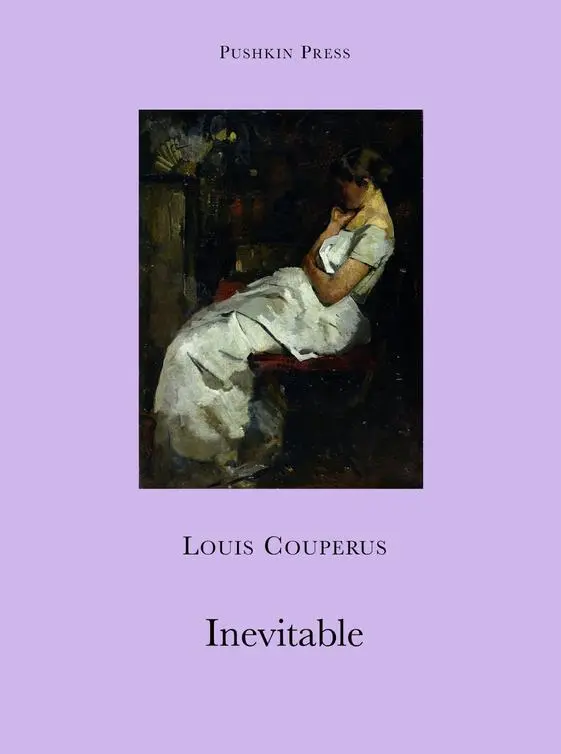
- Название:Inevitable
- Автор:
- Издательство:Pushkin Press
- Жанр:
- Год:2013
- ISBN:9781908968562
- Рейтинг книги:4 / 5. Голосов: 1
-
Избранное:Добавить в избранное
- Отзывы:
-
Ваша оценка:
Inevitable: краткое содержание, описание и аннотация
Предлагаем к чтению аннотацию, описание, краткое содержание или предисловие (зависит от того, что написал сам автор книги «Inevitable»). Если вы не нашли необходимую информацию о книге — напишите в комментариях, мы постараемся отыскать её.
Inevitable — читать онлайн бесплатно полную книгу (весь текст) целиком
Ниже представлен текст книги, разбитый по страницам. Система сохранения места последней прочитанной страницы, позволяет с удобством читать онлайн бесплатно книгу «Inevitable», без необходимости каждый раз заново искать на чём Вы остановились. Поставьте закладку, и сможете в любой момент перейти на страницу, на которой закончили чтение.
Интервал:
Закладка:
“Prince,” she said at once, “this has got to stop.”
“What?”
“No more visits, no jokes, no gifts, no dinners in the Grand-Hôtel and no champagne.”
“Why not?”
“The princess-to-be does not want it.”
“Is she jealous?” Cornélie told him about the scene.
“And you can’t even walk beside me.”
“Yes I can.”
“No, no.”
“I’m going to anyway.”
“So male rights, might is right?”
“Exactly.”
“My vocation is to fight against them. But for today I’m being unfaithful to my vocation.”
“You are utterly charming … as always.”
“You mustn’t say that any more.”
“She’s a nuisance, Urania … Tell me, what do you advise me? Should I marry her?”
Cornélie burst out laughing.
“You’re both asking my advice!”
“Yes, yes, what do you think?”
“Of course, marry her!”
He failed to see her contempt.
“Exchange your coat-of-arms for her purse,” she went on, amid gales of laughter.
Now he glimpsed it.
“You despise me, both of us perhaps.”
“Oh no …”
“Tell me you do not despise me.”
“You want to know my opinion. Urania is the sweetest, nicest girl, but should not travel alone. And you …”
“And I?”
“You are a charming fellow. Buy those violets for me, will you …”
“At once, at once.”
He bought the bouquet.
“You love violets, don’t you …”
“Yes. This must be your second … and last gift. This is the parting of the ways.”
“No, I’ll see you home.”
“I’m not going home.”
“Where then?”
“I’m going to the osteria . Mr Van der Staal is waiting for me there.”
“Lucky man!”
“You really think so?”
“How could it be otherwise?”
“I don’t know. Goodbye, your Highness.”
“Invite me,” he begged. “Let me have lunch with you.”
“No,” she said seriously. “Definitely not. It’s better if you don’t. I think …”
“What …”
“That Duco is just like Urania …”
“Jealous? …When will I see you again then?”
“Really, it’s better if you don’t … Goodbye, your Highness. Merci … for the violets.”
He bent over her hand. She made her way to the osteria and saw that Duco had seen their farewell through the window.
XXIV
DUCO WAS SILENT and nervous at table. He played with his bread and his fingers were trembling. She felt that something was troubling him.
“What is it?” she asked sweetly.
“Cornélie,” he said, full of emotion. “I have to speak to you.”
“What about?”
“It’s not right.”
“In what way?”
“With the prince. You’ve seen through him, and yet … yet you go on tolerating him, you keep meeting him … Let me finish,” he said, looking around: there were only two Italians in the restaurant, at the table furthest from them, and he could speak without fear of eavesdropping. “I want to finish,” he repeated, as she was about to interrupt him. “Of course you’re free to do as you please. But I’m your friend and I want to advise you. What you’re doing isn’t right. The prince is a blackguard. Ignoble, base … How can you accept gifts and invitations from him? Why did you force me to go with you yesterday evening? That whole dinner was torture for me. You know how much I love you — why shouldn’t I admit it. You know how highly I value you. I can’t bear to see you demeaning yourself with him like that. Let me speak. Demean, I said. He’s not worthy to tie your shoelaces. And you play with him, you banter with him, you flirt … Let me speak: you flirt with him. What do you care about him, that conceited twit. What is he in your life. Let him marry Miss Hope, what do you care about either of them? What do you care about those inferior people, Cornélie? I despise them and so do you. I know. So why do you cross their path? Let them live in their vain world of tides and money, what do you care? I don’t understand you. Oh, I know: you can’t be understood, you are everything that is woman. And I love everything of you that I see: I love you in everything … It doesn’t matter if I don’t understand. Yet I feel that this isn’t right. I’m asking you not to see the prince again. Have nothing more to do with him. Cut him dead … That dinner yesterday was torture …”
“You poor thing,” she said softly and filled his glass from their flask. “But why?”
“Why? Why? You’re demeaning yourself.”
“I’m not that exalted … No, now I want to speak. I’m not on a pedestal. Just because I have a few modern ideas, and a few others that are more liberal than those of the mass of women? Apart from that I’m an ordinary woman. If a man is jovial and witty, it amuses me. No, Duco, I’m speaking. I don’t find the prince a blackguard, I think maybe he’s conceited, but I think he’s jovial and witty. You know that I’m very fond of you too, but you’re neither cheerful nor witty. You’re much more. I won’t even compare il nostro Gilio with you … I don’t want to say anything more about you, otherwise you’ll get pedantic. But you’re not cheerful or witty. And my poor nature sometimes needs those things. What is there in my life? Nothing but you, only you. I am very happy to have your friendship, I am happy to have met you. But why can’t I be cheerful occasionally. Really, there’s a light-hearted side to me, frivolous even … Must I fight against it? Is it bad? Tell me, Duco, am I bad?”
He gave a melancholy smile, a moist sheen lay across his eyes and he did not answer.
“I can fight, if I have to,” she continued. “But is this something to fight against? It’s a moment’s froth. Nothing more. I’ve forgotten about it instantly. I’ve forgotten about the prince instantly. And you I don’t forget.”
He looked at her and beamed.
“Do you understand? Do you feel that I don’t flirt and play the coquette with you? Hold my hand, don’t be angry any more …”
She stretched out her hand to him across the table and he squeezed her fingers.
“Cornélie,” he continued softly. “Yes, I feel that you are genuine. Cornélie, marry me.”
She looked earnestly straight ahead, dropped her head a little and stared straight in front of her. They were no longer eating. The two Italians got up, said goodbye and left. They were alone. The waiter had put out some fruit for them and withdrawn.
They were both silent for a moment. Then she spoke in a very soft voice and with such an air of tender melancholy that he could have burst into sobs of adoration.
“Of course I knew you would ask me that one day. It was in the nature of things. A great friendship like ours led naturally to that question. But it’s impossible, my dear Duco … It’s impossible, my dear boy … I have my ideas … but it’s not that. I’m against marriage …but it’s not that. In some cases a woman betrays all her ideals in a single instant … What is it then …?”
She stared wide-eyed, brushed her forehead, as if she could not see clearly … Still, she continued:
“The thing is … that I’m afraid of marriage. I’ve known it, I know what it is … I can see my husband clearly in front of me right now. I can see that habit, that drudgery in front of me, in which all nuance is erased. That’s what marriage is: habit, drudgery. And now I’ll tell you frankly: I think marriage is disgusting. I think that habit is disgusting. I think passion is beautiful, but marriage isn’t passion. Passion can be noble, and superhuman, but marriage is a human institution of petty human morality and calculation … And I’ve become afraid of such wise moral bonds. I have promised myself — and I think I shall keep that promise — never to marry again. My whole nature has become unsuitable. I am no longer the young girl from The Hague with her soirées and dinners, on the look-out for a husband, together with her parents … My love for him was passion! And in my marriage he wanted to bridle that passion till it became drudgery and habit. I rose up … Don’t let me talk about it. Passion is too short-lived to fill a marriage … Respect afterwards, etcetera? There’s no need to get married for that. I can respect, even unmarried. Of course, there is the question of children, there are all kinds of difficulties …I can’t think that through now. I just feel now, very seriously and calmly, that I am unsuited to marriage, and never want to marry again. I wouldn’t make you happy … Don’t be sad, Duco. I love you, you are dear to me. And perhaps … I’ve met you at the right moment. If I had met you earlier in my Hague days … you would certainly have been too high for me to aspire to. I wouldn’t have come to love you. Now I can understand you, respect you and look up to you. I’m saying this to you quite simply, that I love you and look up to you, look up to you, for all your softness, in a way that I never looked up to my husband, however much he asserted his masculine rights. And you must believe, with great firmness, that I am telling the truth. Flirting … is something I do only with Gilio …”
Читать дальшеИнтервал:
Закладка:
Похожие книги на «Inevitable»
Представляем Вашему вниманию похожие книги на «Inevitable» списком для выбора. Мы отобрали схожую по названию и смыслу литературу в надежде предоставить читателям больше вариантов отыскать новые, интересные, ещё непрочитанные произведения.


Обсуждение, отзывы о книге «Inevitable» и просто собственные мнения читателей. Оставьте ваши комментарии, напишите, что Вы думаете о произведении, его смысле или главных героях. Укажите что конкретно понравилось, а что нет, и почему Вы так считаете.