Pearl Buck - Bridge for Passing
Здесь есть возможность читать онлайн «Pearl Buck - Bridge for Passing» весь текст электронной книги совершенно бесплатно (целиком полную версию без сокращений). В некоторых случаях можно слушать аудио, скачать через торрент в формате fb2 и присутствует краткое содержание. Год выпуска: 2013, Издательство: Open Road Media, Жанр: Классическая проза, Биографии и Мемуары, на английском языке. Описание произведения, (предисловие) а так же отзывы посетителей доступны на портале библиотеки ЛибКат.
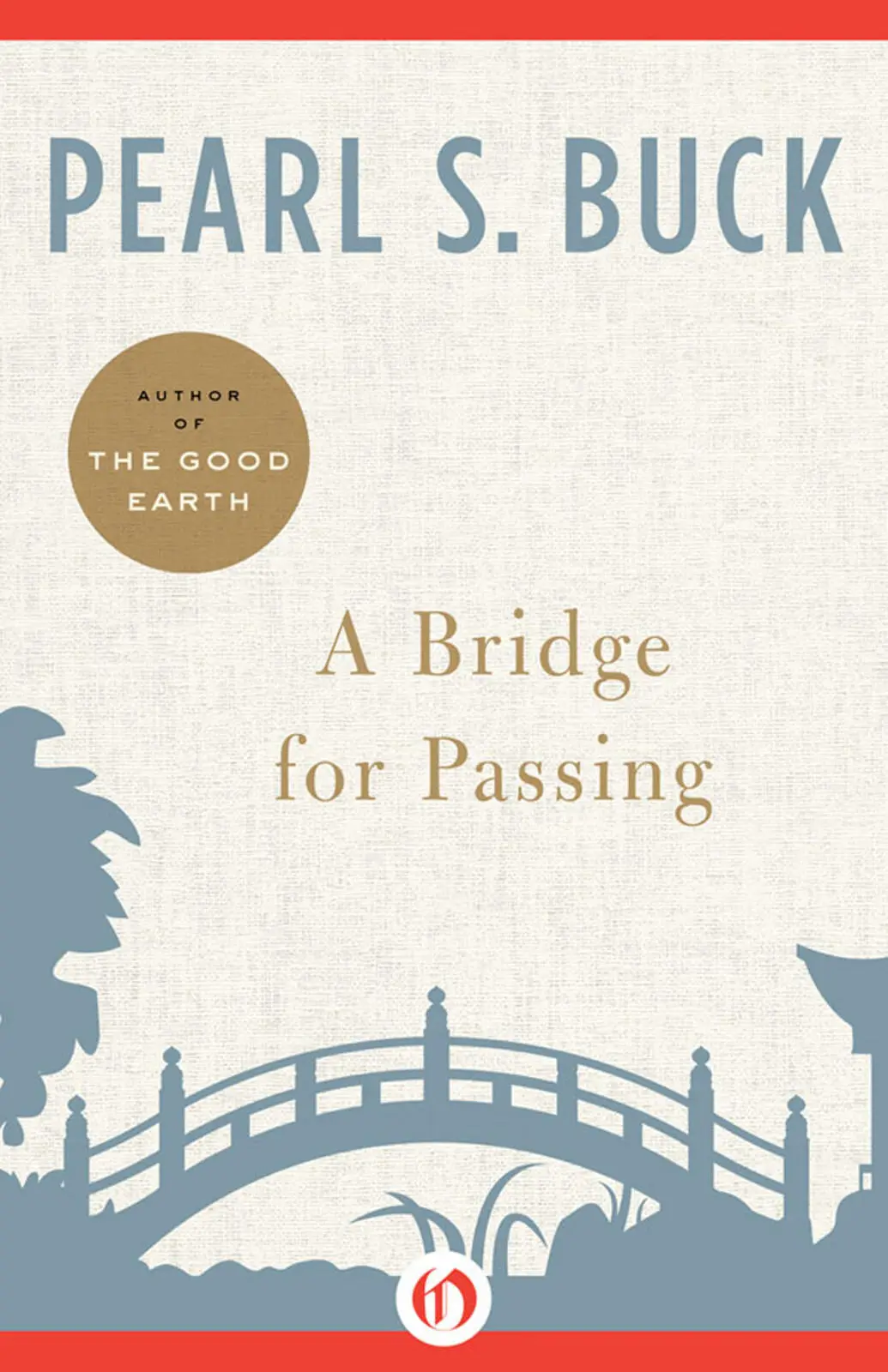
- Название:Bridge for Passing
- Автор:
- Издательство:Open Road Media
- Жанр:
- Год:2013
- ISBN:нет данных
- Рейтинг книги:3 / 5. Голосов: 1
-
Избранное:Добавить в избранное
- Отзывы:
-
Ваша оценка:
Bridge for Passing: краткое содержание, описание и аннотация
Предлагаем к чтению аннотацию, описание, краткое содержание или предисловие (зависит от того, что написал сам автор книги «Bridge for Passing»). Если вы не нашли необходимую информацию о книге — напишите в комментариях, мы постараемся отыскать её.
Bridge for Passing — читать онлайн бесплатно полную книгу (весь текст) целиком
Ниже представлен текст книги, разбитый по страницам. Система сохранения места последней прочитанной страницы, позволяет с удобством читать онлайн бесплатно книгу «Bridge for Passing», без необходимости каждый раз заново искать на чём Вы остановились. Поставьте закладку, и сможете в любой момент перейти на страницу, на которой закончили чтение.
Интервал:
Закладка:
Certainly I enjoyed sitting in on the casting. We were given office space in the handsome building owned by our Japanese co-producers, and each day I went there early and stayed late, looking, listening, judging, disapproving or approving, while those in command gave auditions to actors and actresses, adults and children. Our first concern was to find the children, two boys, two girls, who were to begin the story. Therefore children came to us, accompanied by mothers.
I have seen many stage children, and they can be sad children. These Japanese stage children, however, were not sad. They were like all other Japanese children, healthy and happy and exuding a general atmosphere of being much loved. Neither they nor their mothers were tense, as so many of our American stage children and mothers are tense, which difference I can only ascribe to the possibility that competition is not as important in Japanese life as it is in ours, and the desire to excel is second to the consideration of human feelings.
They came in, one after the other, each mother unobtrusively following her particular star, and they bowed with the grace bestowed by that extra hinge which seems to have developed in the Japanese back. It is unique, this bow. The Chinese bobs his head cheerfully at greeting and parting and the Korean makes a proud inclination. The Japanese performs obeisance, deep but also proud.
Only one boy in the endless procession seemed reluctant or rebellious. He came in early one morning, flanked by his mother and his aunt, the only boy who needed the escort of two women and it soon became evident why. He was a handsome fellow, but sulky, his bow was just short of courtesy and at first he would not talk. His mother and his aunt, in gentle distress and apology for such behavior, informed us eagerly that he was a champion swimmer. This was good, the part called for a good swimmer and we congratulated the boy, who only continued to look sulky. We invited him to sit down and he sat down, still sulky. He condescended, after several whispered pleadings from his lady relatives, to answer our questions briefly — too briefly — all the time staring at the wall. Yes, he said in answer to direct question, he was in school — Japanese school. Yes, he did speak English — sometimes. He had been three and a half years in Cairo, Egypt, and there he went to English school but he preferred not to speak English. … He liked Japanese school better than English school. … He did not wish to remember Cairo. Well, it was a city, and that’s all. … He grew more and more sulky. Something occurred to us. We put a final question.
“Do you want to be in this motion picture?”
He lifted his head, his face brightened for the first time. He shouted.
“No!”
We put one more arrow question. “Do you ever want to be an actor?”
He shone now like a neon light. “No!”
We burst into laughter and he looked at us hopefully.
“The interview is over,” we told him, “and you are a wise man. You know what you don’t want.”
He tramped out, unsmiling, a lordly male, his female relatives trotting after him, pained but acquiescent. It was obvious that he had won a family victory and that he was accustomed to such victories.
Days passed and the actors narrowed down to the impossibles and the possibles, the latter by far the smaller group. Japan has many excellent actors of both sexes and all ages, but we were looking for excellent actors who also spoke English, since the dialogue was to be in English. At first we hoped, unrealistically, that their English would be perfect. Later we merely hoped their English could be understood well enough so that it could give the illusion of Japanese.
Which illusion reminds me of an incident of my own life in China. I was stopping to rest one day at a wayside inn in a remote province. An old woman came to pour tea into my bowl. I thanked her in Chinese and asked her how she did. She stared at me in terror and dropped the teapot. “The gods save me,” she gasped. “What is the matter with me? I can understand English!”
Something of this we hoped to achieve, but there were times when we wondered if we were fools to hope. The variety of accents in English-speaking Japanese is astounding but they have one characteristic in common. The consonant “L” seems foreign to the Japanese ear as well as to the Japanese tongue.
In such diverting work the day passed until evening fell, and the trouble with every day was that at the end of it there was always night.
For the first time in my life I was sad when evening came. The others went to their husbands and wives, but I came back alone to my hotel room. The windows looked over the roofs of new Tokyo — as I have said, not beautiful, for there has not been time enough to create beauty. The city was hastily rebuilt after the war, a pity, for after it was thoroughly flattened by bombing it would have been well, if possible, to design a city with wide streets and parkways, a modern city but beautiful in the Japanese fashion. It was not done. The war had been harsh, people were desperate to begin living again, and the government was all but bankrupt. Houses went up helter-skelter. Today it is still almost impossible to find a house by its number or even by its street. One can only entrust one’s self to the unknown.
Evenings in lonely hotel rooms are impossible, at least for me. I had friends in plenty, and invitations in plenty, more than I could accept, but these did not fill the need. One had always to maintain a front, or a poise, and this could be done during the day’s work when the mind was engaged. It was different when one had to respond individually to others. In despair and loneliness I took to wandering the streets at night, unknown and free. Tokyo is rich in theaters and motion picture houses and usually I stopped by in one or the other. Though I did not understand the dialogue, the drift of the story was easy to catch, and I could be mildly amused, superficially at least, by what I saw. The houses were always packed, the audiences grave and intense until a comic moment brought loud, staccato laughter, stopped instantaneously by intent gravity again.
On one such evening I chanced to see an American woman of about my own age wandering as I was wandering. We stopped, startled each by the other, then I spoke. She was from Los Angeles, her husband had gone to Formosa, where she did not wish to follow, her daughter had a dinner date with a young American man, and she was indulging in a long-concealed wish to wander about Tokyo alone. By this time, however, she looked uncertain, though not frightened, and I proposed that we see the picture together, which we did, to our mutual enjoyment. The acquaintance ripened into a friendship, and later a dinner with her family, and another still later in Los Angeles. The point of this incident is that I did not realize how an American woman looks in a Japanese crowd. When I saw her, I forgot, of course, how I also looked among thousands of Japanese.
I had, actually, a warmly comfortable feeling when I was alone in a Japanese crowd. This must have been a lingering memory of the atmosphere of my childhood when, accompanied by my Chinese nurse, I sat in a Chinese theater or out-of-doors on a village threshing floor or in a temple courtyard, to watch a play. The play was always the thing in China, and the star system was unknown, unless of course one went to Shanghai, or Peking, there to attend the performance of such a star as, for example, Mei Lan-fang, or Butterfly Wu. As a child I had no such privilege, but I enjoyed the miracle plays and the long historical dramas through which the Chinese everyday folk learned religion, philosophy and the history of their own people. They accepted me as a frequent member of the audience, and I lost myself, a fair-haired American child in the Asian multitude — a kindly multitude in those days and I was never held responsible for the sins of colonialism as all white folk are nowadays and by all Asians, it seems. I was conscious only of being surrounded by pleasant and humorous people. In Tokyo now I found the same people, though of a different nation and country, and they accepted me merely because they had become used to Americans as part of the world landscape. They know the best and the worst of us from the long years of the Occupation and we cannot surprise them any more, either by good or evil.
Читать дальшеИнтервал:
Закладка:
Похожие книги на «Bridge for Passing»
Представляем Вашему вниманию похожие книги на «Bridge for Passing» списком для выбора. Мы отобрали схожую по названию и смыслу литературу в надежде предоставить читателям больше вариантов отыскать новые, интересные, ещё непрочитанные произведения.









Обсуждение, отзывы о книге «Bridge for Passing» и просто собственные мнения читателей. Оставьте ваши комментарии, напишите, что Вы думаете о произведении, его смысле или главных героях. Укажите что конкретно понравилось, а что нет, и почему Вы так считаете.