Sergei Lebedev - Oblivion
Здесь есть возможность читать онлайн «Sergei Lebedev - Oblivion» весь текст электронной книги совершенно бесплатно (целиком полную версию без сокращений). В некоторых случаях можно слушать аудио, скачать через торрент в формате fb2 и присутствует краткое содержание. Город: New York, Год выпуска: 2016, ISBN: 2016, Издательство: New Vessel Press, Жанр: Историческая проза, Современная проза, на английском языке. Описание произведения, (предисловие) а так же отзывы посетителей доступны на портале библиотеки ЛибКат.
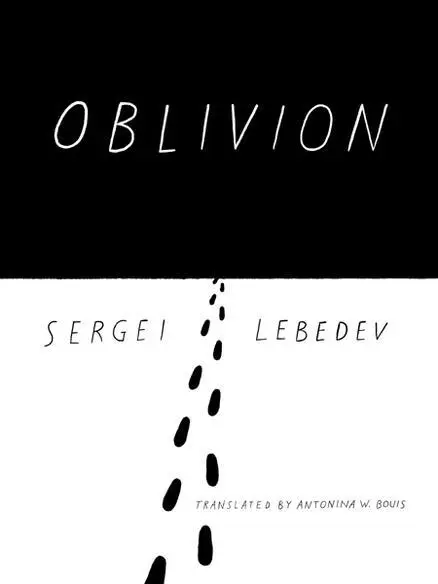
- Название:Oblivion
- Автор:
- Издательство:New Vessel Press
- Жанр:
- Год:2016
- Город:New York
- ISBN:978-1-939931-25-2
- Рейтинг книги:4 / 5. Голосов: 1
-
Избранное:Добавить в избранное
- Отзывы:
-
Ваша оценка:
Oblivion: краткое содержание, описание и аннотация
Предлагаем к чтению аннотацию, описание, краткое содержание или предисловие (зависит от того, что написал сам автор книги «Oblivion»). Если вы не нашли необходимую информацию о книге — напишите в комментариях, мы постараемся отыскать её.
Sergei Lebedev
Oblivion
Oblivion — читать онлайн бесплатно полную книгу (весь текст) целиком
Ниже представлен текст книги, разбитый по страницам. Система сохранения места последней прочитанной страницы, позволяет с удобством читать онлайн бесплатно книгу «Oblivion», без необходимости каждый раз заново искать на чём Вы остановились. Поставьте закладку, и сможете в любой момент перейти на страницу, на которой закончили чтение.
Интервал:
Закладка:
I saw that a great force of compulsion had erected the town, cleared the forest, laid the roads, dug the canals, and built the factories; but it turned out that compulsion is incapable of one thing: the effort a person brings to work freely chosen. Without that effort, without that bit of spiritual labor that merges with physical labor, all the roads, bridges, cities, and factories were held up only by the will of the state that had them built. When that will vanished, when its time has passed, people were left with a legacy of great construction in which spiritually they were not involved; they were left among houses, stations, and streets built under duress.
Sleeping in a room with a view of the wall was good; dreaming was a way of leaving the building. The dreams—the three dreams I had at home—did not come anymore; they could not exist in this hotel room, they were too personal for this commonplace setting; the dreams I had after the train were not even dreams but just preparation, clean sheets of paper for dreaming on which light, unrecognizable shadows flitted; I could not expect more than that for now.
I had decided ahead of time that I would not go looking for the man who wrote to Grandfather II right away; I wanted to see the town first, see its present—and only then disturb its past.
The town was named for a Bolshevik killed in the mid-1930s; the name of the town communicated nothing to the place, or the place to its name. They spoke different languages and avoided each other.
The area’s mountains bore names given to them by local ethnic groups; these names left the sensation of raw meat and gnawed bones in your throat; reading a dozen names in a row from the map was like drinking thick blood that was steaming in the cold; the names were redolent of campfire smoke, fish scales, rawhide, canine and human sweat, they were long and the syllables joined up like reindeer or dogs in harness.
The town name—two syllables, with an sk ending—gave away its alienness, the Bolshevik’s name looked good on a big map of the country where the names of his comrades formed a toponymic constellation, a lifetime and posthumous pantheon, but up close the name seemed ridiculous, a random collection of letters which the residents got used to and considered themselves dwellers of Abracadabra-sk.
All the original foundations of the town lay outside it, first it appeared in a plan, on a map, and only then in the area. No matter how it grew, how it developed, it remained a papier-mâché town. There were houses, stores, streets, trees, intersections, and streetlights—but it was inherently ephemeral; the town existed as long as the ore lasted next to it; of itself, without the ore, it meant nothing. It did not arise at a focus point of historical fates, or at the crossroads of trade and military interests, but near a giant pocket of land from which riches could be mined; it was created according to the will of the regime that moved thousands of workers to the north, it grew out of barracks, temporary huts, and that spirit had not dissipated; stale, uninhabited, the spirit of a new construction, of a workshop, oiled rags, and rotting pipes.
I left the hotel in search of the library; I hoped to read something written by regional historians and then to go find the city museum, if there was one.
It was too dark to read in the library, damp and green; there were flowers everywhere in pots, vines, sharp-leaved plants, and the books seemed to get lost in the jungle; the librarian, who did not see me, walked past with her watering can, and the pots stood as if she was watering books instead of flowers, adding the water of words to old, dried out volumes. The wall calendar was from two years ago; charts with letters— А, Б, В —stuck out from the shelves into the aisles, rabbit ears of the alphabet; it was classroom-like, pathetic.
There were no works on the town history in the library; instead, the librarian showed me old editions, prerevolutionary and from the 1920s, with half-erased ex libris inscriptions; books were taken away from those sent here, and that created the first collection for the library.
Local history could be learned only from the newspaper archives. The pages, as fragile as dried seaweed, kept the hieroglyphs of the past’s daily news; photographs turned into black-and white underwater photography; you could barely make out a few details—the corner of a house, a man’s silhouette, but that was all—through a murky substance, like water at a silty river bottom; the view into the photograph was the view through the glass of a diving suit—you expected a deep-water fish to swim by, a bottom angler with glassy beads on its whiskers. I realized the substance was time, and I was a diver who could speak only to himself—the deep diving suit does not let sound escape.
The newspapers lay before me, but they did not let me inside; they joined up in columns of letters, bristled with names, details, dates, decrees, announcements, and holiday editorials; Dumin’s brigade overfulfilled the plan for skidding logs, excavator Rutin got a state award, the separation line was started up in Mine 3a—the newspaper pages reported only ancient news, news, news; news items crowded, chatted, hustled one another, there were so many, as if everything done was done for the sake of creating news, and even better, for creating two or three stories, news that the previous story, just a day later, was obsolete and here is something even newer; the newspaper pages flashed by like an express train you couldn’t jump on to from the platform. The surnames and names also flashed by, unless it was an article about some production worker; the thin sheet of paper—a vertical slice of time a micron thick—was stacked with others just like it, the newspaper lay in thick piles, but there was no temporal volume; I needed a book in three dimensions, a book as a collected, repackaged rethinking of time, but no one ever wrote a book about the town. “There isn’t enough of us for a book,” said the librarian. “We haven’t accumulated enough, we’re too thin on the ground, too thin.”
The library as entrée to the past did not work. The museum was even more hopeless; it was too new, that museum, and its creators were too concerned with having a good, trustworthy past; so the whole thing was a stage set, newly minted: the way restaurants are decorated in “olde time” fashion. In the middle there was a reconstruction of an earthen house in which the first settlers allegedly lived—they called the prisoners “settlers”; the house was made of first-class logs, with glass in the low windows, the roof covered with even sod; this was a historical attraction, an attempt to amend one’s genealogy.
A glass case displayed a kettle made out of a can, an explorer’s rubber boots chewed up by rats, a rusty lantern, and some other objects, real ones, not fakes, but placed under glass and brightly illuminated, they appeared to be frozen lumps of mud from a tractor rut exhibited in a museum for some reason. The past did not come closer, on the contrary, it was moving away, and the exhibits were presented as evidence of a civilization—earthly or not—to which we now living had no relation; “Look, they also had a life” said the glass cases, and the respectable present, ashamed of the rough past (which is why the earth house was made of the highest-quality wood) showed them in their best light and rushed to announce that the past was in the past and shoved it deeper away, into the stifling sack, the sleeve, the cellar.
Next to the cases representing the history of the town were cases with archeological exhibits; a spoon hand-carved out of wood, a lighter made out of a shell case—and nearby bone arrow and spearheads, sharpened cutting stones, fish bone needles, clay beads; it was strange to see that, despite the difference in intention and materials, both types of objects lagged behind us by an immeasurable period of time and were closer to each other than to us.
Читать дальшеИнтервал:
Закладка:
Похожие книги на «Oblivion»
Представляем Вашему вниманию похожие книги на «Oblivion» списком для выбора. Мы отобрали схожую по названию и смыслу литературу в надежде предоставить читателям больше вариантов отыскать новые, интересные, ещё непрочитанные произведения.




Обсуждение, отзывы о книге «Oblivion» и просто собственные мнения читателей. Оставьте ваши комментарии, напишите, что Вы думаете о произведении, его смысле или главных героях. Укажите что конкретно понравилось, а что нет, и почему Вы так считаете.