Sergei Lebedev - Oblivion
Здесь есть возможность читать онлайн «Sergei Lebedev - Oblivion» весь текст электронной книги совершенно бесплатно (целиком полную версию без сокращений). В некоторых случаях можно слушать аудио, скачать через торрент в формате fb2 и присутствует краткое содержание. Город: New York, Год выпуска: 2016, ISBN: 2016, Издательство: New Vessel Press, Жанр: Историческая проза, Современная проза, на английском языке. Описание произведения, (предисловие) а так же отзывы посетителей доступны на портале библиотеки ЛибКат.
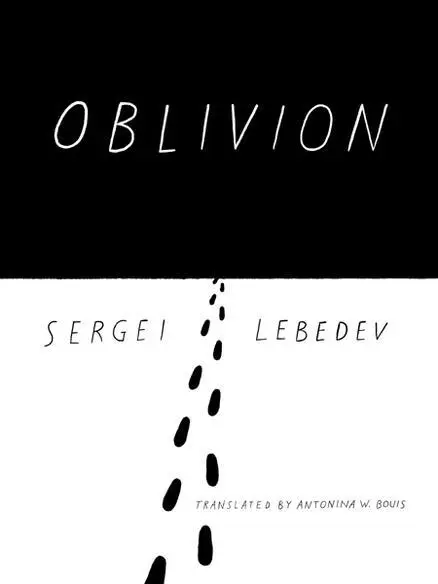
- Название:Oblivion
- Автор:
- Издательство:New Vessel Press
- Жанр:
- Год:2016
- Город:New York
- ISBN:978-1-939931-25-2
- Рейтинг книги:4 / 5. Голосов: 1
-
Избранное:Добавить в избранное
- Отзывы:
-
Ваша оценка:
Oblivion: краткое содержание, описание и аннотация
Предлагаем к чтению аннотацию, описание, краткое содержание или предисловие (зависит от того, что написал сам автор книги «Oblivion»). Если вы не нашли необходимую информацию о книге — напишите в комментариях, мы постараемся отыскать её.
Sergei Lebedev
Oblivion
Oblivion — читать онлайн бесплатно полную книгу (весь текст) целиком
Ниже представлен текст книги, разбитый по страницам. Система сохранения места последней прочитанной страницы, позволяет с удобством читать онлайн бесплатно книгу «Oblivion», без необходимости каждый раз заново искать на чём Вы остановились. Поставьте закладку, и сможете в любой момент перейти на страницу, на которой закончили чтение.
Интервал:
Закладка:
You couldn’t get to the quarry just like that, it was guarded—including against people like me, simple gawkers, who could be hurt in a blast; but the higher the fences and the more guards, the more varied the loopholes; I didn’t even have to search—any spot used frequently gives itself away, by a path leading to it, or clothing wrapped around bars that are just a little wider apart so that a person can squeeze through; or by signs of useless fortification, soldered strips of metal, piles of concrete beams, “no entry” signs; but there was a path that disappeared inside the labyrinth of beams; these people who erected these barriers also lacked vision with the correct resolving power, so there was always a crack—sidle in, losing buttons, pull yourself up, and get through somehow.
I met tramps collecting metal; old men going into the tundra for mushrooms—the road to the best mushroom places crossed the quarry; workers who had hidden something on their shift and now were back to retrieve it; kids—they were on their way to play at war; a couple looking for a trysting spot; they all squeezed in habitually, clambered, pushed, dragging in a basket or some bottles; the tramps were hauling a spool of wire; I used their path into the quarry.
I had seen quarries like this in Kazakhstan; but there it was hot, the air over the enormous pit boiled, turned white and opaque, and even the sound of the blasts were drowned, muffled by it. Here in the North, the pit opened all of itself at once, pulling you inside, into the five hundred-meter depth; the quarry was a mirror reflection—in terms of the earth’s surface—of the Tower of Babel, molded out of emptiness; the spirals of the quarry road, circling down from level to level, went to the bottom, so deep and narrow compared to the top of the quarry cut that there were only a few hours of sunlight a day down there.
The gray quarry cliffs were covered by a coat of very fine stone dust that had been wetted and then dried; this coating, with pulverized minerals weakly reflecting the sun, gave the quarry this color; dust covered the dump trucks, huge Belazes, excavators with toothed jaws; here, where there was no soil but only solid rock, the sophisticated human mind discovered its predatory nature; the technology was ready to bite, chew, dig in, crumple, blow up; this mind—I thought of the museum—was close to the mind of the Neanderthal but on a new spiral of development; a mind that combined the jaws of a saber-toothed tiger, neck of a giraffe, and body of a woolly mammoth to create a hybrid, the excavator with gaping jaw; a mind motivated by an insatiable, hopeless desire to devour.
My brain refused to recognize this five hundred-meter hole in the ground, these stalking excavators that embodied the stupid assiduousness of metal, as the work of humans. They must have been created by semirational animals or insects who preferred scale to accuracy or grace; creatures that did not know individuality and functioned only in quantity. The gigantic hole and the enormous trucks had a challenging but unarticulated manifesto, a heavy symbol; the practical meaning—extracting ore—took a backseat in this picture: human effort multiplied by mechanical power created inhuman effort and the quarry showed the volume and measure of that effort.
There must be proportions that keep things made by human hands commensurate with man and when violated turn those things against him. It was not that you feel like a grain of sand or a dust mote at the quarry. The violation of the principle of proportionality separates people from what they are doing; it deprives them of significance in terms of labor. In fact, labor as such vanishes, if we understand it as a living connection between the worker and the result of his work, a connection that is mutually enriching and ennobling.
The quarry boomed, thundered, and clanged metallically; the dump trucks and bulldozers bellowed, diesel exhaust floated in the air, water pumps rumbled; but the result was ephemeral: tons and percentages, units of measure.
The whole city—streets, windows, bread and vegetables on a counter—was covered with a coating of gray quarry dust, giving it an aspect of death, like the cheap powder at the morgue, for the excessive scale of labor here left its trace on the residents.
This was particularly noticeable in late August, on Miners Day. The whole city drank; they drank without abandon, ardor, zeal or the ordinary pleasure of drunkards. Time, as colorless as vodka, twisted like a filament in a bottle; the colorless day hung horribly, unnaturally long. Colorless people lay in the streets and others walked past; the connection of words fell apart, the alphabet fell apart, and people shouted and muttered vowels, clumps of words; the collapse of reason manifested in those sounds reached a peak. Then the final last silence settled over the town.
On the day meant to celebrate their work, their labor, people vented on themselves what they couldn’t vent at the quarry, workshops, and pipes; on the day of legal and even approved drunkenness people felt an outburst of definite, collected, and predetermined self-destruction; this kind of suicide is not tried by healthy people but by legless cripples already a third dead—they only need to kill two-thirds of themselves, death had done part of its work, and they set to it with determination and facility, knowing that the mortal path is a third shorter.
This was the ultimate rebellion, stifled almost in embryo; dozens of kilometers of tracks, hangars, pipe, factories, precipitation lakes, the quarry, the transporters of enrichment plants—it surrounded and divided up the city, it looked like a car after an accident in which living flesh is squashed and mutilated by metal. Only the quarry kept increasing, growing in width and depth, and all their labor went to using their own lives, the effort of the muscles, and the wear on their hearts to magnify the gaping hole in the ground. This was the most monstrous part––the extracted ore was broken up, turned into fertilizer, freight trains took it south—because what they saw, continually, daily, was the growing hole sucking up their work.
The slopes of the mountains around the quarry had been blown up and it was called the “avalanche zone.” You could see the thrusting chunks of cliff flesh from every point in the town, the twisted, unnaturally smashed rock, moved by the centrifugal energy of the blasts; the avalanche zone took up three sides of the city horizon, the blown-up cliffs huddled on the slopes as if beyond the point of equilibrium, frozen in midfall.
There are pictures, a combination of lines and angles, that humans should not see: looking at them is like chewing ground glass to see what flavor it is; they painfully damage the sensory foci of perception; the view of the avalanche zone was one such picture. The world after a catastrophe; the world cracked open, disjointed, with no possibility of bringing it together again; I was amazed to understand that the raw material extracted from the quarry is for fertilizer which is then sprinkled on fields; I saw the joyless cereals growing on those fields—as if sprinkled with ash from a crematorium.
The gray bread of my childhood, the loaves of bread on the bakery counters, people lining up an hour before opening, the line darker than twilight; women in gray scarves, men in gray coats, faces gray with lack of sleep, and the gray salted urban snow; I understood now where that bread had come from, delivered in vans that looked like Black Marias; where that ubiquitous gray came from—not in a belittling sense but grayness as the absence of color or as the color of dust.
You stood at the quarry edge and told yourself this is how hell looks; but the image of hell, the circles of hell marked by the spirals of the quarry road, came from culture; you were using it to save yourself from what could barely be described in artistic language, because the quarry was an anti-image, the negation of imagery as such.
Читать дальшеИнтервал:
Закладка:
Похожие книги на «Oblivion»
Представляем Вашему вниманию похожие книги на «Oblivion» списком для выбора. Мы отобрали схожую по названию и смыслу литературу в надежде предоставить читателям больше вариантов отыскать новые, интересные, ещё непрочитанные произведения.


Обсуждение, отзывы о книге «Oblivion» и просто собственные мнения читателей. Оставьте ваши комментарии, напишите, что Вы думаете о произведении, его смысле или главных героях. Укажите что конкретно понравилось, а что нет, и почему Вы так считаете.