Sergei Lebedev - Oblivion
Здесь есть возможность читать онлайн «Sergei Lebedev - Oblivion» весь текст электронной книги совершенно бесплатно (целиком полную версию без сокращений). В некоторых случаях можно слушать аудио, скачать через торрент в формате fb2 и присутствует краткое содержание. Город: New York, Год выпуска: 2016, ISBN: 2016, Издательство: New Vessel Press, Жанр: Историческая проза, Современная проза, на английском языке. Описание произведения, (предисловие) а так же отзывы посетителей доступны на портале библиотеки ЛибКат.
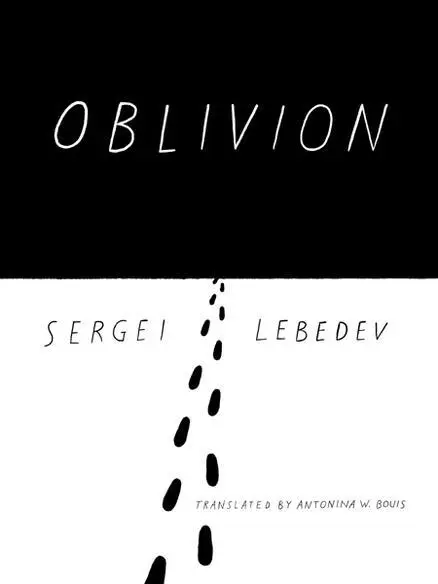
- Название:Oblivion
- Автор:
- Издательство:New Vessel Press
- Жанр:
- Год:2016
- Город:New York
- ISBN:978-1-939931-25-2
- Рейтинг книги:4 / 5. Голосов: 1
-
Избранное:Добавить в избранное
- Отзывы:
-
Ваша оценка:
Oblivion: краткое содержание, описание и аннотация
Предлагаем к чтению аннотацию, описание, краткое содержание или предисловие (зависит от того, что написал сам автор книги «Oblivion»). Если вы не нашли необходимую информацию о книге — напишите в комментариях, мы постараемся отыскать её.
Sergei Lebedev
Oblivion
Oblivion — читать онлайн бесплатно полную книгу (весь текст) целиком
Ниже представлен текст книги, разбитый по страницам. Система сохранения места последней прочитанной страницы, позволяет с удобством читать онлайн бесплатно книгу «Oblivion», без необходимости каждый раз заново искать на чём Вы остановились. Поставьте закладку, и сможете в любой момент перейти на страницу, на которой закончили чтение.
Интервал:
Закладка:
The canal led to the northern sea; its predecessors were ancient portage routes, the old river paths that were perhaps walked much more than dry land. Probably there was more unconscious symbolism in the creation of the canal—let the water through, let it flow rather than stand—than actual necessity; the locks with their added columns and arches, the temples of cargo delivery, the tabernacles of river ships—the life of the big country was supposed to flow into these parts through the canal, as if through a catheter; a cellulose paper plant was built on the shore of one of the lakes: the trees were cut down for the sake of the word, and power over these regions shifted from timber to paper.
Now the villages and towns were situated on two sides of the road—of the tracks and the canal; ships went past, trains went past—two flows, two directions, two currents bearing away; life gradually took on the features of platform and wharf, wharf and platform, depending on which way you turned; the residents were not fed by the land on which their houses stood but by the water and land roads; sometimes loaded, sometimes empty; the canal and railroad tracks were surrounded by zones of alienation, and the residents were icebound between the two zones.
The train reached a big station; twenty minutes’ wait and a locomotive change. On the low platform, shin-high, sellers bustled, knowing where the car doors would be; most were female, old women and kids; paastrees, paastrees, cowoldbeer, cowoldbeer, fish, fish, fish, kefir whowantskefir, berries, berries, hotpotates, hotpotates, getcher chips, chips, chips, mineral water—dozens of selling patters, pattering sellers, hurry-hurry, hurryitup, mister, wheresyourbag, costsmore withthejar, swallowing letters hungrily. But each face, every figure that had acquired the platform whirl and bustle suggested another face and figure—the real ones they would be back home; God knows what awaited them there—an old woman’s corner with a view of the empty vegetable plot, an apartment in a boarded-up two-story barracks, where everything is in everyone’s face, and the yellowed sheets of a bedridden man hang on the same wash line as the yellow diapers of an infant.
The locomotive was coupled, the conductors were hurrying people to get in, the sellers were rushing to the next track, the express was approaching from the north, its high beam and red double whiskers appeared around the turn, while I stood, finishing my cigarette; for some reason I always need to use up all the time allotted for a stop.
An old woman walked along the next platform; she carried a bouquet of peonies, the stems already fading and losing their firmness, but the flowers were still living, deep claret and fully opened. I knew those flowers—I had dug them out and rinsed the tangled roots in a pinkish manganese solution, the tubers like knotted flesh—and by early July the tight glossy buds exploded in a single day into large purple petals, tenfold folded, crumpled, and now falling apart like a pomegranate shattered by its overripeness, almost vulgar in its lack of restraint in proportion, but gorgeous because of that lack of strictness, lushness, loss of form, reduced by the glowing darkness of the depth of its color.
Peonies like that—I knew this—brought from the dacha were now flowering on Grandfather II’s grave, their sensitive leathery roots going deep; they are death flowers, which are not only appropriate in the face of a death, but somehow crown and attenuate it; the ones whose vegetative flesh is closest to human flesh and can therefore stand in for it in the funeral ritual, grow in the soil of the cemetery, which does not tolerate random plantings; claret peonies—tiny black ants often crawled into their buds; a dark spot on the green, a herald of future decay.
The old woman’s fingers clumsily held the flowers bound by a scrap of ribbon; the peonies were falling apart, bending in various directions, and it seemed that the same thing was happening inside the old woman: her life was about to fall apart, and the old woman was just trying to get into the cover of her house and be alone with the hardship of dying. The unsold flowers were in the way, her hands could not contain them, the hands were almost dead, life had gathered closer to the heart, to the belly.
I realized that I could not get into the train leaving her on the platform; I recognized her the way you recognize people who appear to us only a few times, and they are different, but in relation to use they are the same person—confidante, wordless advisor and comforter.
I had seen her only two times before—in the underground passage of the metro near my house. She healed me from the self-love of grief and self-reliance of insulted injury; they were late evenings of a hot and dusty summer and something was fermenting in people, flaring up in meaningless fights, or cursing, or broken glass; the air was stifling, flowers faded quickly, leaves drooped; I was coming home, wrapped up in my grief and injury, so furious that I was stumbling—everything was in the way, not handy, rubbing me the wrong way—and both times late in the metro passage the old woman was there dressed in a child’s knit cap and a very old dress, in the fashion of her youth, threadbare from washing. There was something of a fastidious mouse used to living with people about her; the gray hairs on her lip, the worn fabric where threads held other threads at a third of their power, her poor vision, her weakness, her clarity of mind in the tiny area, about the size of eyeglasses, of her daily cares. She stood there neither meekly nor pleadingly, but without catching anyone’s attention; before her on a cardboard box were seedlings of houseplants in plastic cups and separately in a jar the claw-like feather of a century plant.
She had meekness before God; we think that meekness means being ready to bear everything, but that is our pride speaking, our accountant’s concept of justice and revenge; true meekness is where the contradiction is gone—bear it or not, put up with it or not, where there is an equal possibility of one or the other—but you do not raise your voice against God. And meeting that old woman you knew that nothing would befall her in the nasty nighttime metro; all your injuries, anxieties, and sorrow were shamefully tiny in her presence—they became insignificant and nonexistent; just before you had been suffering, a cold, slippery, poisonous lump had filled your solar plexus, and now it was all gone.
“I’ll get there myself,” the old woman said on the platform, guessing my intention. I bought the peonies; the southbound express hid her from me, the step of my train car began to move.
It happens that an accidental meeting, for a short second, creates a nearness that does not occur in ordinary life; you suddenly learn that there are no distances, no defenses—they are illusory—there is only the most profound kinship; no risk is needed, no overcoming obstacles or going beyond your boundaries to meet another—the meeting has taken place; it is greater than any of us, we live inside it, we have already met; meeting is not an accident, it is a law, a means and an environment for existence: it is not between us, we are in it.
The train had left the station; the flowers were on the table in my compartment as a greeting and sign of farewell simultaneously in saturated colors of purplish claret.
The flowers breathed; their excessive sweetness reminded me of the cemetery, Grandfather II’s grave; evening was descending and the train flew out onto a bridge, and the bolted steel girders stood along the sides of the tracks like enormous letters. Below was the broad river, and the river was still, the current could be felt only near the bottom, under the tense smoothness of the water; the train moved for several minutes in emptiness, the bridge itself was not visible, only the supports and the river, and my heart beat harder, feeling this interruption. The river was turned to glass by the sunset and a long fishing boat powered by a single rower moved across the current, slowly, heavily, as if the oars were scooping mercury.
Читать дальшеИнтервал:
Закладка:
Похожие книги на «Oblivion»
Представляем Вашему вниманию похожие книги на «Oblivion» списком для выбора. Мы отобрали схожую по названию и смыслу литературу в надежде предоставить читателям больше вариантов отыскать новые, интересные, ещё непрочитанные произведения.









Обсуждение, отзывы о книге «Oblivion» и просто собственные мнения читателей. Оставьте ваши комментарии, напишите, что Вы думаете о произведении, его смысле или главных героях. Укажите что конкретно понравилось, а что нет, и почему Вы так считаете.