Charles Dickens - Barnaby Rudge
Здесь есть возможность читать онлайн «Charles Dickens - Barnaby Rudge» весь текст электронной книги совершенно бесплатно (целиком полную версию без сокращений). В некоторых случаях можно слушать аудио, скачать через торрент в формате fb2 и присутствует краткое содержание. Год выпуска: 2014, Издательство: epubBooks Classics, Жанр: Историческая проза, на английском языке. Описание произведения, (предисловие) а так же отзывы посетителей доступны на портале библиотеки ЛибКат.
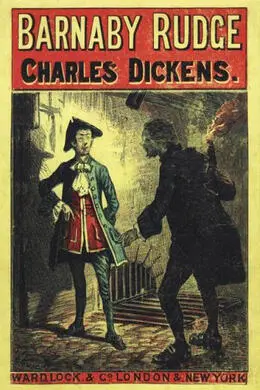
- Название:Barnaby Rudge
- Автор:
- Издательство:epubBooks Classics
- Жанр:
- Год:2014
- ISBN:нет данных
- Рейтинг книги:4 / 5. Голосов: 1
-
Избранное:Добавить в избранное
- Отзывы:
-
Ваша оценка:
Barnaby Rudge: краткое содержание, описание и аннотация
Предлагаем к чтению аннотацию, описание, краткое содержание или предисловие (зависит от того, что написал сам автор книги «Barnaby Rudge»). Если вы не нашли необходимую информацию о книге — напишите в комментариях, мы постараемся отыскать её.
Barnaby Rudge — читать онлайн бесплатно полную книгу (весь текст) целиком
Ниже представлен текст книги, разбитый по страницам. Система сохранения места последней прочитанной страницы, позволяет с удобством читать онлайн бесплатно книгу «Barnaby Rudge», без необходимости каждый раз заново искать на чём Вы остановились. Поставьте закладку, и сможете в любой момент перейти на страницу, на которой закончили чтение.
Интервал:
Закладка:
'Why, you wouldn't,' said the secretary, with his worst expression of face, and in his mildest tones, 'have anything to do, with—with death in it?'
'I don't know that,' replied Hugh. 'I'm open to orders. I don't care; not I.'
'Nor I!' vociferated Dennis.
'Brave fellows!' said the secretary, in as pastor–like a voice as if he were commending them for some uncommon act of valour and generosity. 'By the bye'—and here he stopped and warmed his hands: then suddenly looked up—'who threw that stone to–day?'
Mr Dennis coughed and shook his head, as who should say, 'A mystery indeed!' Hugh sat and smoked in silence.
'It was well done!' said the secretary, warming his hands again. 'I should like to know that man.'
'Would you?' said Dennis, after looking at his face to assure himself that he was serious. 'Would you like to know that man, Muster Gashford?'
'I should indeed,' replied the secretary.
'Why then, Lord love you,' said the hangman, in his hoarest chuckle, as he pointed with his pipe to Hugh, 'there he sits. That's the man. My stars and halters, Muster Gashford,' he added in a whisper, as he drew his stool close to him and jogged him with his elbow, 'what a interesting blade he is! He wants as much holding in as a thorough–bred bulldog. If it hadn't been for me to–day, he'd have had that 'ere Roman down, and made a riot of it, in another minute.'
'And why not?' cried Hugh in a surly voice, as he overheard this last remark. 'Where's the good of putting things off? Strike while the iron's hot; that's what I say.'
'Ah!' retorted Dennis, shaking his head, with a kind of pity for his friend's ingenuous youth; 'but suppose the iron an't hot, brother! You must get people's blood up afore you strike, and have 'em in the humour. There wasn't quite enough to provoke 'em to–day, I tell you. If you'd had your way, you'd have spoilt the fun to come, and ruined us.'
'Dennis is quite right,' said Gashford, smoothly. 'He is perfectly correct. Dennis has great knowledge of the world.'
'I ought to have, Muster Gashford, seeing what a many people I've helped out of it, eh?' grinned the hangman, whispering the words behind his hand.
The secretary laughed at this jest as much as Dennis could desire, and when he had done, said, turning to Hugh:
'Dennis's policy was mine, as you may have observed. You saw, for instance, how I fell when I was set upon. I made no resistance. I did nothing to provoke an outbreak. Oh dear no!'
'No, by the Lord Harry!' cried Dennis with a noisy laugh, 'you went down very quiet, Muster Gashford—and very flat besides. I thinks to myself at the time "it's all up with Muster Gashford!" I never see a man lay flatter nor more still—with the life in him—than you did to–day. He's a rough 'un to play with, is that 'ere Papist, and that's the fact.'
The secretary's face, as Dennis roared with laughter, and turned his wrinkled eyes on Hugh who did the like, might have furnished a study for the devil's picture. He sat quite silent until they were serious again, and then said, looking round:
'We are very pleasant here; so very pleasant, Dennis, that but for my lord's particular desire that I should sup with him, and the time being very near at hand, I should be inclined to stay, until it would be hardly safe to go homeward. I come upon a little business—yes, I do—as you supposed. It's very flattering to you; being this. If we ever should be obliged—and we can't tell, you know—this is a very uncertain world'—
'I believe you, Muster Gashford,' interposed the hangman with a grave nod. 'The uncertainties as I've seen in reference to this here state of existence, the unexpected contingencies as have come about!—Oh my eye!' Feeling the subject much too vast for expression, he puffed at his pipe again, and looked the rest.
'I say,' resumed the secretary, in a slow, impressive way; 'we can't tell what may come to pass; and if we should be obliged, against our wills, to have recourse to violence, my lord (who has suffered terribly to–day, as far as words can go) consigns to you two—bearing in mind my recommendation of you both, as good staunch men, beyond all doubt and suspicion—the pleasant task of punishing this Haredale. You may do as you please with him, or his, provided that you show no mercy, and no quarter, and leave no two beams of his house standing where the builder placed them. You may sack it, burn it, do with it as you like, but it must come down; it must be razed to the ground; and he, and all belonging to him, left as shelterless as new–born infants whom their mothers have exposed. Do you understand me?' said Gashford, pausing, and pressing his hands together gently.
'Understand you, master!' cried Hugh. 'You speak plain now. Why, this is hearty!'
'I knew you would like it,' said Gashford, shaking him by the hand; 'I thought you would. Good night! Don't rise, Dennis: I would rather find my way alone. I may have to make other visits here, and it's pleasant to come and go without disturbing you. I can find my way perfectly well. Good night!'
He was gone, and had shut the door behind him. They looked at each other, and nodded approvingly: Dennis stirred up the fire.
'This looks a little more like business!' he said.
'Ay, indeed!' cried Hugh; 'this suits me!'
'I've heerd it said of Muster Gashford,' said the hangman, 'that he'd a surprising memory and wonderful firmness—that he never forgot, and never forgave.—Let's drink his health!'
Hugh readily complied—pouring no liquor on the floor when he drank this toast—and they pledged the secretary as a man after their own hearts, in a bumper.
Chapter 45
While the worst passions of the worst men were thus working in the dark, and the mantle of religion, assumed to cover the ugliest deformities, threatened to become the shroud of all that was good and peaceful in society, a circumstance occurred which once more altered the position of two persons from whom this history has long been separated, and to whom it must now return.
In a small English country town, the inhabitants of which supported themselves by the labour of their hands in plaiting and preparing straw for those who made bonnets and other articles of dress and ornament from that material,—concealed under an assumed name, and living in a quiet poverty which knew no change, no pleasures, and few cares but that of struggling on from day to day in one great toil for bread,—dwelt Barnaby and his mother. Their poor cottage had known no stranger's foot since they sought the shelter of its roof five years before; nor had they in all that time held any commerce or communication with the old world from which they had fled. To labour in peace, and devote her labour and her life to her poor son, was all the widow sought. If happiness can be said at any time to be the lot of one on whom a secret sorrow preys, she was happy now. Tranquillity, resignation, and her strong love of him who needed it so much, formed the small circle of her quiet joys; and while that remained unbroken, she was contented.
For Barnaby himself, the time which had flown by, had passed him like the wind. The daily suns of years had shed no brighter gleam of reason on his mind; no dawn had broken on his long, dark night. He would sit sometimes—often for days together on a low seat by the fire or by the cottage door, busy at work (for he had learnt the art his mother plied), and listening, God help him, to the tales she would repeat, as a lure to keep him in her sight. He had no recollection of these little narratives; the tale of yesterday was new to him upon the morrow; but he liked them at the moment; and when the humour held him, would remain patiently within doors, hearing her stories like a little child, and working cheerfully from sunrise until it was too dark to see.
Читать дальшеИнтервал:
Закладка:
Похожие книги на «Barnaby Rudge»
Представляем Вашему вниманию похожие книги на «Barnaby Rudge» списком для выбора. Мы отобрали схожую по названию и смыслу литературу в надежде предоставить читателям больше вариантов отыскать новые, интересные, ещё непрочитанные произведения.










Обсуждение, отзывы о книге «Barnaby Rudge» и просто собственные мнения читателей. Оставьте ваши комментарии, напишите, что Вы думаете о произведении, его смысле или главных героях. Укажите что конкретно понравилось, а что нет, и почему Вы так считаете.