Charles Dickens - Barnaby Rudge
Здесь есть возможность читать онлайн «Charles Dickens - Barnaby Rudge» весь текст электронной книги совершенно бесплатно (целиком полную версию без сокращений). В некоторых случаях можно слушать аудио, скачать через торрент в формате fb2 и присутствует краткое содержание. Год выпуска: 2014, Издательство: epubBooks Classics, Жанр: Историческая проза, на английском языке. Описание произведения, (предисловие) а так же отзывы посетителей доступны на портале библиотеки ЛибКат.
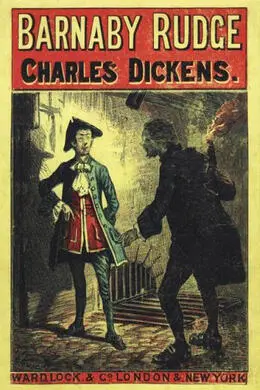
- Название:Barnaby Rudge
- Автор:
- Издательство:epubBooks Classics
- Жанр:
- Год:2014
- ISBN:нет данных
- Рейтинг книги:4 / 5. Голосов: 1
-
Избранное:Добавить в избранное
- Отзывы:
-
Ваша оценка:
Barnaby Rudge: краткое содержание, описание и аннотация
Предлагаем к чтению аннотацию, описание, краткое содержание или предисловие (зависит от того, что написал сам автор книги «Barnaby Rudge»). Если вы не нашли необходимую информацию о книге — напишите в комментариях, мы постараемся отыскать её.
Barnaby Rudge — читать онлайн бесплатно полную книгу (весь текст) целиком
Ниже представлен текст книги, разбитый по страницам. Система сохранения места последней прочитанной страницы, позволяет с удобством читать онлайн бесплатно книгу «Barnaby Rudge», без необходимости каждый раз заново искать на чём Вы остановились. Поставьте закладку, и сможете в любой момент перейти на страницу, на которой закончили чтение.
Интервал:
Закладка:
Mrs Varden having cut in, looked at a box upon the mantelshelf, painted in imitation of a very red–brick dwelling–house, with a yellow roof; having at top a real chimney, down which voluntary subscribers dropped their silver, gold, or pence, into the parlour; and on the door the counterfeit presentment of a brass plate, whereon was legibly inscribed 'Protestant Association:'—and looking at it, said, that it was to her a source of poignant misery to think that Varden never had, of all his substance, dropped anything into that temple, save once in secret—as she afterwards discovered—two fragments of tobacco–pipe, which she hoped would not be put down to his last account. That Dolly, she was grieved to say, was no less backward in her contributions, better loving, as it seemed, to purchase ribbons and such gauds, than to encourage the great cause, then in such heavy tribulation; and that she did entreat her (her father she much feared could not be moved) not to despise, but imitate, the bright example of Miss Miggs, who flung her wages, as it were, into the very countenance of the Pope, and bruised his features with her quarter's money.
'Oh, mim,' said Miggs, 'don't relude to that. I had no intentions, mim, that nobody should know. Such sacrifices as I can make, are quite a widder's mite. It's all I have,' cried Miggs with a great burst of tears—for with her they never came on by degrees—'but it's made up to me in other ways; it's well made up.'
This was quite true, though not perhaps in the sense that Miggs intended. As she never failed to keep her self–denial full in Mrs Varden's view, it drew forth so many gifts of caps and gowns and other articles of dress, that upon the whole the red–brick house was perhaps the best investment for her small capital she could possibly have hit upon; returning her interest, at the rate of seven or eight per cent in money, and fifty at least in personal repute and credit.
'You needn't cry, Miggs,' said Mrs Varden, herself in tears; 'you needn't be ashamed of it, though your poor mistress IS on the same side.'
Miggs howled at this remark, in a peculiarly dismal way, and said she knowed that master hated her. That it was a dreadful thing to live in families and have dislikes, and not give satisfactions. That to make divisions was a thing she could not abear to think of, neither could her feelings let her do it. That if it was master's wishes as she and him should part, it was best they should part, and she hoped he might be the happier for it, and always wished him well, and that he might find somebody as would meet his dispositions. It would be a hard trial, she said, to part from such a missis, but she could meet any suffering when her conscience told her she was in the rights, and therefore she was willing even to go that lengths. She did not think, she added, that she could long survive the separations, but, as she was hated and looked upon unpleasant, perhaps her dying as soon as possible would be the best endings for all parties. With this affecting conclusion, Miss Miggs shed more tears, and sobbed abundantly.
'Can you bear this, Varden?' said his wife in a solemn voice, laying down her knife and fork.
'Why, not very well, my dear,' rejoined the locksmith, 'but I try to keep my temper.'
'Don't let there be words on my account, mim,' sobbed Miggs. 'It's much the best that we should part. I wouldn't stay—oh, gracious me!—and make dissensions, not for a annual gold mine, and found in tea and sugar.'
Lest the reader should be at any loss to discover the cause of Miss Miggs's deep emotion, it may be whispered apart that, happening to be listening, as her custom sometimes was, when Gabriel and his wife conversed together, she had heard the locksmith's joke relative to the foreign black who played the tambourine, and bursting with the spiteful feelings which the taunt awoke in her fair breast, exploded in the manner we have witnessed. Matters having now arrived at a crisis, the locksmith, as usual, and for the sake of peace and quietness, gave in.
'What are you crying for, girl?' he said. 'What's the matter with you? What are you talking about hatred for? I don't hate you; I don't hate anybody. Dry your eyes and make yourself agreeable, in Heaven's name, and let us all be happy while we can.'
The allied powers deeming it good generalship to consider this a sufficient apology on the part of the enemy, and confession of having been in the wrong, did dry their eyes and take it in good part. Miss Miggs observed that she bore no malice, no not to her greatest foe, whom she rather loved the more indeed, the greater persecution she sustained. Mrs Varden approved of this meek and forgiving spirit in high terms, and incidentally declared as a closing article of agreement, that Dolly should accompany her to the Clerkenwell branch of the association, that very night. This was an extraordinary instance of her great prudence and policy; having had this end in view from the first, and entertaining a secret misgiving that the locksmith (who was bold when Dolly was in question) would object, she had backed Miss Miggs up to this point, in order that she might have him at a disadvantage. The manoeuvre succeeded so well that Gabriel only made a wry face, and with the warning he had just had, fresh in his mind, did not dare to say one word.
The difference ended, therefore, in Miggs being presented with a gown by Mrs Varden and half–a–crown by Dolly, as if she had eminently distinguished herself in the paths of morality and goodness. Mrs V., according to custom, expressed her hope that Varden would take a lesson from what had passed and learn more generous conduct for the time to come; and the dinner being now cold and nobody's appetite very much improved by what had passed, they went on with it, as Mrs Varden said, 'like Christians.'
As there was to be a grand parade of the Royal East London Volunteers that afternoon, the locksmith did no more work; but sat down comfortably with his pipe in his mouth, and his arm round his pretty daughter's waist, looking lovingly on Mrs V., from time to time, and exhibiting from the crown of his head to the sole of his foot, one smiling surface of good humour. And to be sure, when it was time to dress him in his regimentals, and Dolly, hanging about him in all kinds of graceful winning ways, helped to button and buckle and brush him up and get him into one of the tightest coats that ever was made by mortal tailor, he was the proudest father in all England.
'What a handy jade it is!' said the locksmith to Mrs Varden, who stood by with folded hands—rather proud of her husband too—while Miggs held his cap and sword at arm's length, as if mistrusting that the latter might run some one through the body of its own accord; 'but never marry a soldier, Doll, my dear.'
Dolly didn't ask why not, or say a word, indeed, but stooped her head down very low to tie his sash.
'I never wear this dress,' said honest Gabriel, 'but I think of poor Joe Willet. I loved Joe; he was always a favourite of mine. Poor Joe!—Dear heart, my girl, don't tie me in so tight.'
Dolly laughed—not like herself at all—the strangest little laugh that could be—and held her head down lower still.
'Poor Joe!' resumed the locksmith, muttering to himself; 'I always wish he had come to me. I might have made it up between them, if he had. Ah! old John made a great mistake in his way of acting by that lad—a great mistake.—Have you nearly tied that sash, my dear?'
What an ill–made sash it was! There it was, loose again and trailing on the ground. Dolly was obliged to kneel down, and recommence at the beginning.
'Never mind young Willet, Varden,' said his wife frowning; 'you might find some one more deserving to talk about, I think.'
Miss Miggs gave a great sniff to the same effect.
'Nay, Martha,' cried the locksmith, 'don't let us bear too hard upon him. If the lad is dead indeed, we'll deal kindly by his memory.'
Читать дальшеИнтервал:
Закладка:
Похожие книги на «Barnaby Rudge»
Представляем Вашему вниманию похожие книги на «Barnaby Rudge» списком для выбора. Мы отобрали схожую по названию и смыслу литературу в надежде предоставить читателям больше вариантов отыскать новые, интересные, ещё непрочитанные произведения.










Обсуждение, отзывы о книге «Barnaby Rudge» и просто собственные мнения читателей. Оставьте ваши комментарии, напишите, что Вы думаете о произведении, его смысле или главных героях. Укажите что конкретно понравилось, а что нет, и почему Вы так считаете.