Charles Dickens - Barnaby Rudge
Здесь есть возможность читать онлайн «Charles Dickens - Barnaby Rudge» весь текст электронной книги совершенно бесплатно (целиком полную версию без сокращений). В некоторых случаях можно слушать аудио, скачать через торрент в формате fb2 и присутствует краткое содержание. Год выпуска: 2014, Издательство: epubBooks Classics, Жанр: Историческая проза, на английском языке. Описание произведения, (предисловие) а так же отзывы посетителей доступны на портале библиотеки ЛибКат.
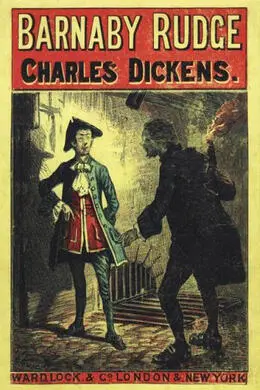
- Название:Barnaby Rudge
- Автор:
- Издательство:epubBooks Classics
- Жанр:
- Год:2014
- ISBN:нет данных
- Рейтинг книги:4 / 5. Голосов: 1
-
Избранное:Добавить в избранное
- Отзывы:
-
Ваша оценка:
Barnaby Rudge: краткое содержание, описание и аннотация
Предлагаем к чтению аннотацию, описание, краткое содержание или предисловие (зависит от того, что написал сам автор книги «Barnaby Rudge»). Если вы не нашли необходимую информацию о книге — напишите в комментариях, мы постараемся отыскать её.
Barnaby Rudge — читать онлайн бесплатно полную книгу (весь текст) целиком
Ниже представлен текст книги, разбитый по страницам. Система сохранения места последней прочитанной страницы, позволяет с удобством читать онлайн бесплатно книгу «Barnaby Rudge», без необходимости каждый раз заново искать на чём Вы остановились. Поставьте закладку, и сможете в любой момент перейти на страницу, на которой закончили чтение.
Интервал:
Закладка:
'What have you done with that paper?' said Sir John.
'I have it here, master.'
'Drop it again as you go along; it's as well not to keep such things about you.'
Hugh nodded, and touching his cap with an air of as much respect as he could summon up, departed.
Sir John, fastening the doors behind him, went back to his dressing–room, and sat down once again before the fire, at which he gazed for a long time, in earnest meditation.
'This happens fortunately,' he said, breaking into a smile, 'and promises well. Let me see. My relative and I, who are the most Protestant fellows in the world, give our worst wishes to the Roman Catholic cause; and to Saville, who introduces their bill, I have a personal objection besides; but as each of us has himself for the first article in his creed, we cannot commit ourselves by joining with a very extravagant madman, such as this Gordon most undoubtedly is. Now really, to foment his disturbances in secret, through the medium of such a very apt instrument as my savage friend here, may further our real ends; and to express at all becoming seasons, in moderate and polite terms, a disapprobation of his proceedings, though we agree with him in principle, will certainly be to gain a character for honesty and uprightness of purpose, which cannot fail to do us infinite service, and to raise us into some importance. Good! So much for public grounds. As to private considerations, I confess that if these vagabonds WOULD make some riotous demonstration (which does not appear impossible), and WOULD inflict some little chastisement on Haredale as a not inactive man among his sect, it would be extremely agreeable to my feelings, and would amuse me beyond measure. Good again! Perhaps better!'
When he came to this point, he took a pinch of snuff; then beginning slowly to undress, he resumed his meditations, by saying with a smile:
'I fear, I DO fear exceedingly, that my friend is following fast in the footsteps of his mother. His intimacy with Mr Dennis is very ominous. But I have no doubt he must have come to that end any way. If I lend him a helping hand, the only difference is, that he may, upon the whole, possibly drink a few gallons, or puncheons, or hogsheads, less in this life than he otherwise would. It's no business of mine. It's a matter of very small importance!'
So he took another pinch of snuff, and went to bed.
Chapter 41
From the workshop of the Golden Key, there issued forth a tinkling sound, so merry and good–humoured, that it suggested the idea of some one working blithely, and made quite pleasant music. No man who hammered on at a dull monotonous duty, could have brought such cheerful notes from steel and iron; none but a chirping, healthy, honest–hearted fellow, who made the best of everything, and felt kindly towards everybody, could have done it for an instant. He might have been a coppersmith, and still been musical. If he had sat in a jolting waggon, full of rods of iron, it seemed as if he would have brought some harmony out of it.
Tink, tink, tink—clear as a silver bell, and audible at every pause of the streets' harsher noises, as though it said, 'I don't care; nothing puts me out; I am resolved to be happy.' Women scolded, children squalled, heavy carts went rumbling by, horrible cries proceeded from the lungs of hawkers; still it struck in again, no higher, no lower, no louder, no softer; not thrusting itself on people's notice a bit the more for having been outdone by louder sounds—tink, tink, tink, tink, tink.
It was a perfect embodiment of the still small voice, free from all cold, hoarseness, huskiness, or unhealthiness of any kind; foot–passengers slackened their pace, and were disposed to linger near it; neighbours who had got up splenetic that morning, felt good–humour stealing on them as they heard it, and by degrees became quite sprightly; mothers danced their babies to its ringing; still the same magical tink, tink, tink, came gaily from the workshop of the Golden Key.
Who but the locksmith could have made such music! A gleam of sun shining through the unsashed window, and chequering the dark workshop with a broad patch of light, fell full upon him, as though attracted by his sunny heart. There he stood working at his anvil, his face all radiant with exercise and gladness, his sleeves turned up, his wig pushed off his shining forehead—the easiest, freest, happiest man in all the world. Beside him sat a sleek cat, purring and winking in the light, and falling every now and then into an idle doze, as from excess of comfort. Toby looked on from a tall bench hard by; one beaming smile, from his broad nut–brown face down to the slack–baked buckles in his shoes. The very locks that hung around had something jovial in their rust, and seemed like gouty gentlemen of hearty natures, disposed to joke on their infirmities. There was nothing surly or severe in the whole scene. It seemed impossible that any one of the innumerable keys could fit a churlish strong–box or a prison–door. Cellars of beer and wine, rooms where there were fires, books, gossip, and cheering laughter—these were their proper sphere of action. Places of distrust and cruelty, and restraint, they would have left quadruple–locked for ever.
Tink, tink, tink. The locksmith paused at last, and wiped his brow. The silence roused the cat, who, jumping softly down, crept to the door, and watched with tiger eyes a bird–cage in an opposite window. Gabriel lifted Toby to his mouth, and took a hearty draught.
Then, as he stood upright, with his head flung back, and his portly chest thrown out, you would have seen that Gabriel's lower man was clothed in military gear. Glancing at the wall beyond, there might have been espied, hanging on their several pegs, a cap and feather, broadsword, sash, and coat of scarlet; which any man learned in such matters would have known from their make and pattern to be the uniform of a serjeant in the Royal East London Volunteers.
As the locksmith put his mug down, empty, on the bench whence it had smiled on him before, he glanced at these articles with a laughing eye, and looking at them with his head a little on one side, as though he would get them all into a focus, said, leaning on his hammer:
'Time was, now, I remember, when I was like to run mad with the desire to wear a coat of that colour. If any one (except my father) had called me a fool for my pains, how I should have fired and fumed! But what a fool I must have been, sure–ly!'
'Ah!' sighed Mrs Varden, who had entered unobserved. 'A fool indeed. A man at your time of life, Varden, should know better now.'
'Why, what a ridiculous woman you are, Martha,' said the locksmith, turning round with a smile.
'Certainly,' replied Mrs V. with great demureness. 'Of course I am. I know that, Varden. Thank you.'
'I mean—' began the locksmith.
'Yes,' said his wife, 'I know what you mean. You speak quite plain enough to be understood, Varden. It's very kind of you to adapt yourself to my capacity, I am sure.'
'Tut, tut, Martha,' rejoined the locksmith; 'don't take offence at nothing. I mean, how strange it is of you to run down volunteering, when it's done to defend you and all the other women, and our own fireside and everybody else's, in case of need.'
'It's unchristian,' cried Mrs Varden, shaking her head.
'Unchristian!' said the locksmith. 'Why, what the devil—'
Mrs Varden looked at the ceiling, as in expectation that the consequence of this profanity would be the immediate descent of the four–post bedstead on the second floor, together with the best sitting–room on the first; but no visible judgment occurring, she heaved a deep sigh, and begged her husband, in a tone of resignation, to go on, and by all means to blaspheme as much as possible, because he knew she liked it.
Читать дальшеИнтервал:
Закладка:
Похожие книги на «Barnaby Rudge»
Представляем Вашему вниманию похожие книги на «Barnaby Rudge» списком для выбора. Мы отобрали схожую по названию и смыслу литературу в надежде предоставить читателям больше вариантов отыскать новые, интересные, ещё непрочитанные произведения.











Обсуждение, отзывы о книге «Barnaby Rudge» и просто собственные мнения читателей. Оставьте ваши комментарии, напишите, что Вы думаете о произведении, его смысле или главных героях. Укажите что конкретно понравилось, а что нет, и почему Вы так считаете.