Ken Follett - World Without End
Здесь есть возможность читать онлайн «Ken Follett - World Without End» весь текст электронной книги совершенно бесплатно (целиком полную версию без сокращений). В некоторых случаях можно слушать аудио, скачать через торрент в формате fb2 и присутствует краткое содержание. Жанр: Историческая проза, на английском языке. Описание произведения, (предисловие) а так же отзывы посетителей доступны на портале библиотеки ЛибКат.
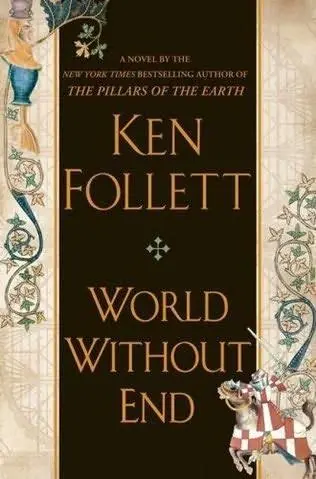
- Название:World Without End
- Автор:
- Жанр:
- Год:неизвестен
- ISBN:нет данных
- Рейтинг книги:5 / 5. Голосов: 1
-
Избранное:Добавить в избранное
- Отзывы:
-
Ваша оценка:
World Without End: краткое содержание, описание и аннотация
Предлагаем к чтению аннотацию, описание, краткое содержание или предисловие (зависит от того, что написал сам автор книги «World Without End»). Если вы не нашли необходимую информацию о книге — напишите в комментариях, мы постараемся отыскать её.
Ken Follett has 90 million readers worldwide. The Pillars of the Earth is his bestselling book of all time. Now, eighteen years after the publication of The Pillars of the Earth, Ken Follett has written the most-anticipated sequel of the year, World Without End.
In 1989 Ken Follett astonished the literary world with The Pillars of the Earth, a sweeping epic novel set in twelfth-century England centered on the building of a cathedral and many of the hundreds of lives it affected. Critics were overwhelmed-"it will hold you, fascinate you, surround you" (Chicago Tribune)-and readers everywhere hoped for a sequel.
World Without End takes place in the same town of Kingsbridge, two centuries after the townspeople finished building the exquisite Gothic cathedral that was at the heart of The Pillars of the Earth. The cathedral and the priory are again at the center of a web of love and hate, greed and pride, ambition and revenge, but this sequel stands on its own. This time the men and women of an extraordinary cast of characters find themselves at a crossroad of new ideas-about medicine, commerce, architecture, and justice. In a world where proponents of the old ways fiercely battle those with progressive minds, the intrigue and tension quickly reach a boiling point against the devastating backdrop of the greatest natural disaster ever to strike the human race-the Black Death.
Three years in the writing, and nearly eighteen years since its predecessor, World Without End breathes new life into the epic historical novel and once again shows that Ken Follett is a masterful author writing at the top of his craft.
World Without End — читать онлайн бесплатно полную книгу (весь текст) целиком
Ниже представлен текст книги, разбитый по страницам. Система сохранения места последней прочитанной страницы, позволяет с удобством читать онлайн бесплатно книгу «World Without End», без необходимости каждый раз заново искать на чём Вы остановились. Поставьте закладку, и сможете в любой момент перейти на страницу, на которой закончили чтение.
Интервал:
Закладка:
He was Ralph Fitzgerald.
Ralph’s first manorial court was held the following Sunday.
In the interim, Wulfric was depressed. Gwenda wanted to weep every time she looked at him. He walked around with his eyes cast down, his broad shoulders slumped. All summer he had seemed tireless, working in the fields with the uncomplaining dependability of a plough horse; but now he looked weary. He had done all a man could do, but his fate had been given into the hands of one who hated him.
She would have liked to say something hopeful, in an attempt to cheer him up, but the truth was that she shared his pessimism. Lords were often petty and vindictive, and nothing about Ralph encouraged her to believe that he would be magnanimous. As a child, he had been stupid and brutal. She would never forget the day he had killed her dog with Merthin’s bow and arrow.
There was no sign that he had improved since then. He had moved into the manor house with his sidekick, a beefy young squire called Alan Fernhill, and the two of them were drinking the best wine, eating the chickens and squeezing the breasts of the female servants with the carelessness typical of their class.
Nathan Reeve’s attitude confirmed her fears. The bailiff was not bothering to negotiate an increased bribe – a sure sign that he expected failure.
Annet, too, seemed to have a poor view of Wulfric’s prospects. Gwenda saw an unmistakable change in her. She did not toss her hair so gaily, nor walk with that swish of her hips, and the waterfall tinkle of her laughter was not heard so often. Gwenda hoped Wulfric would not see the difference in Annet: he had enough to be gloomy about. But it seemed to her that he did not stay so late at Perkin’s house in the evenings, and when he returned home he was taciturn.
She was surprised to learn, on Sunday morning, that Wulfric still harboured the ghost of a hope. When the service ended, and Father Gaspard gave place to Lord Ralph, she saw that Wulfric’s eyes were closed and his lips were moving, presumably in a prayer to his favourite saint, the Virgin Mary.
All the villagers were in church, of course, including Joby and Ethna. Gwenda did not stand with her parents. She talked to her mother sometimes, but only when her father was not around. Joby had an angry red patch on his cheek where she had burned him with the blazing log. He never met her eye. She was still afraid of him, but she sensed that he was now also afraid of her.
Ralph sat on the big wooden chair, staring at his serfs with the appraising look of a buyer at a cattle market. The court proceedings on this day consisted of a series of announcements. Nathan proclaimed the arrangements for getting the harvest in from the lord’s fields, stating on which days of the coming week different villagers would be required to perform their customary duty on the lord’s lands. No discussion was invited. Clearly Ralph did not intend to govern by consensus.
There were other details of the kind Nathan dealt with every week: gleaning should be completed in Hundredacre by Monday night so that livestock could graze the stubble from Tuesday morning, and autumn ploughing of Long Field would begin on Wednesday. Normally there would have been minor disputes about these plans, with the more argumentative villagers finding reasons to propose different arrangements, but today they were all quiet, waiting to get the measure of the new lord.
When the decision came, it seemed curiously low-key. As if he were simply stating another schedule of work, Nathan said: “Wulfric will not be permitted to inherit his father’s landholding, because he is only sixteen.”
Gwenda looked at Ralph. He was trying to smother a triumphant grin. His hand went to his face – unconsciously, she thought – and he touched his broken nose.
Nathan went on: “Lord Ralph will consider what to do with the lands and give his judgement later.”
Wulfric groaned loud enough for everyone to hear. It was the decision he had been expecting, but its confirmation was bitter. She watched as he turned his back on the crowd in the church, hiding his face, and leaned against the wall as if to stop himself falling.
“That’s all for today,” said Nathan.
Ralph stood up. He walked down the aisle slowly, his eyes continually turning to the distraught Wulfric. What kind of lord would he be, Gwenda thought, if his first instinct was to use his power for revenge? Nathan followed Ralph, looking at the floor: he knew that an injustice had been done. As they left the church, a buzz of comment arose. Gwenda spoke to no one, but watched Wulfric.
He turned from the wall, his face a picture of misery. His eyes raked the crowd and found Annet. She looked furious. Gwenda waited for her to meet Wulfric’s eye, but she seemed determined not to look at him. Gwenda wondered what was going through her mind.
Annet walked towards the door, head held high. Her father, Perkin, and the family followed. Would she not even speak to Wulfric?
The same thought must have occurred to him, for he went after her. “Annet!” he said. “Wait.”
The place went quiet.
Annet turned. Wulfric stood before her. “We’ll still get married, won’t we?” he said. Gwenda winced to hear the undignified note of pleading in his voice. Annet stared at him, apparently about to speak, but she said nothing for a long moment, and Wulfric spoke again. “Lords need good serfs to farm the land. Perhaps Ralph will give me a smaller holding-”
“You broke his nose,” she said harshly. “He will never give you anything.”
Gwenda recalled how pleased Annet had been, at the time, to have two men fighting over her.
Wulfric said: “Then I’ll be a labourer. I’m strong, I’ll never lack for work.”
“But you’ll be poor all your life. Is that what you’re offering me?”
“We’ll be together – just as we dreamed, that day in the forest, when you told me you loved me, don’t you remember?”
“And what would life be like for me, married to a landless labourer?” Annet demanded angrily. “I’ll tell you.” She lifted her arm and pointed at Gwenda’s mother, Ethna, standing with Joby and the three little ones. “I would be like her – grim-faced with worry and as thin as a broom handle.”
Joby was stung by this. He waved the stump of his severed hand at Annet. “You watch your mouth, you haughty minx.”
Perkin stepped in front of his daughter and made a patting gesture with both hands. “Forgive her, Joby, she’s overwrought, she means no harm.”
Wulfric said: “No disrespect to Joby, but I’m not like him, Annet.”
“But you are!” she said. “You’ve got no land. It’s why he’s poor, and it’s why you’ll be poor, and your children will be hungry and your wife will be drab.”
It was true. In hard times the landless were the first to suffer. Dismissing your employees was the quickest way to save money. All the same, Gwenda found it hard to believe that a woman would turn down the chance of spending her life with Wulfric.
Yet that seemed to be what Annet was doing.
Wulfric thought so, too. Plaintively, he said: “Don’t you love me any more?”
He had lost all his dignity and he looked pathetic; yet, at that moment, Gwenda felt more passion for him than ever before.
“I can’t eat love,” Annet said, and she walked out of the church.
Two weeks later, she married Billy Howard.
Gwenda went to the wedding, as did everyone in the village except Wulfric. Despite the poor harvest, there was a good feast. By this marriage two large landholdings were united: Perkin’s hundred acres with Billy’s forty. Furthermore, Perkin had asked Ralph to give him Wulfric’s family’s lands. If Ralph agreed, Annet’s children could be heirs to almost half the village. But Ralph had gone to Kingsbridge, promising a decision as soon as he returned.
Читать дальшеИнтервал:
Закладка:
Похожие книги на «World Without End»
Представляем Вашему вниманию похожие книги на «World Without End» списком для выбора. Мы отобрали схожую по названию и смыслу литературу в надежде предоставить читателям больше вариантов отыскать новые, интересные, ещё непрочитанные произведения.


Обсуждение, отзывы о книге «World Without End» и просто собственные мнения читателей. Оставьте ваши комментарии, напишите, что Вы думаете о произведении, его смысле или главных героях. Укажите что конкретно понравилось, а что нет, и почему Вы так считаете.