Ken Follett - World Without End
Здесь есть возможность читать онлайн «Ken Follett - World Without End» весь текст электронной книги совершенно бесплатно (целиком полную версию без сокращений). В некоторых случаях можно слушать аудио, скачать через торрент в формате fb2 и присутствует краткое содержание. Жанр: Историческая проза, на английском языке. Описание произведения, (предисловие) а так же отзывы посетителей доступны на портале библиотеки ЛибКат.
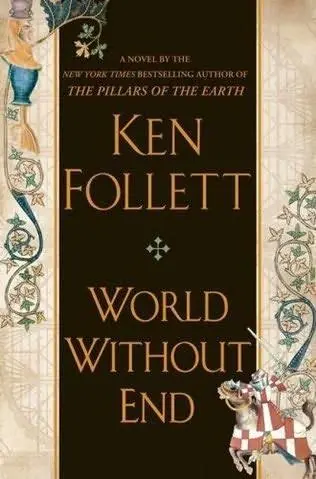
- Название:World Without End
- Автор:
- Жанр:
- Год:неизвестен
- ISBN:нет данных
- Рейтинг книги:5 / 5. Голосов: 1
-
Избранное:Добавить в избранное
- Отзывы:
-
Ваша оценка:
World Without End: краткое содержание, описание и аннотация
Предлагаем к чтению аннотацию, описание, краткое содержание или предисловие (зависит от того, что написал сам автор книги «World Without End»). Если вы не нашли необходимую информацию о книге — напишите в комментариях, мы постараемся отыскать её.
Ken Follett has 90 million readers worldwide. The Pillars of the Earth is his bestselling book of all time. Now, eighteen years after the publication of The Pillars of the Earth, Ken Follett has written the most-anticipated sequel of the year, World Without End.
In 1989 Ken Follett astonished the literary world with The Pillars of the Earth, a sweeping epic novel set in twelfth-century England centered on the building of a cathedral and many of the hundreds of lives it affected. Critics were overwhelmed-"it will hold you, fascinate you, surround you" (Chicago Tribune)-and readers everywhere hoped for a sequel.
World Without End takes place in the same town of Kingsbridge, two centuries after the townspeople finished building the exquisite Gothic cathedral that was at the heart of The Pillars of the Earth. The cathedral and the priory are again at the center of a web of love and hate, greed and pride, ambition and revenge, but this sequel stands on its own. This time the men and women of an extraordinary cast of characters find themselves at a crossroad of new ideas-about medicine, commerce, architecture, and justice. In a world where proponents of the old ways fiercely battle those with progressive minds, the intrigue and tension quickly reach a boiling point against the devastating backdrop of the greatest natural disaster ever to strike the human race-the Black Death.
Three years in the writing, and nearly eighteen years since its predecessor, World Without End breathes new life into the epic historical novel and once again shows that Ken Follett is a masterful author writing at the top of his craft.
World Without End — читать онлайн бесплатно полную книгу (весь текст) целиком
Ниже представлен текст книги, разбитый по страницам. Система сохранения места последней прочитанной страницы, позволяет с удобством читать онлайн бесплатно книгу «World Without End», без необходимости каждый раз заново искать на чём Вы остановились. Поставьте закладку, и сможете в любой момент перейти на страницу, на которой закончили чтение.
Интервал:
Закладка:
The first cart lumbered slowly up the ramp, the carter urging the ox on with a long-tailed whip, the ox putting one foot in front of the other with mute resentment. Four huge stones were piled on its flatbed, rough-hewn and incised with the mark of the man who had quarried them. Each man’s output was counted once at the quarry and again at the building site, and he was paid per stone.
As the cart came closer, Ralph saw that the carter was a Kingsbridge man, Ben Wheeler. He looked a bit like his ox, with a thick neck and massive shoulders. His face wore a similar expression of dull hostility. He might try to make trouble, Ralph guessed. However, he could be subdued.
Ben drove his ox towards the line of horses blocking the road. Instead of halting at a distance, he let the beast come closer and closer. The horses were not combat-trained destriers but everyday hacks, and they snorted nervously and backed. The ox stopped of its own accord.
Ben’s attitude angered Ralph, who called out: “You’re a cocksure oaf.”
Ben said: “Why do you stand in my way?”
“To collect the tax.”
“There’s no tax.”
“To carry stone across the territory of the earl of Shiring, you must pay a penny per cartload.”
“I have no money.”
“Then you must get some.”
“Do you bar my passage?”
The fool was not as scared as he should have been, which infuriated Ralph. “Don’t presume to question me,” Ralph said. “The stone stays here until someone has paid tax for it.”
Ben glared back at him for a long moment, and Ralph had the strongest feeling that the man was wondering whether to knock him off his horse. “But I have no money,” he said eventually.
Ralph wanted to run him through with his sword, but he reined in his temper. “Don’t pretend to be even more stupid than you are,” he said contemptuously. “Just go to the master quarryman and tell him the earl’s men will not let you leave.”
Ben stared at him a little longer, mulling this over; then, without speaking, he turned and walked back down the ramp, leaving his cart.
Ralph waited, fuming, staring at the ox.
Ben entered a wooden hut half way along the quarry. He emerged a few minutes later accompanied by a slight man in a brown tunic. At first, Ralph presumed the second man was the quarrymaster. However, the figure looked familiar and, as the two came closer, Ralph recognized his brother, Merthin.
“Oh, no,” he said aloud.
He was not prepared for this. He felt tortured by shame as he watched Merthin walk up the long ramp. He knew he was here to betray his brother, but he had not expected Merthin to be here to see it.
“Hello, Ralph,” said Merthin as he came closer. “Ben says you won’t let him pass.”
Merthin had always been able to overcome him in an argument, Ralph recalled dismally. He decided to be formal. It would hide his emotions, and he could hardly get into trouble if he simply repeated his instructions. He said stiffly: “The earl has decided to exercise his right to collect taxes from consignments of stone using his roads.”
Merthin ignored that. “Aren’t you going to get down off your horse to talk to your brother?”
Ralph would have preferred to stay mounted, but he did not want to refuse what seemed like some kind of challenge, so he got down. Then he felt as if he had already been bested.
“There’s no tax on stone from here,” Merthin said.
“There is now.”
“The monks have been working this quarry for hundreds of years. Kingsbridge Cathedral is build of this stone. It has never been taxed.”
“Perhaps the earl forgave the tax for the sake of the church,” Ralph said, improvising. “But he won’t do it for a bridge.”
“He just doesn’t want the town to have a new bridge. That’s the reason for this. First he sends you to bribe me, then when that fails he invents a new tax.” Merthin looked thoughtfully at Ralph. “This was your idea, wasn’t it?”
Ralph was mortified. How had he guessed? “No!” he said, but he felt himself redden.
“I can see from your face that it was. I gave you the notion, I’m sure, when I spoke of Jake Chepstow importing logs from Wales to avoid the earl of Shaftesbury’s tax.”
Ralph was feeling more foolish and angry with every moment. “There’s no connection,” he said stubbornly.
“You berated me for putting my bridge before my brother, but you’re happy to wreck my hopes for the sake of your earl.”
“It doesn’t matter whose idea it was, the earl has decided to tax the stone.”
“But he doesn’t have the right.”
Ben Wheeler was following the conversation intently, standing beside Merthin with his legs apart and his hands on his hips. Now he said to Merthin: “Are you saying these men don’t have the right to stop me?”
“That’s exactly what I’m saying,” said Merthin.
Ralph could have told Merthin it was a mistake to treat such a man as if he was intelligent. Ben now took Merthin’s words for permission to leave. He flicked his whip over his ox’s shoulders. The beast leaned into its wooden collar and took the strain.
Ralph shouted angrily: “Halt!”
Ben whipped the ox again and called: “Hup!”
The ox pulled harder and the cart started forward with a jerk that startled the horses. Joseph Woodstock’s mount whinnied and reared up, eyes rolling.
Joseph sawed at the reins and got the horse under control. Then he pulled from his saddlebag a long wooden club. “You keep still when you’re told,” he said to Ben. He urged his horse forward and lashed out with the club.
Ben dodged the blow, grabbed the club and pulled.
Joseph was already leaning out from his saddle. The sudden jerk unbalanced him, and he fell off his horse.
Merthin cried: “Oh, no!”
Ralph knew why Merthin was dismayed. A man-at-arms could not overlook such humiliation. There was no avoiding violence now. But Ralph himself was not sorry. His brother had failed to treat the earl’s men with the deference they merited, and now he would see the consequences.
Ben was holding Joseph’s club in a two-handed grip. Joseph leaped to his feet. Seeing Ben brandishing the club, he reached for his dagger. But Ben was quicker – the carter must have fought in battle at some time, Ralph realized. Ben swung the club and landed a mighty blow on the top of Joseph’s head. Joseph fell to the ground and lay motionless.
Ralph roared with rage. He drew his sword and ran at the carter.
Merthin shouted: “No!”
Ralph stabbed Ben in the chest, thrusting the sword between his ribs as forcefully as he could. It passed through Ben’s thick body and came out the other side. Ben fell back and Ralph pulled the sword out. Blood spurted from the carter in a fountain. Ralph felt a jolt of triumphant satisfaction. There would be no more insolence from Ben Wheeler.
He knelt beside Joseph. The man’s eyes stared sightlessly. There was no heartbeat. He was dead.
In a way that was good. It simplified the explanations. Ben Wheeler had murdered one of the earl’s men, and had died for it. No one would see any injustice in that – least of all Earl Roland, who had no mercy for those who defied his authority.
Merthin did not see it the same way. His face was twisted as if in pain. “What have you done?” he said incredulously. “Ben Wheeler has a two-year-old son! They call him Bennie!”
“The widow had better look for another husband, then,” said Ralph. “This time, she should choose a man who knows his place.”
27
It was a poor harvest. There was so little sunshine in August that the grain had barely ripened by September. In the village of Wigleigh, spirits were low. There was none of the usual euphoria of harvest time: the dances, the drinking, the sudden romances. Wet crops were liable to rot. Many villagers would go hungry before spring.
Читать дальшеИнтервал:
Закладка:
Похожие книги на «World Without End»
Представляем Вашему вниманию похожие книги на «World Without End» списком для выбора. Мы отобрали схожую по названию и смыслу литературу в надежде предоставить читателям больше вариантов отыскать новые, интересные, ещё непрочитанные произведения.
Обсуждение, отзывы о книге «World Without End» и просто собственные мнения читателей. Оставьте ваши комментарии, напишите, что Вы думаете о произведении, его смысле или главных героях. Укажите что конкретно понравилось, а что нет, и почему Вы так считаете.