Ken Follett - World Without End
Здесь есть возможность читать онлайн «Ken Follett - World Without End» весь текст электронной книги совершенно бесплатно (целиком полную версию без сокращений). В некоторых случаях можно слушать аудио, скачать через торрент в формате fb2 и присутствует краткое содержание. Жанр: Историческая проза, на английском языке. Описание произведения, (предисловие) а так же отзывы посетителей доступны на портале библиотеки ЛибКат.
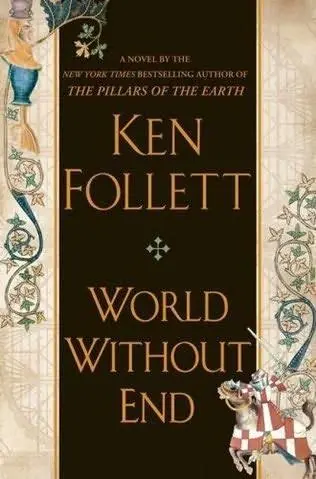
- Название:World Without End
- Автор:
- Жанр:
- Год:неизвестен
- ISBN:нет данных
- Рейтинг книги:5 / 5. Голосов: 1
-
Избранное:Добавить в избранное
- Отзывы:
-
Ваша оценка:
World Without End: краткое содержание, описание и аннотация
Предлагаем к чтению аннотацию, описание, краткое содержание или предисловие (зависит от того, что написал сам автор книги «World Without End»). Если вы не нашли необходимую информацию о книге — напишите в комментариях, мы постараемся отыскать её.
Ken Follett has 90 million readers worldwide. The Pillars of the Earth is his bestselling book of all time. Now, eighteen years after the publication of The Pillars of the Earth, Ken Follett has written the most-anticipated sequel of the year, World Without End.
In 1989 Ken Follett astonished the literary world with The Pillars of the Earth, a sweeping epic novel set in twelfth-century England centered on the building of a cathedral and many of the hundreds of lives it affected. Critics were overwhelmed-"it will hold you, fascinate you, surround you" (Chicago Tribune)-and readers everywhere hoped for a sequel.
World Without End takes place in the same town of Kingsbridge, two centuries after the townspeople finished building the exquisite Gothic cathedral that was at the heart of The Pillars of the Earth. The cathedral and the priory are again at the center of a web of love and hate, greed and pride, ambition and revenge, but this sequel stands on its own. This time the men and women of an extraordinary cast of characters find themselves at a crossroad of new ideas-about medicine, commerce, architecture, and justice. In a world where proponents of the old ways fiercely battle those with progressive minds, the intrigue and tension quickly reach a boiling point against the devastating backdrop of the greatest natural disaster ever to strike the human race-the Black Death.
Three years in the writing, and nearly eighteen years since its predecessor, World Without End breathes new life into the epic historical novel and once again shows that Ken Follett is a masterful author writing at the top of his craft.
World Without End — читать онлайн бесплатно полную книгу (весь текст) целиком
Ниже представлен текст книги, разбитый по страницам. Система сохранения места последней прочитанной страницы, позволяет с удобством читать онлайн бесплатно книгу «World Without End», без необходимости каждый раз заново искать на чём Вы остановились. Поставьте закладку, и сможете в любой момент перейти на страницу, на которой закончили чтение.
Интервал:
Закладка:
“I bring barley in every day.” Dick was the largest brewer in the county. He owned a huge copper kettle that held five hundred gallons, in consequence of which his tavern was called the Copper.
Edmund interrupted this spat. “There are other problems caused by delays on the bridge,” he said. “Some traders go to Shiring, where there’s no bridge and no queue. Others do their business while waiting in line, then go home without ever entering the town, and save themselves the bridge toll and the market taxes. It’s forestalling, and it’s illegal, but we’ve never succeeded in stopping it. And then there’s the question of how people think of Kingsbridge. Right now we’re the town whose bridge collapsed. If we’re going to attract back all the business we’re losing, we need to change that. I’d like us to become known as the town with the best bridge in England.”
Edmund was hugely influential, and Merthin began to scent victory.
Betty Baxter, an enormously fat woman in her forties, stood up and pointed to something on Merthin’s drawing. “What’s this, here in the middle of the bridge parapet, over the pier?” she said. “There’s a little pointed bit that sticks out over the water, like a viewing platform. What is it for, fishing?” The others laughed.
“It’s a pedestrian refuge,” Merthin answered. “If you’re walking over the bridge, and suddenly the earl of Shiring rides across with twenty mounted knights, you can step out of their way.”
Edward Butcher said: “I hope it’s big enough to fit Betty in.”
Everyone laughed, but Betty persisted with her questioning. “Why is the pier underneath it pointed like that all the way down to the water? Elfric’s piers aren’t pointed.”
“To deflect debris. Look at any river bridge – you’ll see the piers are chipped and cracked. What do you think causes that damage? It must be the large pieces of wood – tree trunks, or timbers from demolished buildings – that you see floating downstream and crashing into piers.”
“Or Ian Boatman when he’s drunk,” said Edward.
“Boats or debris, they will cause less damage to my pointed piers. Elfric’s will suffer the full impact.”
Elfric said: “My walls are too strong to be knocked down by bits of wood.”
“On the contrary,” said Merthin. “Your arches are narrower than mine, therefore the water will be drawn through them faster, and the debris will strike the piers with greater force, causing more damage.”
He could see from Elfric’s face that the older man had not even thought of that. But the audience were not builders – how could they judge what was right?
Around the base of each pier, Merthin had drawn a pile of rough stones, known to builders as riprap. This would prevent the current undermining his piers the way it had those of the old wooden bridge. But no one asked him about the riprap, so he did not explain it.
Betty had more questions. “Why is your bridge so long? Elfric’s begins at the water’s edge. Yours starts several yards inland. Isn’t that unnecessary expense?”
“My bridge is ramped at both ends,” Merthin explained. “That’s so that you step off the bridge on to dry land, instead of a swamp. No more ox-carts getting bogged down on the beach and blocking the bridge for an hour.”
“Cheaper to put down a paved road,” said Elfric.
Elfric was beginning to sound desperate. Then Bill Watkin stood up. “I’m having trouble deciding who’s right and who’s wrong,” he said. “When these two argue, it’s difficult to make up your mind. And I’m a builder – it must be worse for those who aren’t.” There was a murmur of agreement. Bill went on: “So I think we should look at the men, not the designs.”
Merthin had been afraid of this. He listened with increasing despair.
“Which of the two do you know best?” said Bill. “Which can you rely on? Elfric has been a builder in this town, man and boy, for twenty years. We can look at houses he’s put up and see they’re still standing. We can see the repairs he’s done on the cathedral. On the other hand, here’s Merthin – a clever lad, we know, but a bit of a tearaway, and never finished his apprenticeship. There’s not a lot to indicate that he’s capable of taking charge of the largest building project Kingsbridge has seen since the construction of the cathedral. I know which one I trust.” He sat down.
Several men voiced their approval. They would not judge the designs – they would decide on personalities. It was maddeningly unfair.
Then Brother Thomas spoke up. “Has anyone in Kingsbridge ever been involved in a project that involved building below water level?”
Merthin knew the answer was No. He felt a surge of hope. This could rescue it for him.
Thomas went on: “I would like to know how both men would handle that problem.”
Merthin was ready with his solution – but he was afraid that if he spoke first Elfric would simply echo him. He compressed his lips, hoping that Thomas – who usually helped him – would get the message.
Thomas caught Merthin’s eye, and said: “Elfric, what would you do?”
“The answer is simpler than you think,” Elfric said. “You just have to drop loose rubble into the river at the point where your pier will stand. The rubble rests on the river bottom. You put more and more in until the pile is visible above water level. Then you build your pier on that foundation.”
As Merthin had expected, Elfric had come up with the crudest solution to the problem. Now Merthin said: “There are two snags with Elfric’s method. One is that a pile of rubble is no more stable under water than on land. Over time, it will shift and drop, and when that happens the bridge will subside. If you want a bridge to last only a few years, fine. But I think we should build for the long term.”
He heard a quiet rumble of concurrence.
“The second problem is the shape of the pile. It will naturally slope outwards below the water line, restricting the passage of boats, especially when the river is low. And Elfric’s arches are already narrow.”
Elfric said irritably: “What would you do instead?”
Merthin suppressed a smile. That was what he had wanted to hear – Elfric admitting that he did not know a better answer. “I’ll tell you,” he said. And I’ll show everyone that I know better than the idiot who chopped my door to pieces, he thought. He looked around. They were all listening. Their decision hung on what he would say next.
He took a deep breath. “First, I would take a pointed wooden stake and piledrive it into the river bed. Then I would bang in another next to it, touching; then another. In that way I would build a ring of stakes around the place in the river where I want to put my pier.”
“A ring of stakes?” Elfric jeered. “That will never keep the water out.”
Brother Thomas, who had asked the question, said: “Listen to him, please. He listened to you.”
Merthin said: “Next, I would build a second ring inside the first, with a gap between them of half a foot.” He sensed that he had his audience’s attention now.
“It still won’t be waterproof,” said Elfric.
Edmund said: “Shut up, Elfric, this is interesting.”
Merthin went on: “Then I would pour a clay mortar into the gap between the two rings. The mixture would displace the water, being heavier. And it would plug any chinks between the wood stakes, making the ring watertight. This is called a coffer dam.”
The room was quiet.
“Finally, I would remove the water from inside by bucket, exposing the river bed, and build a mortared stone foundation.”
Elfric was dumbstruck. Both Edmund and Godwyn were staring at Merthin.
Thomas said: “Thank you both. Speaking for myself, that makes the decision an easy one.”
Читать дальшеИнтервал:
Закладка:
Похожие книги на «World Without End»
Представляем Вашему вниманию похожие книги на «World Without End» списком для выбора. Мы отобрали схожую по названию и смыслу литературу в надежде предоставить читателям больше вариантов отыскать новые, интересные, ещё непрочитанные произведения.



Обсуждение, отзывы о книге «World Without End» и просто собственные мнения читателей. Оставьте ваши комментарии, напишите, что Вы думаете о произведении, его смысле или главных героях. Укажите что конкретно понравилось, а что нет, и почему Вы так считаете.