Ken Follett - World Without End
Здесь есть возможность читать онлайн «Ken Follett - World Without End» весь текст электронной книги совершенно бесплатно (целиком полную версию без сокращений). В некоторых случаях можно слушать аудио, скачать через торрент в формате fb2 и присутствует краткое содержание. Жанр: Историческая проза, на английском языке. Описание произведения, (предисловие) а так же отзывы посетителей доступны на портале библиотеки ЛибКат.
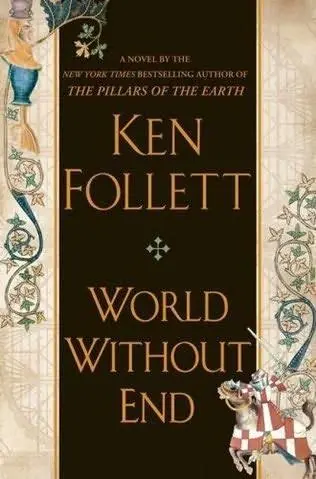
- Название:World Without End
- Автор:
- Жанр:
- Год:неизвестен
- ISBN:нет данных
- Рейтинг книги:5 / 5. Голосов: 1
-
Избранное:Добавить в избранное
- Отзывы:
-
Ваша оценка:
World Without End: краткое содержание, описание и аннотация
Предлагаем к чтению аннотацию, описание, краткое содержание или предисловие (зависит от того, что написал сам автор книги «World Without End»). Если вы не нашли необходимую информацию о книге — напишите в комментариях, мы постараемся отыскать её.
Ken Follett has 90 million readers worldwide. The Pillars of the Earth is his bestselling book of all time. Now, eighteen years after the publication of The Pillars of the Earth, Ken Follett has written the most-anticipated sequel of the year, World Without End.
In 1989 Ken Follett astonished the literary world with The Pillars of the Earth, a sweeping epic novel set in twelfth-century England centered on the building of a cathedral and many of the hundreds of lives it affected. Critics were overwhelmed-"it will hold you, fascinate you, surround you" (Chicago Tribune)-and readers everywhere hoped for a sequel.
World Without End takes place in the same town of Kingsbridge, two centuries after the townspeople finished building the exquisite Gothic cathedral that was at the heart of The Pillars of the Earth. The cathedral and the priory are again at the center of a web of love and hate, greed and pride, ambition and revenge, but this sequel stands on its own. This time the men and women of an extraordinary cast of characters find themselves at a crossroad of new ideas-about medicine, commerce, architecture, and justice. In a world where proponents of the old ways fiercely battle those with progressive minds, the intrigue and tension quickly reach a boiling point against the devastating backdrop of the greatest natural disaster ever to strike the human race-the Black Death.
Three years in the writing, and nearly eighteen years since its predecessor, World Without End breathes new life into the epic historical novel and once again shows that Ken Follett is a masterful author writing at the top of his craft.
World Without End — читать онлайн бесплатно полную книгу (весь текст) целиком
Ниже представлен текст книги, разбитый по страницам. Система сохранения места последней прочитанной страницы, позволяет с удобством читать онлайн бесплатно книгу «World Without End», без необходимости каждый раз заново искать на чём Вы остановились. Поставьте закладку, и сможете в любой момент перейти на страницу, на которой закончили чтение.
Интервал:
Закладка:
“May his soul rest in peace. We have come here to see your brother, Bishop Richard, who is our abbot.”
“You’re too late,” William said. “My brother, too, is dead.”
Later in the morning, when the fog had lifted and the battlefield looked like a sunlit slaughterhouse, Earl William took Caris and Mair to see King Edward.
Everyone was astonished at the tale of the two nuns who had followed the English army all through Normandy, and soldiers who had faced death only yesterday were fascinated by their adventures. William told Caris that the king would want to hear the story from her own lips.
Edward III had been king for nineteen years, but he was still only thirty-three years old. Tall and broad-shouldered, he was imposing rather than handsome, with a face that might have been moulded for power: a big nose, high cheekbones and luxuriant long hair just beginning to recede from his high forehead. Caris saw why people called him a lion.
He sat on a stool in front of his tent, fashionably dressed in two-coloured hose and a cape with a scalloped border. He wore no armour or weapons: the French had vanished, and in fact a force of vengeful troops had been sent out to hunt down and kill any stragglers. A handful of barons stood around.
As Caris told how she and Mair had sought food and shelter in the devastated landscape of Normandy, she wondered if the king felt criticized by her tale of hardship. However, he seemed not to think the sufferings of the people reflected on him. He was as delighted with her exploits as if he were hearing of someone who had been brave during a shipwreck.
She ended by telling him of her disappointment on finding, after all her travails, that Bishop Richard, from whom she hoped for justice, was dead. “I beg your majesty to order the prior of Kingsbridge to restore to the nuns the money he stole.”
Edward smiled ruefully. “You’re a brave woman, but you know nothing of politics,” he said with condescension. “The king can’t get involved in an ecclesiastical quarrel such as this. We would have all our bishops banging on our door in protest.”
That might be so, Caris reflected, but it did not prevent the king interfering with the church when it suited his own purposes. However, she said nothing.
Edward went on: “And it would do your cause harm. The church would be so outraged that every cleric in the land would oppose our ruling, regardless of its merits.”
There might be something in that, she judged. But he was not as powerless as he pretended. “I know you will remember the wronged nuns of Kingsbridge,” she said. “When you appoint the new bishop of Kingsbridge, please tell him our story.”
“Of course,” said the king, but Caris had the feeling he would forget.
The interview seemed to be over, but then William said: “Your majesty, now that you have graciously confirmed my elevation to my father’s earldom, there is the question of who is to be lord of Caster.”
“Ah, yes. Our son the prince of Wales suggests Sir Ralph Fitzgerald, who was knighted yesterday for saving his life.”
Caris murmured: “Oh, no!”
The king did not hear her, but William did, and he obviously felt the same way. He was not quite able to hide his indignation as he said: “Ralph was an outlaw, guilty of numerous thefts, murders and rapes, until he obtained a royal pardon by joining your majesty’s army.”
The king was not as moved by this as Caris expected. He said: “All the same, Ralph has fought with us for seven years now. He has earned a second chance.”
“Indeed he has,” William said diplomatically. “But, given the trouble we’ve had with him in the past, I’d like to see him settle down peacefully for a year of two before he’s ennobled.”
“Well, you will be his overlord, so you’ll have to deal with him,” Edward granted. “We won’t impose him on you against your will. However, the prince is keen that he should have some further reward.” The king thought for a few moments, then said: “Don’t you have a cousin who is eligible for marriage?”
“Yes, Matilda,” said William. “We call her Tilly.”
Caris knew Tilly. She was at the nunnery school.
“That’s right,” said Edward. “She was your father Roland’s ward. Her father had three villages near Shiring.”
“Your majesty has a good memory for detail.”
“Marry Lady Matilda to Ralph and give him her father’s villages,” said the king.
Caris was appalled. “But she’s only twelve!” she burst out.
William said to her: “Hush!”
King Edward turned a cold gaze on her. “The children of the nobility must grow up fast, sister. Queen Philippa was fourteen when I married her.”
Caris knew she should shut up, but she could not. Tilly was only four years older than the daughter she might have had, if she had given birth to Merthin’s baby. “There’s a big difference between twelve and fourteen,” she said desperately.
The young king became even more frosty. “In the royal presence, people give their opinions only when asked. And the king almost never asks for the opinions of women.”
Caris realized she had taken the wrong tack. Her objection to the marriage was not based on Tilly’s age so much as Ralph’s character. “I know Tilly,” she said. “You can’t marry her to that brute Ralph.”
Mair said in a scared whisper: “Caris! Remember who you’re speaking to!”
Edward looked at William. “Take her away, Shiring, before she says something that cannot be overlooked.”
William took Caris’s arm and firmly marched her out of the royal presence. Mair followed. Behind them, Caris heard the king say: “I can see how she survived in Normandy – the locals must have been terrified of her.” The noblemen around him laughed.
“You must be mad!” William hissed.
“Must I?” Caris said. They were out of earshot of the king now, and she raised her voice. “In the last six weeks the king has caused the deaths of thousands of men, women and children, and burned their crops and their homes. And I have tried to save a twelve-year-old girl from being married to a murderer. Tell me again, Lord William, which of us is mad?”
51
In the year 1347 the peasants of Wigleigh suffered a poor harvest. The villagers did what they always did in such times: they ate less food, postponed the purchase of hats and belts, and slept closer together for warmth. Old Widow Huberts died earlier than expected; Janey Jones succumbed to a cough that she might have survived in a good year; and Joanna David’s new baby, who might otherwise have had a chance, failed to make it to his first birthday.
Gwenda kept an anxious eye on her two little boys. Sam, the eight-year-old, was big for his age, and strong: he had Wulfric’s physique, people said, though Gwenda knew that in truth he was like his real father, Ralph Fitzgerald. Even so, Sam was visibly thinner by December. David, named after Wulfric’s brother who had died when the bridge collapsed, was six. He resembled Gwenda, being small and dark. The poor diet had weakened him, and all through the autumn he suffered minor ailments: a cold, then a skin rash, then a cough.
All the same, she took the boys with her when she went with Wulfric to finish sowing the winter wheat on Perkin’s land. A bitterly cold wind swept across the open fields. She dropped seeds into the furrows, and Sam and David chased off the daring birds who tried to snatch the corn before Wulfric turned the earth over. As they ran, and jumped, and shouted, Gwenda marvelled that these two fully functioning miniature human beings had come from inside her body. They turned the chasing of the birds into some kind of competitive game, and she delighted in the miracle of their imagination. Once part of her, they were now able to have thoughts she did not know about.
Читать дальшеИнтервал:
Закладка:
Похожие книги на «World Without End»
Представляем Вашему вниманию похожие книги на «World Without End» списком для выбора. Мы отобрали схожую по названию и смыслу литературу в надежде предоставить читателям больше вариантов отыскать новые, интересные, ещё непрочитанные произведения.

Обсуждение, отзывы о книге «World Without End» и просто собственные мнения читателей. Оставьте ваши комментарии, напишите, что Вы думаете о произведении, его смысле или главных героях. Укажите что конкретно понравилось, а что нет, и почему Вы так считаете.