Ken Follett - World Without End
Здесь есть возможность читать онлайн «Ken Follett - World Without End» весь текст электронной книги совершенно бесплатно (целиком полную версию без сокращений). В некоторых случаях можно слушать аудио, скачать через торрент в формате fb2 и присутствует краткое содержание. Жанр: Историческая проза, на английском языке. Описание произведения, (предисловие) а так же отзывы посетителей доступны на портале библиотеки ЛибКат.
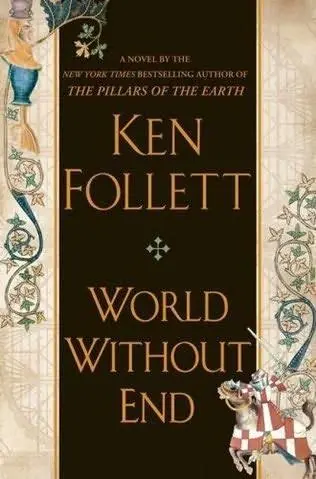
- Название:World Without End
- Автор:
- Жанр:
- Год:неизвестен
- ISBN:нет данных
- Рейтинг книги:5 / 5. Голосов: 1
-
Избранное:Добавить в избранное
- Отзывы:
-
Ваша оценка:
World Without End: краткое содержание, описание и аннотация
Предлагаем к чтению аннотацию, описание, краткое содержание или предисловие (зависит от того, что написал сам автор книги «World Without End»). Если вы не нашли необходимую информацию о книге — напишите в комментариях, мы постараемся отыскать её.
Ken Follett has 90 million readers worldwide. The Pillars of the Earth is his bestselling book of all time. Now, eighteen years after the publication of The Pillars of the Earth, Ken Follett has written the most-anticipated sequel of the year, World Without End.
In 1989 Ken Follett astonished the literary world with The Pillars of the Earth, a sweeping epic novel set in twelfth-century England centered on the building of a cathedral and many of the hundreds of lives it affected. Critics were overwhelmed-"it will hold you, fascinate you, surround you" (Chicago Tribune)-and readers everywhere hoped for a sequel.
World Without End takes place in the same town of Kingsbridge, two centuries after the townspeople finished building the exquisite Gothic cathedral that was at the heart of The Pillars of the Earth. The cathedral and the priory are again at the center of a web of love and hate, greed and pride, ambition and revenge, but this sequel stands on its own. This time the men and women of an extraordinary cast of characters find themselves at a crossroad of new ideas-about medicine, commerce, architecture, and justice. In a world where proponents of the old ways fiercely battle those with progressive minds, the intrigue and tension quickly reach a boiling point against the devastating backdrop of the greatest natural disaster ever to strike the human race-the Black Death.
Three years in the writing, and nearly eighteen years since its predecessor, World Without End breathes new life into the epic historical novel and once again shows that Ken Follett is a masterful author writing at the top of his craft.
World Without End — читать онлайн бесплатно полную книгу (весь текст) целиком
Ниже представлен текст книги, разбитый по страницам. Система сохранения места последней прочитанной страницы, позволяет с удобством читать онлайн бесплатно книгу «World Without End», без необходимости каждый раз заново искать на чём Вы остановились. Поставьте закладку, и сможете в любой момент перейти на страницу, на которой закончили чтение.
Интервал:
Закладка:
Wulfric lit a lamp and built up the fire while Gwenda put the boys to bed. Although there were bedrooms upstairs – they were still living in the large house that had been occupied by Wulfric’s parents – nevertheless they all slept in the kitchen, for warmth.
Gwenda felt depressed as she wrapped the boys in blankets and settled them near the fire. She had grown up determined not to live the way her mother did, in constant worry and want. She had aspired to independence: a patch of land, a hard-working husband, a reasonable lord. Wulfric yearned to get back the land his father had farmed. In all those aspirations they had failed. She was a pauper, and her husband a landless labourer whose employer could not even pay him a penny a day. She had ended up exactly like her mother, she thought; and she felt too bitter for tears.
Wulfric took a pottery bottle from a shelf and poured ale into a wooden cup. “Enjoy it,” Gwenda said sourly. “You won’t be able to buy your own ale for a while.”
Wulfric said conversationally: “It’s amazing that Perkin has no money. He’s the richest man in the village, apart from Nathan Reeve.”
“Perkin has money,” Gwenda said. “There’s a jar of silver pennies under his fireplace. I’ve seen it.”
“Then why won’t he pay us?”
“He doesn’t want to dip into his savings.”
Wulfric was taken aback. “But he could pay us, if he wanted to?”
“Of course.”
“Then why am I going to work for food?”
Gwenda let out an impatient grunt. Wulfric was so slow on the uptake. “Because the alternative was no work at all.”
Wulfric was feeling that they had been hoodwinked. “We should have insisted on payment.”
“Then why didn’t you?”
“I didn’t know about the jar of pennies under the fireplace.”
“For God’s sake, do you think a man as rich as Perkin can be impoverished by failing to sell one cartload of apples? He’s been the largest landholder in Wigleigh ever since he got hold of your father’s acres ten years ago. Of course he has savings!”
“Yes, I see that.”
She stared into the fire while he finished the ale, then they went to bed. He put his arms around her, and she rested her head on his chest, but she did not want to make love. She was too angry. She told herself she should not take it out on her husband: Perkin had let them down, not Wulfric. But she was angry with Wulfric – furious. As she sensed him drifting off to sleep, she realized that her anger was not about their wages. That was the kind of misfortune that afflicted everyone from time to time, like bad weather and barley mould.
What, then?
She recalled the way Annet had fallen against Wulfric as she stepped down from the cart. When she remembered Annet’s coquettish smile, and Wulfric’s flush of pleasure, she wanted to slap his face. I’m angry with you, she thought, because that worthless, empty-headed flirt can still make you look such a damn fool.
On the Sunday before Christmas, a manor court was held in the church after the service. It was cold, and the villagers huddled together, wrapped in cloaks and blankets. Nathan Reeve was in charge. The lord of the manor, Ralph Fitzgerald, had not been seen in Wigleigh for years. So much the better, Gwenda thought. Besides, he was Sir Ralph now, with three other villages in his fiefdom, so he would not take much interest in ox teams and cow pasture.
Alfred Shorthouse had died during the week. He was a childless widower with ten acres. “He has no natural heirs,” said Nate Reeve. “Perkin is willing to take over his land.”
Gwenda was surprised. How could Perkin think of taking on more land? She was too startled to respond immediately, and Aaron Appletree, the bagpipe player, spoke first. “Alfred has been in poor health since the summer,” he said. “He’s done no autumn ploughing and sown no winter wheat. All the work is to be done. Perkin will have his hands full.”
Nate said aggressively: “Are you asking for the land yourself?”
Aaron shook his head. “In a few more years, when my boys are big enough to help, I’ll jump at such a chance,” he said. “I couldn’t handle it now.”
“I can manage it,” Perkin said.
Gwenda frowned. Nate obviously wanted Perkin to have the land. No doubt a bribe had been promised. She had known all along that Perkin had money. But she had little interest in exposing Perkin’s duplicity. She was thinking of how she could exploit this situation to her advantage, and get her family out of poverty.
Nate said: “You could take on another labourer, Perkin.”
“Wait a minute,” Gwenda said. “Perkin can’t pay the labourers he’s got now. How can he take on more land?”
Perkin was taken aback, but he could hardly deny what Gwenda was saying, so he remained silent.
Nate said: “Well, who else can cope with it?”
Gwenda said quickly. “We’ll take it.”
Nate looked surprised.
She added quickly: “Wulfric is working for food. I have no work. We need land.”
She noticed several nodding heads. No one in the village liked what Perkin had done. They all feared that one day they might end up in the same situation.
Nate saw the danger of his plan going awry. “You can’t afford the entry fee,” he said.
“We’ll pay it a little at a time.”
Nate shook his head. “I want a tenant who can pay right away.” He looked around the assembled villagers. However, no one volunteered. “David Johns?”
David was a middle-aged man whose sons had land of their own. “I would have said yes a year ago,” he said. “But the rain at harvest time knocked me back.”
The offer of an extra ten acres would normally have had the more ambitious villagers fighting among themselves, but it was a bad year. Gwenda and Wulfric were different. For one thing, Wulfric had never ceased to long for land of his own. Alfred’s acres were not Wulfric’s birthright, but they were better than nothing. Anyway, Gwenda and Wulfric were desperate.
Aaron Appletree said: “Give it to Wulfric, Nate. He’s a hard worker, he’ll get the ploughing done in time. And he and his wife deserve some good luck – they’ve had more than their fair share of bad.”
Nate looked bad-tempered, but there was a loud rumble of assent from the peasants. Wulfric and Gwenda were well respected despite their poverty.
This was a rare combination of circumstances that could get Gwenda and her family started on the road to a better life, and she felt growing excitement as it began to seem possible.
But Nate was still looking dubious. “Sir Ralph hates Wulfric,” he said.
Wulfric’s hand went to his cheek, and he touched the scar made by Ralph’s sword.
“I know,” said Gwenda. “But Ralph’s not here.”
52
When Earl Roland died the day after the battle of Crécy, several people moved a step up the ladder. His elder son, William, became the earl, overlord of the county of Shiring, answerable to the king. A cousin of William’s, Sir Edward Courthose, became lord of Caster, took over the rule of the forty villages of that fiefdom as a sub-tenant of the earl, and moved into William and Philippa’s old house in Casterham. And Sir Ralph Fitzgerald became lord of Tench.
For the next eighteen months, none of them went home. They were all too busy travelling with the king and killing French people. Then, in 1347, the war reached a stalemate. The English captured and held the valuable port city of Calais, but otherwise there was little to show for a decade of war – except, of course, a great deal of booty.
In January 1348 Ralph took possession of his new property. Tench was a large village with a hundred peasant families, and the manor included two smaller villages nearby. He also retained Wigleigh, which was half a day’s ride away.
Читать дальшеИнтервал:
Закладка:
Похожие книги на «World Without End»
Представляем Вашему вниманию похожие книги на «World Without End» списком для выбора. Мы отобрали схожую по названию и смыслу литературу в надежде предоставить читателям больше вариантов отыскать новые, интересные, ещё непрочитанные произведения.

Обсуждение, отзывы о книге «World Without End» и просто собственные мнения читателей. Оставьте ваши комментарии, напишите, что Вы думаете о произведении, его смысле или главных героях. Укажите что конкретно понравилось, а что нет, и почему Вы так считаете.