Philippa Gregory - Earthly Joys
Здесь есть возможность читать онлайн «Philippa Gregory - Earthly Joys» — ознакомительный отрывок электронной книги совершенно бесплатно, а после прочтения отрывка купить полную версию. В некоторых случаях можно слушать аудио, скачать через торрент в формате fb2 и присутствует краткое содержание. Жанр: Историческая проза, на английском языке. Описание произведения, (предисловие) а так же отзывы посетителей доступны на портале библиотеки ЛибКат.
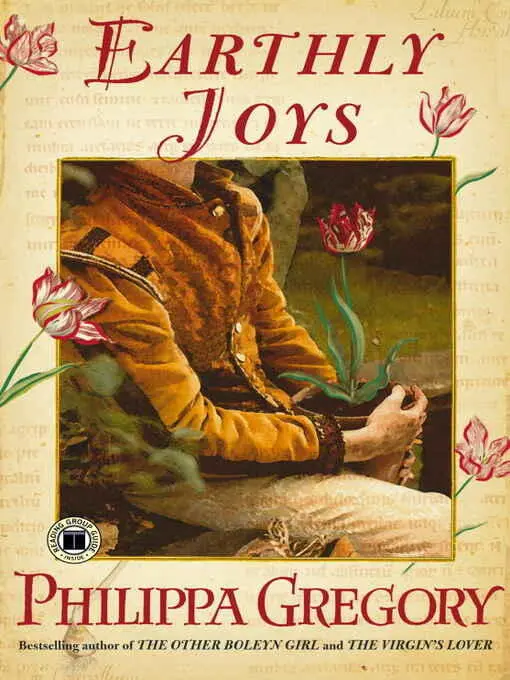
- Название:Earthly Joys
- Автор:
- Жанр:
- Год:неизвестен
- ISBN:нет данных
- Рейтинг книги:3 / 5. Голосов: 1
-
Избранное:Добавить в избранное
- Отзывы:
-
Ваша оценка:
Earthly Joys: краткое содержание, описание и аннотация
Предлагаем к чтению аннотацию, описание, краткое содержание или предисловие (зависит от того, что написал сам автор книги «Earthly Joys»). Если вы не нашли необходимую информацию о книге — напишите в комментариях, мы постараемся отыскать её.
Earthly Joys — читать онлайн ознакомительный отрывок
Ниже представлен текст книги, разбитый по страницам. Система сохранения места последней прочитанной страницы, позволяет с удобством читать онлайн бесплатно книгу «Earthly Joys», без необходимости каждый раз заново искать на чём Вы остановились. Поставьте закладку, и сможете в любой момент перейти на страницу, на которой закончили чтение.
Интервал:
Закладка:
“Fame comes in many guises, Tradescant,” Robert Cecil remarked. “But I think people will remember you when they sit beneath their chestnut trees and when your plants bloom in their gardens. And here you are, and here you will be, as long as my house stands, recorded forever, striding out with a plant in one hand, and your rake in the other.”
Autumn 1611
Elizabeth and Baby J were at last to move to Hatfield House. Gertrude, suddenly seized with maternal tenderness, came to weep over their departure and to see them off, all their goods loaded into one wagon, and Elizabeth sitting beside John on the driver’s seat with Baby J wedged between them.
“Where’s the chestnut tree?” John asked.
“That tree!” Gertrude exclaimed, but she lacked her old spite.
“Safe in the back,” Elizabeth said. “Beside the kitchen things.”
John handed her the reins of the steady horse and went round to the back of the wagon to find the barrel with the tree. It was leaning at an angle against the rail. The movement could have rubbed the bark off the tender trunk. John compressed his lips over hard words. Elizabeth had much work to do: moving house, and a young child, active as a puppy under her feet all day. He should not blame her for being careless with something which had only meant much to her as a token of his love. She never cared for it as he did. It was unfair to expect that she should.
He unloaded a couple of stools and repacked the corner of the wagon so that the tree was fully supported. Then he came round to the driver’s seat.
“Your baby safely settled?” Elizabeth asked sharply.
John nodded, not rising to the bait. “It’s a precious rarity,” he reminded her mildly. “Probably worth more than the whole cart of things put together. We would be fools if we broke it out of carelessness.”
Gertrude shot a swift look at Elizabeth as if to bewail the stubbornness of men, then Elizabeth leaned out from the wagon and kissed her mother good-bye.
“Come and see us at Hatfield,” Elizabeth said.
Gertrude stepped back as the wagon moved forward. She waved and saw Baby J wave back to her. For a moment she thought she might be able to cry, but though she screwed up her face and thought of the loss of her daughter and her grandson, no tears came.
“Safe journey!” she called, and saw Tradescant settle himself on the wagoner’s hard bench seat as if he were ready to travel across half the world.
“Oh, yes,” she said under her breath as the wagon drew away. “I see you, John Tradescant, with your heart leaping up at the very word ‘journey.’ She’d have done better to have married a good Kent farmer and be christened, married, and buried in her father’s church. But that would never have done for you because you are Cecil’s man through and through and you have all of his ambition – though it shows itself in funny ways with your rarities and your travels – and Meopham would never have been big enough or strange enough or rare enough for you.”
A little handkerchief fluttered from the receding cart, and Gertrude whipped out her own and waved back.
“Still,” she said philosophically. “He doesn’t beat her, and there are a lot worse things a man can love better than his wife than a garden and a lord.”
Elizabeth and John, unaware of this brutal and nearly accurate summary of their lives, found their spirits rising as they drew farther and farther away from Meopham.
“It seems odd to me to live anywhere else, but I shall grow accustomed,” Elizabeth said. “And a bigger cottage and a better garden-”
“And the parkland all around instead of the lanes for J to play in,” John reminded her. “And gardens the like of which no one in England has ever seen. Fountains and rivers!”
“We must take care he doesn’t wander off and fall in,” Elizabeth said. “He’s very restless. I can’t think how many times someone has brought him back to me and told me he was halfway to Sussex.”
“He can stray all he likes in my lord’s gardens,” John said with satisfaction. “He’ll come to no harm there.”
“And we’ll eat our dinner in hall or at our home as we wish?” Elizabeth asked.
“As we wish when the lord is away from home. But when he is at the palace he likes his men to dine in the hall. And I like to see him.”
“Well enough when you had no one to cook your dinner at home,” Elizabeth remarked. “But now I shall be there-”
John put a hand gently on hers. “If he looks down the hall to see me, I must be there,” he reminded her. “It’s not a question of a dinner cooked by you or a dinner cooked by the cooks. It’s not even a question of whose company I would rather keep. It is just that if he looks down the hall for me, I must be there. You must know that by now, Elizabeth. You must know that now that we are going to live on his land, in a cottage owned by him and given to us free. You must know that he comes first.”
For a moment he thought she would fly out at him and then there would be a quarrel and a sulk – for they were both terrible sulkers – which could easily last for the whole two days of the journey. But then he saw her recognize the simple truth of it.
“I know,” she agreed. “But it is hard for me. The people I come from, my family, are freeholders on their own land. They dine where they please.”
“Sometimes only on bread and bacon,” John pointed out.
“Even so. It’s their own bread and bacon and they fear no one’s favor.”
John nodded. “And if I had been content to be a farmer or perhaps a gardener on my own account in a small way with a little market garden for bulbs or flowers or fruit, then I should be a man like that too. But I wanted something more, Elizabeth. I wanted the chance to make the greatest garden in England. And he gave me that when I was a young man, so young that most masters would have made me work an apprenticeship under another man for another year or three before they even considered me. He trusted me, he took a risk with me. He gave me Theobalds when I was little more than a lad.”
“And don’t you see what you’ve paid for that?” she asked him. “You can’t even choose where to eat your dinner. You can’t choose where to live. Sometimes I think you can’t even choose what to feel in your heart. It’s his feelings that matter. Not your own.”
“It’s the way it is,” he stated. “The way of the world.”
She shook her head. “Not in Meopham. Not in my family. Not in the country. It’s the way of the court where everyone has to have a great man’s favor and protection to rise, where every great man has to have his followers to show his importance. But there are men and women all over the country who live according to their own lights and call no man master.”
“You think that’s a better life?”
“Of course,” she said, but she could see that what seemed to her to be a freedom from an onerous duty was to him a loss, an emptiness which he could not have borne.
“I would have been a smaller man without my lord,” he said. “And what you think of as freedom is a small price to pay for belonging heart and soul to a great man. It’s the price I pay gladly.”
“But I pay it too,” she said quietly.
For a moment he glanced down at her as if something in her voice had made him feel tender for her, regretful, as if they should have been more to each other. She thought that he would put his arm around her and cuddle her against his side and drive one-handed like a lover and his lass on the way to the fair. “Yes, you pay too,” he admitted, keeping both hands on the driving reins. “You knew you were marrying a man who had a duty already promised. I was Cecil’s man before we were even betrothed, let alone married. You knew that, Elizabeth.”
Читать дальшеИнтервал:
Закладка:
Похожие книги на «Earthly Joys»
Представляем Вашему вниманию похожие книги на «Earthly Joys» списком для выбора. Мы отобрали схожую по названию и смыслу литературу в надежде предоставить читателям больше вариантов отыскать новые, интересные, ещё непрочитанные произведения.
Обсуждение, отзывы о книге «Earthly Joys» и просто собственные мнения читателей. Оставьте ваши комментарии, напишите, что Вы думаете о произведении, его смысле или главных героях. Укажите что конкретно понравилось, а что нет, и почему Вы так считаете.