Philippa Gregory - Earthly Joys
Здесь есть возможность читать онлайн «Philippa Gregory - Earthly Joys» — ознакомительный отрывок электронной книги совершенно бесплатно, а после прочтения отрывка купить полную версию. В некоторых случаях можно слушать аудио, скачать через торрент в формате fb2 и присутствует краткое содержание. Жанр: Историческая проза, на английском языке. Описание произведения, (предисловие) а так же отзывы посетителей доступны на портале библиотеки ЛибКат.
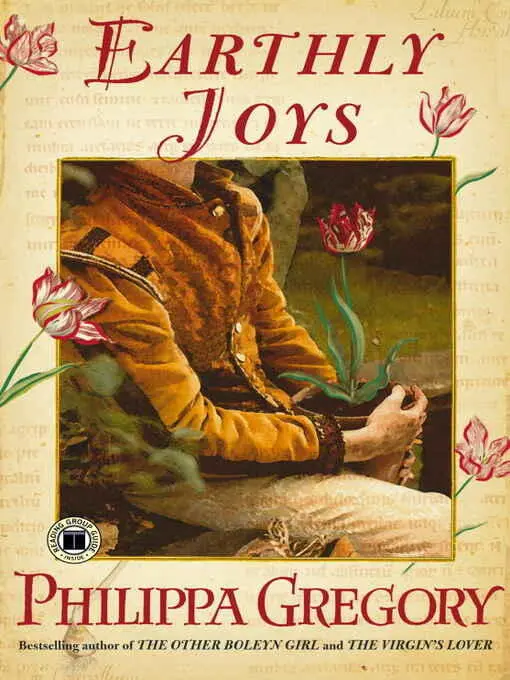
- Название:Earthly Joys
- Автор:
- Жанр:
- Год:неизвестен
- ISBN:нет данных
- Рейтинг книги:3 / 5. Голосов: 1
-
Избранное:Добавить в избранное
- Отзывы:
-
Ваша оценка:
Earthly Joys: краткое содержание, описание и аннотация
Предлагаем к чтению аннотацию, описание, краткое содержание или предисловие (зависит от того, что написал сам автор книги «Earthly Joys»). Если вы не нашли необходимую информацию о книге — напишите в комментариях, мы постараемся отыскать её.
Earthly Joys — читать онлайн ознакомительный отрывок
Ниже представлен текст книги, разбитый по страницам. Система сохранения места последней прочитанной страницы, позволяет с удобством читать онлайн бесплатно книгу «Earthly Joys», без необходимости каждый раз заново искать на чём Вы остановились. Поставьте закладку, и сможете в любой момент перейти на страницу, на которой закончили чтение.
Интервал:
Закладка:
The Prince of Orange’s gardener admitted Tradescant to the beautiful garden behind the palace of The Hague and showed him around. It was a garden in the grand European style, with large stone colonnades and broad sweeping walks. Tradescant spoke to him of his work at Theobalds, planting between the box hedges and replacing the colored stones of the knot garden with lavender. The gardener nodded with enthusiasm and showed Tradescant his version of the changing style in a little garden at the side of the palace where he had used tidily pruned lavender for the hedges themselves. They made a softer pattern and had more variation of color than the usual box hedge. They did not harbor insects and when a woman passed by, her skirts brushed against the leaves and released a cloud of perfume. When he left, Tradescant had a trayful of rooted cuttings and a letter of introduction to the great physic garden at Leiden.
He traveled overland to Rotterdam, uncomfortable on a big broad-backed horse, all the way seeking out English-speaking farmers who could tell him about the growing of their precious tulips. In the darkened cellars of ale houses, drinking a rich sweet beer which was new to John, called “thick beer,” they swore that the new colors entered into the heart of the flowers by slicing into the very heart of the bulb.
“Does it not weaken them?” John asked.
The men shook their heads. “It helps them to split,” one of them volunteered. He leaned forward and breathed a blast of raw onion into John’s face. “To spawn. And then what do you have?”
John shook his head.
“Two, where you had one before! If they are of another color, and the color often enters at the split, then you have made a fortune a thousand times over. But if they are the same color but have doubled, then you have doubled your fortune at the least.”
John nodded. “It is like a miracle,” he said. “You cannot help but double your fortune every year.”
The man sat back in his seat and beamed. “And it’s more than double,” he confirmed. “The prices are steadily rising. People are ready to pay more and more each year.” He scratched his broad belly with quiet satisfaction. “I shall have a handsome house in Amsterdam before I retire,” he predicted. “And all from my tulips.”
“I shall buy from you,” John promised.
“You have to come to the auction,” the man said firmly. “I don’t sell privately. You will have to bid against the others.”
John hesitated. An auction in a foreign country in a language he did not understand was almost bound to drive up the price. One of the other growers leaned forward.
“You have to,” he said simply. “The market for tulips is all agreed. It has to be done in the colleges, in the appointed way. You cannot buy without posting a bid. That way we all know how much is being made on each color.”
“I just want to buy some flowers,” John protested. “I don’t want to post a bid in the colleges; I don’t understand how it is done. I just want some flowers.”
The first grower shook his head. “It may be just flowers to you, but it’s trade to us. We are traders and we have formed a college and we buy and sell in each other’s view. That way we know what prices are being charged; that way we can watch the prices rise. And not be left behind.”
“Prices are rising so fast?” John asked.
The grower beamed and dipped his face into his great mug of ale. “No one knows how high it can go,” he said. “No one knows. If I were you I would swallow my English pride and go to the college and post my bid and buy now. It will be dearer next season, and dearer the year after that.”
John glanced around the ale house. The growers were all nodding, not with a salesman’s desire for a deal but with the quiet confidence of men who are in an irresistibly rising market.
“I’ll take a dozen sacks of plain reds and yellows,” John decided. “Where is this college?”
The grower smiled. “Right here,” he said. “We don’t leave our dinner table for anything.” He took a clean dinner plate, and scribbled a price on it and pushed the plate across to John. The man at John’s elbow dug him in the ribs and whispered, “That’s high. Knock off a dozen guilders at least.”
John amended the price and pushed it back; the man rubbed the number off and wrote his own total. John agreed and the plate was posted on a hook on the wall of the room. The grower extended a callused hand.
“That’s all?” John queried, shaking it.
“That’s all,” the man said. “Business done in the open where everyone can see the posted price. Fairly done and well done, and no harm to either bidder or seller.”
John nodded.
“A pleasure to do business with you, Mr. Tradescant,” said the grower.
The tulips were delivered to John’s inn the next day and he sent them off with a courier under strict orders that they were not to be out of his sight until he had put them into the Hatfield wagon at London dock. He also sent a letter to Meopham with his love and a kiss for Baby J, and news that he was going on to Paris.
It was as he sealed the letter and put it into the hands of the courier that John knew that he was a traveler indeed. He did not fear the strangeness of Europe; he had a deep intoxicating sense that he might hire a horse here and then exchange it for another, and then another, and then another, and ride all the way across Europe, through the heart of papist Spain and even on to Africa. He was an islander no more; he had become a traveler.
He watched the barge carrying his precious tulips slip away down the canal and turned back to the inn. The horse was waiting, saddled for him; he had paid his slate; his traveling pack was ready. John swung his thick cape around his shoulders, heaved himself into the saddle, and set the horse’s head for the west gate.
“Where are you headed?” one of the tulip growers called to him, seeing a good customer departing.
“To Paris,” John called back and nearly laughed at his own sense of excitement. “I’m to visit the gardens of the French king. And I am buying more plants. I need even more. I think I shall buy up half of Europe.”
The man laughed and waved him on and John’s horse, its metal shoes ringing on the cobblestones, stepped delicately out onto the highway.
The roads were good to the frontier and then they deteriorated into a mud track riddled with potholes. John kept a sharp lookout for great forests with a château set among the trees, and when he saw newly planted drives he turned off the road and went to find the French gardener to discover where he got his trees from. If he found a good supplier of rare trees, he placed an order with him to lift a hundred of them when the weather turned colder and they could be safely moved and sent on to Hatfield. For the great Earl Cecil himself.
As John drew nearer to Paris the woods became thinner except for the preserved forests for hunting, and then the road became lined with little farmhouses and market gardens to feed the insatiable appetite of the city. From his vantage point on horseback John overlooked garden and orchard walls and constantly surveyed what the French gardeners were growing. As a man from Kent he could afford to despise the quality of their apples, but he envied the size and ripeness of their plum trees and stopped half a dozen times to buy specimens of what looked like new varieties.
He entered Paris with an entourage following him like a traveling garden, two wagons loaded with swaying leaves, and he had to find an inn that was accustomed to great baggage trains where he could pack up his new purchases and send them on to England.
As soon as they were safely dispatched John called for a laundress to wash and starch his clothes, to clean the dust from his cape so that he might use his letter of introduction to the French king’s own gardener, the famous Jean Robin.
Читать дальшеИнтервал:
Закладка:
Похожие книги на «Earthly Joys»
Представляем Вашему вниманию похожие книги на «Earthly Joys» списком для выбора. Мы отобрали схожую по названию и смыслу литературу в надежде предоставить читателям больше вариантов отыскать новые, интересные, ещё непрочитанные произведения.






Обсуждение, отзывы о книге «Earthly Joys» и просто собственные мнения читателей. Оставьте ваши комментарии, напишите, что Вы думаете о произведении, его смысле или главных героях. Укажите что конкретно понравилось, а что нет, и почему Вы так считаете.