Philippa Gregory - Earthly Joys
Здесь есть возможность читать онлайн «Philippa Gregory - Earthly Joys» — ознакомительный отрывок электронной книги совершенно бесплатно, а после прочтения отрывка купить полную версию. В некоторых случаях можно слушать аудио, скачать через торрент в формате fb2 и присутствует краткое содержание. Жанр: Историческая проза, на английском языке. Описание произведения, (предисловие) а так же отзывы посетителей доступны на портале библиотеки ЛибКат.
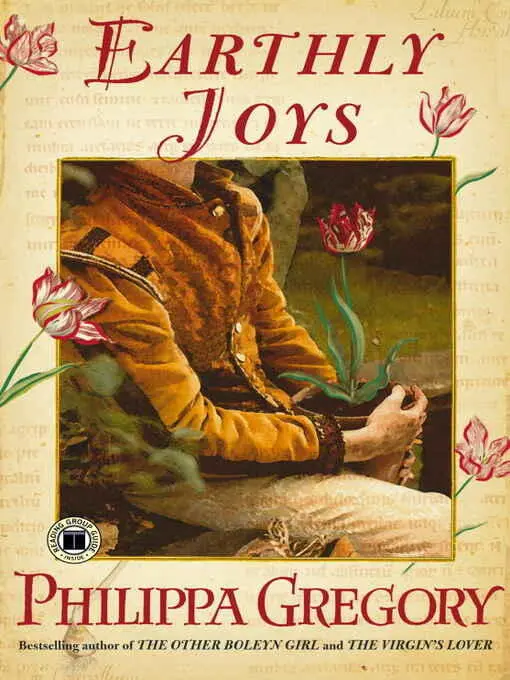
- Название:Earthly Joys
- Автор:
- Жанр:
- Год:неизвестен
- ISBN:нет данных
- Рейтинг книги:3 / 5. Голосов: 1
-
Избранное:Добавить в избранное
- Отзывы:
-
Ваша оценка:
Earthly Joys: краткое содержание, описание и аннотация
Предлагаем к чтению аннотацию, описание, краткое содержание или предисловие (зависит от того, что написал сам автор книги «Earthly Joys»). Если вы не нашли необходимую информацию о книге — напишите в комментариях, мы постараемся отыскать её.
Earthly Joys — читать онлайн ознакомительный отрывок
Ниже представлен текст книги, разбитый по страницам. Система сохранения места последней прочитанной страницы, позволяет с удобством читать онлайн бесплатно книгу «Earthly Joys», без необходимости каждый раз заново искать на чём Вы остановились. Поставьте закладку, и сможете в любой момент перейти на страницу, на которой закончили чтение.
Интервал:
Закладка:
Robin had heard of Tradescant and was desperate for news of the new great palace and gardens at Hatfield. Of course it would be in the French style, it was to be designed by a Frenchman, but what of the woods, what of the walks? And what did Tradescant think of the prices of tulips, were they rising or would they hold steady for another year? How high could the price of a bulb go anyway? Surely there must be a point where a man would pay no higher?
Tradescant and Jean Robin walked around the royal garden for a couple of hours and then retired for a grand dinner enhanced by several bottles of claret from the royal cellar. Jean Robin’s son joined them for the meal, washing the mud from the garden off his hands before he sat down and bowed his head for a papist grace. Tradescant shifted uneasily in his seat while the ritual Latin was spoken, but when the young man broke bread he could not help but smile.
“I hope that my son too will follow me into my place,” John said. “He’s only a baby now, but I will bring him up to my work and – who knows?”
“A man who holds a craft should pass it on,” Jean Robin said, speaking slowly for John’s benefit. “But when it is a garden which takes so long to fruit, then you are planting for your son and his sons anyway. It is a fine thing to say to a boy, look out for this tree and when it is grown this high, I want it pruned like that. To know that the garden lives on, and your work and plans for it will live on, even after you are long dead.”
“It is a poor man’s posterity,” John said thoughtfully.
“I should want no other than to leave a beautiful garden,” Jean Robin declared. He smiled at his son. “And what an inheritance for a young man!”
When they parted, a week later, they had sworn eternal friendship in the brotherhood of gardeners, and Tradescant was loaded with trays of cuttings, purses of seeds and dozens of roots and saplings.
“And where d’you go now?” Robin demanded at a final farewell dinner.
John knew an instant temptation to say that he was going on to Spain, that he would ride slowly down the country ways and collect a plant from every roadside verge. “Home,” he said, in his halting French. “Home and my wife.”
Robin clapped him on the back. “And the new garden at Hatfield,” he said, as if there was no doubt which was the most important.
John arrived back at Meopham in December to kiss Elizabeth and make his peace with Baby J, who was angry at being neglected. He had brought Baby J a little wooden soldier, carved by a Frenchman and dressed in the uniform of the king’s personal guard. Baby J was talking clearly now and very firm in his opinions. He particularly disapproved of John’s return to Elizabeth’s bed.
“That’s my place,” he stated flatly, glaring at his father in the early hours of John’s first day at home. John, who had planned to make love to Elizabeth when they woke, was rather taken aback by the unmistakable enmity in his son’s little face.
“This is my bed,” John said reasonably. “And my wife.”
“She’s my mother!” Baby J shouted and launched himself at his father.
John caught the little fists and tucked the writhing, angry body under his arm. “Hey day! What’s this? I’m home now, Baby J, and this is my place.”
Elizabeth smiled at the two of them. “He’s been the man of the house for three months, John; you stayed away too long.”
John bent his face down to his little son’s wriggling body and smacked a kiss on his bare stomach. “He’ll learn to love me again,” he said. “I shall stay till Twelfth Night.”
Elizabeth did not protest, she was learning that the lord’s garden came before everything, but she swept out of bed in a way which made her feelings very plain. John let her go, his eyes on his son’s bright little face.
“One time I shall take you with me,” he promised. “It’s not that I’m in your place here – you should be sharing my place with me.” He nodded to the window which overlooked the village street but he meant the wider world, beyond the lanes to London, beyond even London. He meant Europe, he meant Africa, he meant the East.
Spring 1611
John stayed for little more than three weeks at Meopham, long enough to get under Elizabeth’s feet in the little cottage and to make his peace with his son, before hiring another cart and driver and traveling down the mud-filled, almost impassable roads to Dorset, seeking more trees for sale: apple trees for the orchard, cherry, pear, quince, plum. Trees for the park: oak, rowan, birch, beech.
“Wherever will you get them all from?” Elizabeth wondered, bringing him his well-darned traveling cloak and packing a basket of food under the seat of the wagon.
“I shall buy them from the orchards,” John said determinedly. “They sell apples by the dozen, why not trees?”
“And the wild trees for the earl’s park?”
“I shall take them,” John said recklessly. “From every forest I pass on my way. I shall be going through the New Forest; every sapling I see I shall stop and dig up.”
“You will be hanged for certain!” Elizabeth exclaimed. “You will be hauled before the verderers’ courts and hanged for damaging the royal chase.”
“How else am I to find my lord’s trees?” John demanded. “How else am I to do it?”
John traveled around England and brought back his swaying whispering carts filled with the bushy heads of trees. They came to know him on the West Road, and when children saw him coming into a town with his carts rumbling behind him they would run to the well to fetch a bucket to water Mr. Tradescant’s trees.
The great house was nearly finished and the gardens were slowly shaping according to the master plan. There had only been one long delay when the workmen had run short of money, and even the great Cecil coffers had run dry. John had feared for his lord then, feared that the cost of the house and the cost of the garden had overstretched him, as everyone had warned that it would. John sensed, but did not know, that there were enemies on every side at court who might bow to and flatter the Secretary of State now, but at the least sign of weakness would pull him down like a pack of hounds upon an old stag. Just as the rumors got out that Cecil had overreached himself and would fail, there was more money delivered to the builders, and more money at the goldsmiths’ in the little provincial towns for John to draw on to buy his trees.
“How did you manage it?” John asked Cecil. “Have you sold your soul, my lord?”
Cecil’s smile was grim. “All but,” he said. “I sold every other property I owned, and borrowed on the rest. But I had to have my house, John. And we had to have our garden.”
John first labored on the acres which faced the house, especially the huge knot garden below the terrace where the earl had his private rooms. Each path leading from the house was precisely aligned to the windows of the private rooms so that Cecil, looking out, would always see a vista of straight lines, running outward to the distant horizon. Tradescant, breaking with tradition, planted different edging plants at each junction of the outward path so the color of the hedges melted and grew paler as the eye was drawn farther and farther from the house. At each crossroads was a little statue, an aid to meditation on the fleeting nature of life and the vanity of wishes.
“I might as well have put up a moneylender’s sign,” Cecil said dourly to John when they walked the new paths, and John grinned.
“You were warned, my lord,” he said lovingly. “But you would have your own way.”
“And are you telling me I was wrong?” Cecil asked with a dark upward gleam at the taller man.
Читать дальшеИнтервал:
Закладка:
Похожие книги на «Earthly Joys»
Представляем Вашему вниманию похожие книги на «Earthly Joys» списком для выбора. Мы отобрали схожую по названию и смыслу литературу в надежде предоставить читателям больше вариантов отыскать новые, интересные, ещё непрочитанные произведения.




Обсуждение, отзывы о книге «Earthly Joys» и просто собственные мнения читателей. Оставьте ваши комментарии, напишите, что Вы думаете о произведении, его смысле или главных героях. Укажите что конкретно понравилось, а что нет, и почему Вы так считаете.