Philippa Gregory - Earthly Joys
Здесь есть возможность читать онлайн «Philippa Gregory - Earthly Joys» — ознакомительный отрывок электронной книги совершенно бесплатно, а после прочтения отрывка купить полную версию. В некоторых случаях можно слушать аудио, скачать через торрент в формате fb2 и присутствует краткое содержание. Жанр: Историческая проза, на английском языке. Описание произведения, (предисловие) а так же отзывы посетителей доступны на портале библиотеки ЛибКат.
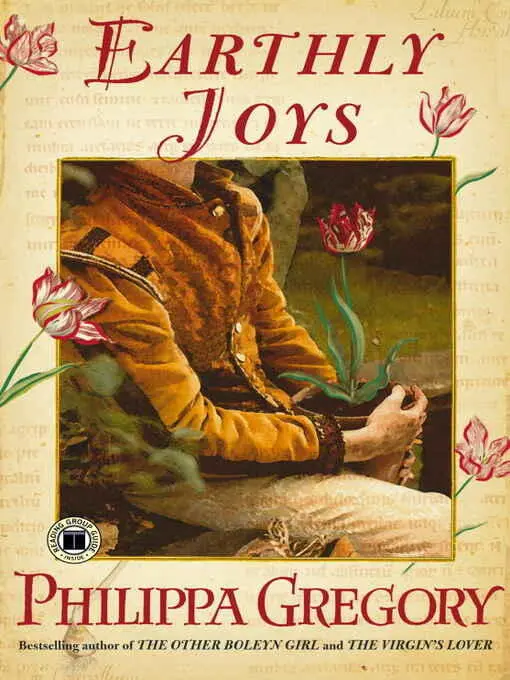
- Название:Earthly Joys
- Автор:
- Жанр:
- Год:неизвестен
- ISBN:нет данных
- Рейтинг книги:3 / 5. Голосов: 1
-
Избранное:Добавить в избранное
- Отзывы:
-
Ваша оценка:
Earthly Joys: краткое содержание, описание и аннотация
Предлагаем к чтению аннотацию, описание, краткое содержание или предисловие (зависит от того, что написал сам автор книги «Earthly Joys»). Если вы не нашли необходимую информацию о книге — напишите в комментариях, мы постараемся отыскать её.
Earthly Joys — читать онлайн ознакомительный отрывок
Ниже представлен текст книги, разбитый по страницам. Система сохранения места последней прочитанной страницы, позволяет с удобством читать онлайн бесплатно книгу «Earthly Joys», без необходимости каждый раз заново искать на чём Вы остановились. Поставьте закладку, и сможете в любой момент перейти на страницу, на которой закончили чтение.
Интервал:
Закладка:
She nodded and kept her eyes on the unwinding road ahead of them. “I knew that,” she agreed a little grimly. “I don’t complain.”
He left it at that, with her acquiescence, and trusted to the house that his lord had provided for them to persuade her, as he could not, that it was better to be the follower of a great man than a small man on your own account. He saw her face as he drew up outside the cottage and knew that there would be no complaints for a while about the earl.
It was not a cottage he had given them at all – not two cramped rooms on the ground floor and a rickety stair to a hayloft bedroom – but a proper house with a fence all around it and a path of handsome brick chippings leading up to the front door set flush in the middle with two windows, proper glazed windows with panes set diamond-wise in thick lead, on each side of it.
“Oh! oh!” Elizabeth slid down from the hard driving seat, lost for words.
A thick blond thatch sat weightily on the low roof. The beams in the walls were so new that they were still golden against the pale pink of the limewashed plaster.
“New built!” Elizabeth whispered. “New built for us?”
“For us and no other. Step inside,” John invited her.
With J at her heels, looking around at everything with eyes as wide as a hunting owl, Elizabeth stepped over the threshold of her new home and found herself inside a stone-flagged hall with a fire already lit in the fireplace to welcome her. To the right was the kitchen, with a big stone sink and a broad fireplace. To the left was a small room she could use as she pleased: a still room, or a drawing room; and immediately before her was a genuine solid flight of stairs with well-made wooden treads and risers which led to two more rooms above. Each one of them was big enough for a full-size bed, never mind the cramped little bed and Baby J’s truckle that they had brought with them on the wagon from Meopham.
“And a garden,” John said exultantly.
“A garden!” Elizabeth laughed at the predictability of her man, but let him lead her back down the stairs and through the kitchen to the back door.
Cecil had bidden John take what he wanted from the saplings and plants of the palace gardens and make his own little Eden. John had created in the small walled plot a little orchard, a walk of trellised apple and plum trees, a pottager by the back door with herbs for cooking and salad vegetables, a bed of strawberries and a kitchen garden bed of beans and peas and onions and greens.
“It looks so – rooted!” Elizabeth found the word at last. “As if it had been here forever.”
A brief gleam of pride crossed John’s face. “That is what I have learned this year at least,” he said. “I have learned how to make a garden new-made look as if it was there when Eden was planted. The trick of it is to put things too close, and bear the work of moving them before they get overcrowded. Also you have to take a risk of moving things which are really too big to be disturbed. Digging a wide trench around the roots. Those trees now-” He broke off. His wife was smiling at him but she was not listening. “I have found a way of moving trees so they don’t wither,” he finished. “But it’s of little interest except to another gardener.”
“It means that you have given me a beautiful garden which I will treasure,” she said. She came into his arms and held him close. “And I thank you for it. I see now why the little patch at Meopham was not enough. I never thought of you making a cottage garden like you make grand gardens, my John, but you have given me a little beauty here.”
He smiled at her pleasure and bent his head and kissed her. Her lips were still soft and warm and he thought with rising desire that tonight they would bed in a new room and tomorrow wake to look out on the great parkland of Hatfield, and their new life would begin.
“We’ll see these trees grow strong,” he said. “And we’ll plant the chestnut sapling at the bottom of the garden and sit in its shade when we are old.”
She nestled a little closer. “And we’ll bide at home,” she said firmly.
John rested his cheek against her warm cap. “When we’re old,” he promised, disarmingly.
The very next day the earl himself came down to visit the Tradescants in their new cottage. Elizabeth was flustered and overawed by the grandness of the pony carriage with one footman driving, and another hanging on the back. She came to the gate and curtseyed and stammered her thanks. But John opened the gate and went out to stand at the carriage door as to an intimate friend.
“Are you ill?” he asked Cecil quietly.
Cecil’s face was yellow and the lines of pain were deeper than ever. “No worse than usual,” he replied.
“Is it your bones?”
“My belly this time,” he said. “I am sick as a dog, John. But I can’t stop work yet. I have a plan to reform the king’s finances despite himself. If I can get him to agree then I can sell the whole scheme to Parliament, and hand over to them the farming of benefits in return for a proper wage for the king.”
John blinked. “You want the king to be paid by Parliament? To be its servant?”
Cecil nodded. “Better than this endless haggling, year after year, when they demand that he change his favorites and he demands more money. Anything is better than that. You have to be a king rich in charm to survive holding out an annual begging bowl, and this king is not as the old queen.”
“Can you not rest and come back to it later?” John asked urgently.
The heavy-lidded eyes looked at him. “Setting up as apothecary, John?”
“Can you not rest?”
Cecil flinched as he stretched out his hand to his man, and John saw that even that small gesture cost him pain. He took the hand as gently as he would hold Baby J’s while he slept. Unconsciously, he put his other hand on top of it and felt how cool were the fingers and how sluggish the pulse.
“Do I look so sick?”
John hesitated.
There was a gleam of a smile on Cecil’s face. “Come, John,” he said in a half-whisper. “You always prided yourself on telling me the truth; don’t turn courtier now.”
“You do look very very sick,” John said, his voice very low.
“Sick to death?”
John snatched a quick glance at his master’s heavy-lidded eyes and saw that he wanted a true answer to his question.
“I have no skills, my lord, but I would think so.”
Cecil frowned slightly and John tightened his grip on the thin cold hand.
“I’ve so much more to do,” the Secretary of State said.
“Look to yourself first,” John urged him, and then heard himself whisper, “please, my lord. Look to yourself first.”
Cecil leaned forward and laid his cheek against John’s warm face. “Ah, John,” he said softly. “I wish I had some of your strength.”
“I wish to God I could give it to you,” John whispered.
“Drive with me,” the earl commanded. “Drive round with me and tell me what is planted and how it will be, even though neither of us will be here to see it. Tell me how it will be in a hundred years when we will both be dead and gone. Hale or sick, John, this garden will outlive us both.”
Tradescant clambered into the carriage and sat beside his master, one arm along the back of the seat as if he would protect him from the jolting movement. Elizabeth, forgotten at the gate of her new house, watched them both go.
“You have made me a velvet setting for my jewel,” Cecil said with quiet pleasure as the carriage moved slowly down the avenue of new-planted trees. “We have done well together, John, for a pair of youngsters learning our trades.”
May 1612
Cecil was dying in the great curtained bed in the master chamber of his new fine house. Outside his door, the household staff pretended to go about their work in a hushed silence, hoping to hear the muttered colloquy of the doctors. Some wanted to send him to Bath to take the waters – his last chance of health. Some were for leaving him in his bed to rest. Sometimes, when his door opened, the servants could hear the harsh laboring of his breath and see him propped up on the rich embroidered pillows, the brightness of their spring colors a mockery of his yellowing skin.
Читать дальшеИнтервал:
Закладка:
Похожие книги на «Earthly Joys»
Представляем Вашему вниманию похожие книги на «Earthly Joys» списком для выбора. Мы отобрали схожую по названию и смыслу литературу в надежде предоставить читателям больше вариантов отыскать новые, интересные, ещё непрочитанные произведения.





Обсуждение, отзывы о книге «Earthly Joys» и просто собственные мнения читателей. Оставьте ваши комментарии, напишите, что Вы думаете о произведении, его смысле или главных героях. Укажите что конкретно понравилось, а что нет, и почему Вы так считаете.