Philippa Gregory - Earthly Joys
Здесь есть возможность читать онлайн «Philippa Gregory - Earthly Joys» — ознакомительный отрывок электронной книги совершенно бесплатно, а после прочтения отрывка купить полную версию. В некоторых случаях можно слушать аудио, скачать через торрент в формате fb2 и присутствует краткое содержание. Жанр: Историческая проза, на английском языке. Описание произведения, (предисловие) а так же отзывы посетителей доступны на портале библиотеки ЛибКат.
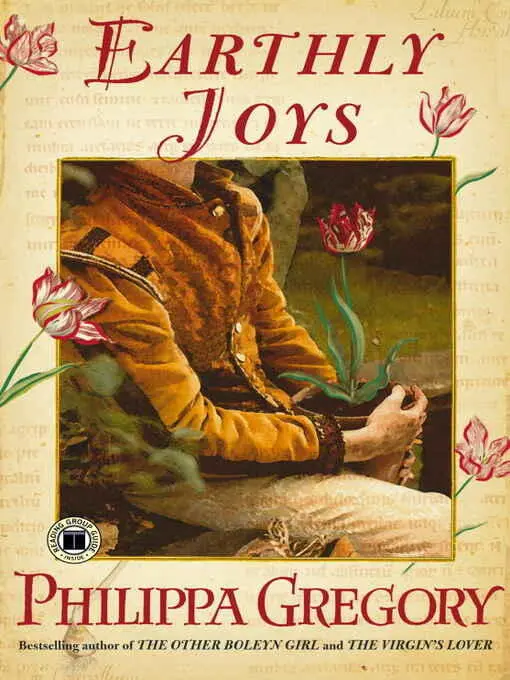
- Название:Earthly Joys
- Автор:
- Жанр:
- Год:неизвестен
- ISBN:нет данных
- Рейтинг книги:3 / 5. Голосов: 1
-
Избранное:Добавить в избранное
- Отзывы:
-
Ваша оценка:
Earthly Joys: краткое содержание, описание и аннотация
Предлагаем к чтению аннотацию, описание, краткое содержание или предисловие (зависит от того, что написал сам автор книги «Earthly Joys»). Если вы не нашли необходимую информацию о книге — напишите в комментариях, мы постараемся отыскать её.
Earthly Joys — читать онлайн ознакомительный отрывок
Ниже представлен текст книги, разбитый по страницам. Система сохранения места последней прочитанной страницы, позволяет с удобством читать онлайн бесплатно книгу «Earthly Joys», без необходимости каждый раз заново искать на чём Вы остановились. Поставьте закладку, и сможете в любой момент перейти на страницу, на которой закончили чтение.
Интервал:
Закладка:
Jane was silent for a moment. “I want to believe that better times are coming,” she said.
The wistfulness in her voice caught J’s attention. He took her hand and put his other hand gently on her belly. “They are for us,” he said reassuringly. “Whatever is happening for the king and his foolish court. A new baby on the way and the garden growing well. These are good times for us, Jane, and better times coming.”
John’s prediction of a grandson was accurate. Jane gave birth to a large-boned brown-haired baby in the middle of the afternoon of a warm September day. J was picking apples at the farthest end of the orchard, finding the cries of Jane’s labor quite unbearable. John and Frances were keeping each other company looking for the early fallen chestnuts down John’s little avenue.
“We’ll roast them,” Frances teased her grandfather with the cleverness of the bright three-year-old.
“They’re not sweet chestnuts.” John fell into the trap. “They’re no good for eating.”
“It’s no good as a tree then,” she said innocently. “I don’t like it.”
“Oh, Frances…,” John started and then he saw the bright twinkle in her eyes. “You are a wicked girl!” he pronounced. “And I think I will beat you.” He started to run toward her and she picked up her little gown and ran out of his reach, down the avenue of trees toward her father.
“John! J!” It was Elizabeth’s voice, calling from the terrace. John saw his son’s white face turn toward the house, then his slithering fall down the ladder, and then his run, past his daughter and his father, up the avenue toward the house.
“Is she all right?”
His mother’s face alone was reassurance enough. “She’s fine,” she said. “Very tired. And you have a son.”
J gave a little yelp of delight. “A son!” he yelled down the avenue where Tradescant was limping up with Frances bobbing in his wake. “A son! A boy!”
John checked and a broad smile spread across his face. He turned to Frances. “You have a brother,” he told her. “Your mother has given birth to a little boy.”
She was on her dignity, the powerful dignity of the three-year-old, and determined to be unimpressed. “Is that very good?” she asked.
John scooped her up and swung her to her usual place on his back. “It’s very good,” he said. “It means our name will last forever, with a son to continue the line. Sir John Tradescant of the Ark, Lambeth. It sounds very well indeed.”
“I shall be a Sir too,” Frances said, rather muffled with her face pressed into his back.
“Yes, you will,” John said agreeably. “I shall make sure that the king knows that you need a knighthood, when we next speak.”
Winter 1633-4
The queen took a fancy to J. It was as if she had to find some way of encompassing his refusal to do exactly as she wished about the oak tree. She could not leave his rejection of her plans alone; it rubbed the tender spot of her vanity. When she was walking in the gardens with her ladies, wrapped up in the richest of furs, or watching her courtiers practicing archery at the butts, she would stop if she saw J and call him over. “Here is my gardener who will only plant what he pleases!” she would exclaim in her strong French accent. “The young Tradescant.”
J would take his hat off his head in the chill wind, in obedience to his father’s instructions, and bow, but not very low, in obedience to his wife, and assume an expression of dogged patience as the queen was once more charming to him.
“I want you to plough up the allée of yews. It is so very dark and dreary now it is winter.”
“Of course,” J replied. “Only…”
“There you go!” she cried. “I can never do what I wish in my own garden; Tradescant will always have his own way. Why may I not have those trees grubbed out?”
J glanced down the court to the beautiful allée of trees. They were so old that they had bowed together and interlinked at the top so that they made a perfectly round tunnel. A bare brown earth path ran beneath them, marked with perfectly round white stepping stones. Nothing grew beneath them in the deep greeny light; not even in midsummer did the sunshine filter through. In the heat of the day it was as cool as a cave. To touch such trees other than to prune and shape them would be an act of wanton destruction.
“They are useful to Your Majesty for bows for your archers,” he said politely. “The yew is specially grown for it; it is very strong, Your Majesty.”
“We can get yew anywhere,” she said lightly.
“Not as good as this.”
She threw back her head and laughed like a little girl. J, who knew the ring of real laughter from a mischievous girl, was not impressed by the queen’s coquetry.
“You see how it is? You see?” she demanded, turning to one of her courtiers. The young man smiled responsively. “I am allowed to do nothing with my own land. Tradescant, I am glad I am not your wife. Do you have a wife?”
“Yes, Your Majesty.” J disliked it most when the queen became intimate with him.
“At your home? At – what do you call it? – the Ark?”
“Yes, Your Majesty.”
“And children?”
“A boy, and an older girl.”
“But this is very good,” she exclaimed. “And do you adore your wife, Tradescant? Do you do her every wish?”
J hesitated.
“Not all wives are as fortunate as you, Your Majesty,” the courtier swiftly interposed. “There can be few wives who have a husband who adores them as the king adores you. You are a goddess to His Majesty. You are a goddess to us all.”
Henrietta Maria blushed a little and smiled. “Ah, that is true; but all the same, you must be kind to your little wife, Tradescant. I would have every woman in the kingdom as blessed as me.”
J bowed to avoid answering.
“And she must be obedient to you,” the queen went on. “And you must bring up your children to obey you both, just as the king and I are like kind parents to the country. Then both the country and your household will be at peace.”
J pressed his tongue to his teeth to stop himself arguing and bowed again.
“And everyone will be happy,” the queen said. She turned to the courtier. “Isn’t that right?”
“Of course,” he said simply. “As long as people remember that they must love and obey you and the king as if you were their parents, everyone will be happy.”
J bore the brunt of the queen’s interest because he was more often at Oatlands than his father in the autumn days. Elizabeth was sick in October with pains in her chest and a nagging cough which would not be eased, and John did not want to leave her.
She got up from her bed to see Baby John baptized at their church in November, but she left the baptismal feast early and John found her lying on their bed shivering, though the maid had lit a fire in the bedroom.
“My dear,” he said. “I did not know you were so ill.”
“I’m cold,” she said. “Cold in my bones.”
John heaped more logs on the fire and took another quilt from the press at the foot of the bed. Still her face was white and her fingertips were icy.
“You’ll mend in the spring,” he said cheerfully. “When the ground warms up and the daffodils come out.”
“I’m not a plant, shedding my leaves,” she protested through her pale lips. “I won’t bloom like a tree.”
“But you will bloom,” John said, suddenly anxious. “You will get better, Lizzie.”
She shook her head so slightly that he could hardly see the movement on the pillow.
“Don’t say so!” he cried. “I had always thought I would go first. You’re years younger than me; this is just a chill!”
Again she made that small movement. “It is more than a chill,” she said. “There is a bone growing in me, pressing on me. I can feel it pressing against my breath.”
Читать дальшеИнтервал:
Закладка:
Похожие книги на «Earthly Joys»
Представляем Вашему вниманию похожие книги на «Earthly Joys» списком для выбора. Мы отобрали схожую по названию и смыслу литературу в надежде предоставить читателям больше вариантов отыскать новые, интересные, ещё непрочитанные произведения.




Обсуждение, отзывы о книге «Earthly Joys» и просто собственные мнения читателей. Оставьте ваши комментарии, напишите, что Вы думаете о произведении, его смысле или главных героях. Укажите что конкретно понравилось, а что нет, и почему Вы так считаете.