Philippa Gregory - Earthly Joys
Здесь есть возможность читать онлайн «Philippa Gregory - Earthly Joys» — ознакомительный отрывок электронной книги совершенно бесплатно, а после прочтения отрывка купить полную версию. В некоторых случаях можно слушать аудио, скачать через торрент в формате fb2 и присутствует краткое содержание. Жанр: Историческая проза, на английском языке. Описание произведения, (предисловие) а так же отзывы посетителей доступны на портале библиотеки ЛибКат.
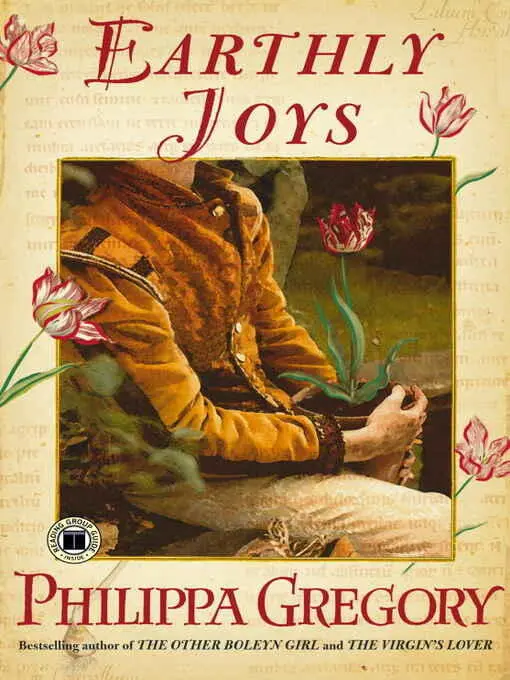
- Название:Earthly Joys
- Автор:
- Жанр:
- Год:неизвестен
- ISBN:нет данных
- Рейтинг книги:3 / 5. Голосов: 1
-
Избранное:Добавить в избранное
- Отзывы:
-
Ваша оценка:
Earthly Joys: краткое содержание, описание и аннотация
Предлагаем к чтению аннотацию, описание, краткое содержание или предисловие (зависит от того, что написал сам автор книги «Earthly Joys»). Если вы не нашли необходимую информацию о книге — напишите в комментариях, мы постараемся отыскать её.
Earthly Joys — читать онлайн ознакомительный отрывок
Ниже представлен текст книги, разбитый по страницам. Система сохранения места последней прочитанной страницы, позволяет с удобством читать онлайн бесплатно книгу «Earthly Joys», без необходимости каждый раз заново искать на чём Вы остановились. Поставьте закладку, и сможете в любой момент перейти на страницу, на которой закончили чтение.
Интервал:
Закладка:
No one had the authority to call him back. Charles only listened to the queen and she listened to her confessor, to the French ambassador, to the favorites of her little court, to her servants and to anyone who took her fancy. She was beyond bribery and beyond corruption because her tastes were so fickle. Not even the French ambassador – representing her own country – could be sure of her full attention. She would look out of the window while he was speaking to her, or wander about the room, turning over pretty ornaments with her fingers, always distracted, always seeking distraction. Only in the king’s presence were her thoughts focused. Her one genuine interest was ensuring that he attended to her, and to her alone.
“Well, she shared him for so long with your lord Buckingham,” Elizabeth said to John as they got into bed one night. “She must always be wary that he might find another favorite.”
John shook his head. “He’s faithful,” he said. “She’s a plain ordinary little woman but she holds his heart now. You see no passion between them, and no liveliness, but he cleaves to her as if he were a little dog.”
Elizabeth smiled. “The king a dog? You sound like J!”
“His eyes follow her around the room.” John pulled on his nightcap. “And when he is watching her she is never still. She is always acting the part of a delightful woman.” He pulled the blankets higher up the bed with a grunt of pleasure. “She would drive me mad,” he said frankly.
Elizabeth sat up in bed and folded the sheet back over the blankets around his shoulders. “Nights are drawing in. Are you warm enough in your house at Oatlands?”
“Of course,” John said. “The maggots and I live like lords. They have eight charcoal burners set around their house and I have all the benefit. You’re a chilly companion compared to my maggots.”
Elizabeth chuckled, not taking offense.
“He was a sad little boy,” John continued, returning to the king. “I used to see him at Hatfield sometimes. King James had no time for him, and his mother never saw him. Nobody thought he’d ever be king with such a stronger older brother before him, so no one bothered with him. Some of them said he’d never survive. He doted on his older brother and sister, and the one died and the other was sent far away. It was only when my lord duke befriended him that he found someone to love.”
“And then he died too,” Elizabeth said.
John bowed his head. “God rest his soul. Now, all he has left is the queen, and the only real friend in the world she can be sure of is the king. Everyone else wants something from her or hopes to gain something from him through her. They must be lonely.”
“Then why not live less rich?” Elizabeth suggested, practical as ever. “If they are surrounded by hangers-on and flatterers who do them no good, why not be rid of them? Why not spend time with their children? Why not seek out the men who care for their own consciences and would not hang on them and flatter them? God knows there were enough men of principle in the last Parliament; the king must have seen them often enough.”
“The price a king must pay is the loss of his common sense,” John said dryly. “I’ve seen it over and over, with kings and great men. They are lied to so sweetly and so often that they lose the taste of truth. They have sugar and honey dripped on their tongue until they are sick of the taste of it, but they still cannot call for bread and cheese.”
“Poor them,” Elizabeth said with cheerful irony.
“Poor them indeed,” said John, thinking for a moment of his duke who died friendless at the end, and was buried at night and in secret.
Winter 1632-3
Jane was not well. She was tired all the time and disliked her food. Christmas came and went and she was no better. When Frances came running in to her parents on the morning of the twelfth day after Christmas for her presents she found her mother pale and sickly.
“Should she see a doctor?” Elizabeth asked J.
“She wants to go to her mother to stay for a few days,” J said. “I’ll take her tomorrow in the wagon.”
“Leave Frances here,” John said across the breakfast table. “You’ll stay with your grandfather, won’t you, Frances?”
He could see little of her but a head of golden brown curls and two interrogative curves of eyebrows. She bobbed upward. “Yes,” she said firmly. “And we’ll make things.”
“What sort of things?” John asked cautiously.
“Big things,” she said ominously.
“I’ll stay overnight with the Hurtes and come back the next day,” J said. “I’ll call in at the docks in case there’s anything of interest to be had on my way home.”
“I’ll put up a hamper for you to take,” Elizabeth said, rising from the table. “Come and help me, Frances, you can go into the storeroom and choose a jar of plums for Grandma Hurte.”
John did not go down to his orchard before Jane left. He waited by the wagon in the yard until he had seen her safely on the seat with her bags stowed. “You will come back soon,” he said, in sudden anxiety.
She was pale but she still managed her familiar smile. “No, I shall stay with my mother and tell her you beat me and overwork me.”
“You’re very dear to me,” John said gruffly. “I don’t like to see you so pale.”
She leaned forward to whisper in his ear. “I think I may be sick for a good reason,” she said. “A very good reason. I’ve not told John yet, so mind you hush.”
It took him a moment to realize what she meant and then he stepped back and beamed up at her. “Sir John Tradescant of Lambeth?”
“Sir John Tradescant himself,” she said.
Summer 1633
It was an easy pregnancy for Jane this time, and the work at the palace was easy for her husband since in May the king left England on a grand progress north.
“He has sucked all the praise he can from the English,” J said sourly to his wife. “He has to go to the poor Scots to see them dance to his tune.”
She nodded but did not reply. She was sewing baby clothes on the terrace in the warm June night and John was within earshot.
“Have you heard how the king’s progress is going?” she asked.
J nodded. “He went riding and hunting as he traveled up the north road. And everywhere he goes there are feasts and knighthoods and processions. He sees the country turn out to greet him and he thinks that all is well.”
“And is it not?” Jane asked. Her hand went gently to the soft curve of her belly. “With Parliament dissolved and the country at peace? Is it perhaps only a few men like you, J, who are not content with this king?”
J shrugged. “How can I say? When I meet a lecturer or a traveling preacher they tell me of men arrested for talking out of turn and for complaining about unjust taxes. I know that there are more papists in the city than I have ever seen before and that they are allowed to hear Mass in the very heart of the kingdom. I know that the king’s best friends are papists and his wife is a papist and the godparents of his child are papists. And I know that our own vicar at Lambeth is at odds with the new Archbishop of Canterbury, William Laud, who is bishop of everywhere it seems, and now archbishop overall. But you are right – there are no voices raised against it – maybe it is just me.”
Jane leaned forward and touched his brown cheek. “And me,” she said. “I don’t thank the archbishop for ordering how I should pray. And Father is furious about the taxes. But there is nothing anyone can do. There’s no Parliament – who can tell the king that he is doing wrong?”
“Especially not when the fools troop out and throw roses down in the road before his horse,” J growled crossly. “And when he touches a bunch of poxed fools for the king’s evil and convinces them they are cured by his hand.”
Читать дальшеИнтервал:
Закладка:
Похожие книги на «Earthly Joys»
Представляем Вашему вниманию похожие книги на «Earthly Joys» списком для выбора. Мы отобрали схожую по названию и смыслу литературу в надежде предоставить читателям больше вариантов отыскать новые, интересные, ещё непрочитанные произведения.
Обсуждение, отзывы о книге «Earthly Joys» и просто собственные мнения читателей. Оставьте ваши комментарии, напишите, что Вы думаете о произведении, его смысле или главных героях. Укажите что конкретно понравилось, а что нет, и почему Вы так считаете.