Philippa Gregory - Earthly Joys
Здесь есть возможность читать онлайн «Philippa Gregory - Earthly Joys» — ознакомительный отрывок электронной книги совершенно бесплатно, а после прочтения отрывка купить полную версию. В некоторых случаях можно слушать аудио, скачать через торрент в формате fb2 и присутствует краткое содержание. Жанр: Историческая проза, на английском языке. Описание произведения, (предисловие) а так же отзывы посетителей доступны на портале библиотеки ЛибКат.
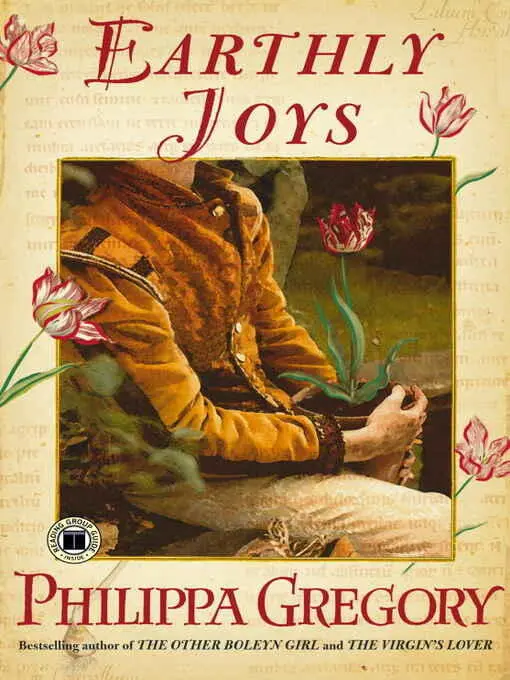
- Название:Earthly Joys
- Автор:
- Жанр:
- Год:неизвестен
- ISBN:нет данных
- Рейтинг книги:3 / 5. Голосов: 1
-
Избранное:Добавить в избранное
- Отзывы:
-
Ваша оценка:
Earthly Joys: краткое содержание, описание и аннотация
Предлагаем к чтению аннотацию, описание, краткое содержание или предисловие (зависит от того, что написал сам автор книги «Earthly Joys»). Если вы не нашли необходимую информацию о книге — напишите в комментариях, мы постараемся отыскать её.
Earthly Joys — читать онлайн ознакомительный отрывок
Ниже представлен текст книги, разбитый по страницам. Система сохранения места последней прочитанной страницы, позволяет с удобством читать онлайн бесплатно книгу «Earthly Joys», без необходимости каждый раз заново искать на чём Вы остановились. Поставьте закладку, и сможете в любой момент перейти на страницу, на которой закончили чтение.
Интервал:
Закладка:
“Have you seen a physician?” John demanded.
She nodded. “He could not find anything wrong, but I can feel it inside, John. I don’t think I will see your daffodils next spring.”
He could feel his throat tightening and his eyes burning. “Don’t say such a thing!”
She smiled and turned her head to look at him. “Of all the men who could do without their wives you would be the first,” she said. “Half of our married life you have been away with your gardens or on your travels, and the other half you were with your lord.”
The usual complaint struck him very painfully now she said it for the last time. “Did I neglect you? I thought – you had J and your house – and it was my life before I married you… I thought…”
Elizabeth gave him her gentle, forgiving smile. “Your work came first,” she said simply, “and your lord before everything. But I had third place in your life. You never loved a woman more than you loved me, did you, John?”
Tradescant had a brief memory of a dimpled serving girl at Theobalds, decades, it seemed like centuries, ago, and a dozen half-remembered women between then and now.
“No,” he said, and he spoke the truth. “None that came anywhere near my love for you. I did put the gardens first, and my lord before all else, but there was always you, Elizabeth. You were the only woman for me.”
“And what a long way we have come,” she said wonderingly. Through the wooden floorboards of their bedroom came the muffled sounds of the baptismal party. They could hear Josiah Hurte’s voice above all the others, and then, in a sudden silence, Frances’s delighted giggle as someone swung her up in the air.
John nodded. “A grand house, a collection of rarities, a nursery garden and an orchard, and a post at the king’s palace.”
“And grandchildren,” Elizabeth said with satisfaction. “I feared when there was only J – and then when they had only Frances…”
“That there would be no one to carry our name?”
She nodded. “I know it is a vanity…”
“There are the trees,” John said. “The flowers, the fruits, and my chestnut trees. We nursed them up just as we nursed J. And now there is one in all the greatest gardens of the country. That is our legacy. The chestnut trees we nursed up together.”
She turned her head and closed her eyes. “You would say that,” she said, but it was not a complaint.
“You lie quiet,” John said, rising stiffly from the bed. “I will send up the maid with a posset for you. Lie quiet and get well. You will see my daffodils this spring, Elizabeth, and even the pink and white candle blossoms on our chestnut trees.”
In January, as the new baby thrived, and Elizabeth grew weaker and never left her bed, J found his father supervising the lad digging up a small chestnut sapling and transplanting it, roots and all, into a large carrying tub. J and the boy slid their carrying poles into the rings of the tub and moved it, as John directed them, right into the house, into the rarities room, and set it down beside the huge window where it would catch the winter light.
“What are you doing?”
“Forcing it,” John said abruptly.
Beside the tub was a big half-barrel of daffodils that had been lifted from the orchard, their green shoots only just showing above the damp earth.
“We need an orangery,” John said. “We should have built one years ago.”
“We do,” J agreed. “But for delicate plants from abroad; not for daffodils and chestnut saplings. What are you doing with them?”
“I want to get them in flower,” John said. “As soon as I can force them.”
“Why?”
“To please your mother,” John said, telling only half the story.
Every night John banked in the fire so the plants were warm all night, every day he sprinkled them – three, four times a day – with warm water. In the evening he set candles around them to give them extra light and warmth. J would have laughed but there was something about his father’s intensity which puzzled him.
“Why d’you want them to bloom early?”
“I have my reasons,” John said.
Spring 1634
John achieved his goal. When Elizabeth died in March, her room was filled with the golden light of dozens of daffodils, and the sweet scent of them perfumed her room. The very last thing she saw as her eyes wearily closed was John coming in the door, his face warm with a smile, and his hands filled with the exquisite pink and white pyramid blossoms of his chestnut trees.
“For you,” he said and bent and kissed her.
Elizabeth tried to say, “Thank you. I love you, John,” but the darkness was creeping in; and in any case, he knew.
After the funeral John moved back to the silk house at Oatlands for the rest of the season. He did not feel that he wanted to be at his home, without Elizabeth. At night he could not sleep; but he liked the warmth of the pretty wooden house, and there was something strangely comforting about the thought of the thousands of silkworms, sleeping in their little cocoons, next door, dreaming whatever dreams silkworms spin.
The queen had authorized the building of a coalhouse and a new and beautiful orangery, and John supervised the building in the short hours of springtime daylight. It was another light-timbered fanciful building like a little wooden palace. It went up quickly and John wrote to J, telling him to bring some citrus whips when he next came.
Apart from the building, there was little to do in the gardens in the cold spring days, but John liked to walk around and see that the streams and fountains were clear of leaves, and that the little green snouts of bulbs were pushing their way defiantly through the cold earth. When it was warmer he would plant a new bowling green for Their Majesties, and he watched the men digging, rolling and harrowing the earth until every smallest stone was gone and the ground was ready for the seed. They grumbled when he made them dig in the old rotted dung from the stables and then water it till it froze and melted and froze again, but John insisted that the ground be rich and smooth before the seed was scattered.
When the snowdrops were thick as ice under the trees, snow-white and green, John thought of his lord Buckingham, who had loved to see the first snowdrops at New Hall. But when the daffodils came through he thought of Elizabeth, who had died with their golden color all around her. There could be no doubt that Elizabeth had gone straight to heaven, he thought. She had lived a life which was as blameless as any woman’s, and she had died surrounded by that golden blaze of glory. At least he had been able to give her that.
As for the duke, it was impossible that there could be a God who loved beauty who could resist him. The king himself loved him and prayed for his soul every day. John felt that the two people in the world that he had truly loved were at peace, and he found he could bear the short cold days and the long cold nights.
He was thinking of the two loves of his life – his passion for the duke and his steady reliable affection for Elizabeth – and watching the water in the fountain of the great court when a shadow fell on the basin of the fountain and he looked around. It was the king. John pulled his hat from his head and dropped to his knee on the cold stone.
“How many years is it now, since your master died?” the king asked abruptly. He did not look at John, but kept his gaze on the cold water in the marble basin.
“Five years and seven months,” John said instantly. “He died toward the end of summer.”
“You can get up,” the king said. He turned from the fountain and started to walk down the path, a small gesture that commanded John to follow him.
Читать дальшеИнтервал:
Закладка:
Похожие книги на «Earthly Joys»
Представляем Вашему вниманию похожие книги на «Earthly Joys» списком для выбора. Мы отобрали схожую по названию и смыслу литературу в надежде предоставить читателям больше вариантов отыскать новые, интересные, ещё непрочитанные произведения.

Обсуждение, отзывы о книге «Earthly Joys» и просто собственные мнения читателей. Оставьте ваши комментарии, напишите, что Вы думаете о произведении, его смысле или главных героях. Укажите что конкретно понравилось, а что нет, и почему Вы так считаете.