Philippa Gregory - Earthly Joys
Здесь есть возможность читать онлайн «Philippa Gregory - Earthly Joys» — ознакомительный отрывок электронной книги совершенно бесплатно, а после прочтения отрывка купить полную версию. В некоторых случаях можно слушать аудио, скачать через торрент в формате fb2 и присутствует краткое содержание. Жанр: Историческая проза, на английском языке. Описание произведения, (предисловие) а так же отзывы посетителей доступны на портале библиотеки ЛибКат.
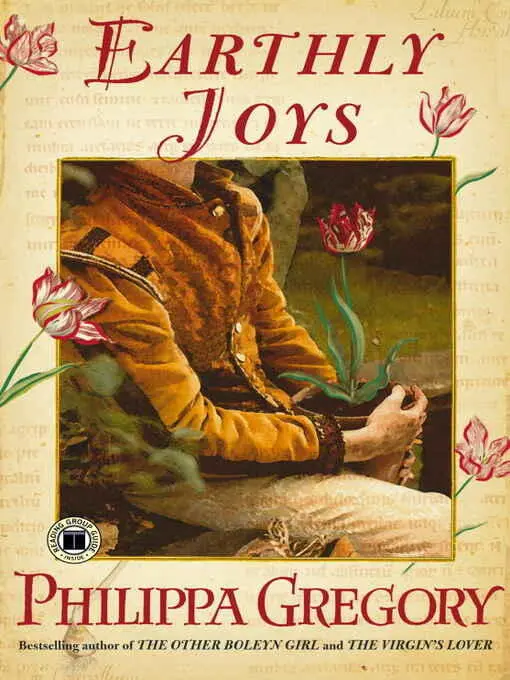
- Название:Earthly Joys
- Автор:
- Жанр:
- Год:неизвестен
- ISBN:нет данных
- Рейтинг книги:3 / 5. Голосов: 1
-
Избранное:Добавить в избранное
- Отзывы:
-
Ваша оценка:
Earthly Joys: краткое содержание, описание и аннотация
Предлагаем к чтению аннотацию, описание, краткое содержание или предисловие (зависит от того, что написал сам автор книги «Earthly Joys»). Если вы не нашли необходимую информацию о книге — напишите в комментариях, мы постараемся отыскать её.
Earthly Joys — читать онлайн ознакомительный отрывок
Ниже представлен текст книги, разбитый по страницам. Система сохранения места последней прочитанной страницы, позволяет с удобством читать онлайн бесплатно книгу «Earthly Joys», без необходимости каждый раз заново искать на чём Вы остановились. Поставьте закладку, и сможете в любой момент перейти на страницу, на которой закончили чтение.
Интервал:
Закладка:
“I suppose it does,” John said. He was very near to laughter but he managed to turn it into a gruff cough.
“And I am going to eschew carnival knowledge and be free of sin,” Frances went on. “And then I can be the king’s gardener.”
“We’ll see,” John said pacifically.
“Is Baby John going to be the king’s gardener?” she demanded.
John nestled the baby back into his arm and took up the plump dimpled hand. “I think he’s too small to work yet,” he said tactfully. “Whereas you’re a great big girl. By the time he’s ready for work you’ll have been prophesying and gardening for years.”
It was exactly the right answer. Frances beamed at him and went to the door. “I have to go now,” she said seriously. “I’ve got some seedlings that want watering.”
John nodded. “You see? You’re a gardener already and all Baby John can do is sit inside with his grandfather.”
Frances nodded and slipped through the door. John looked out of the window and saw her heaving the heavy watering bottle down toward the seed beds set against the warm south wall. Her little thumb was too small to fit the hole at the top of the bottle and she was sprinkling a shiny trail of water behind her like a determined snail.
January 1635
The letter that arrived for the Tradescants at Lambeth bore the royal stamp on the bottom. It was a demand for a tax, a new tax, another new tax. John opened it in the rarities room, standing beside the Venetian windows to catch the light, J beside him.
“It’s a tax to support the Navy,” he said. “Ship money.”
“We don’t pay that,” J said at once. “That’s only for the ports and the seaside towns who need the protection of the Navy against pirates and smugglers.”
“Looks like we do pay it,” John said grimly. “I imagine that everyone is going to have to pay it.”
J swore and took a brief step down the room and back again. “How much?”
“Enough,” John said. “Do we have savings?”
“We have my last quarter’s wages untouched, but that was to buy cuttings and seeds this spring.”
“We’ll have to dip into that,” John told him.
“Can we refuse to pay?”
John shook his head.
“We should refuse,” J declared passionately. “The king has no right to levy taxes. Parliament levies the taxes and passes the money raised on to the king. He has no right to demand on his own account. It is Parliament that should consent to the tax, and any complaint the people have is heard in Parliament. The king cannot just charge what he pleases. Where is it to end?”
John shook his head again. “The king has closed down Parliament, and I doubt he’ll invite them back. The world has changed, J, and the king is uppermost. If he sets a tax then we have to pay. We have no choice.”
J glared at his father. “You always say we have no choice!” he exclaimed.
John looked wearily at his son. “And you always bellow like a Ranter. I know you think me an old fool, J. So tell me your way. You refuse to pay the tax; the king’s men or the parish officers come and arrest you for treason. You are thrown into prison. Your wife and children go hungry. The business collapses; the Tradescants are ruined. This is a master plan, J. I applaud you.”
J looked as if he were about to burst out but then he laughed a short bitter laugh. “Aye,” he said. “Very well. You’re in the right. But it sticks in my throat.”
“It’ll stick in many throats,” John predicted. “But they’ll pay.”
“There will come a time when they will refuse,” J warned his father. “You cannot choke a country year after year and not have to face the people at the end of it. There will come a time when good men will refuse in such numbers that the king has to listen.”
“Maybe,” John said thoughtfully. “But who can say when?”
“If the king knew that his subjects object, that they don’t like being ordered to church and the prayers ordered for them, that they don’t like being ordered to play like children in the churchyard after the service, that there are men in the country who want to use the Lord’s Day for thought and reflection and who don’t want to practice archery and sports – if the king knew all that-”
“Yes, but he doesn’t know that,” John pointed out. “He dismissed the men who might have told him, and those left at court would never bring him bad news.”
“You could tell him,” J observed.
“I’m no better than the rest of them,” John replied. “I’ve learned to be a courtier. Maybe it’s late in life, but I’ve learned it now. I told the truth as I saw it to all the lords I ever served and I never flattered one of them with lies. But this king is a man who doesn’t invite the truth. I tell you, J, I cannot speak the truth to him. He is surrounded by fancy. I would not dare to be the one to tell him that he and the queen are not adored everywhere they go; I couldn’t tell him that the men he has thrown into prison are not wild men, madmen, hotheads, but men more sane and careful and honorable than the rest of us. I cannot be the one to tell him that he is in the wrong and the country is slowly coming to know it. He has made sure that the world appears as best pleases him. It would take more than me to turn it upside down.”
The king kept his promise to visit the Ark, though Tradescant had thought it was a royal promise – one thrown off in the moment with no thought other than to please by the graciousness of the intention. But early in January a Gentleman Usher of the court came to the Ark and was shown into the rarities room.
He looked around, concealing his surprise. “It’s an imposing room,” he remarked to J, who had shown him in. “I had not thought you had built such a grand room.”
J inwardly congratulated his father for overweening ambition. “We need a lot of accommodation,” he said modestly. “Every day we get something new for the collection, and the things need to be shown in the best light.”
The usher nodded. “The king and queen will visit you tomorrow at noon,” he said. “They want to see this famous collection.”
J bowed. “We will be honored.”
“They will not dine here, but you may offer them biscuits and wine and fruit,” the usher said. “I assume you will have no difficulty with that?”
J nodded. “Of course.”
“And there is no need for any loyal address, or anything of that sort,” the usher said. “No poem of greeting or anything like that. This is just an informal visit.”
J thought that the king and queen were very unlikely to get a poem of greeting from his staunchly independent wife but he merely nodded his assent. “I understand.”
“And if there are any in your household who suffer from strong and misguided views-” the usher paused to make sure that J was following him “ – it is your responsibility to make sure that they do not appear before Their Majesties. The king and queen do not want to see long Puritanical faces on their visit; they do not want anyone reflecting on them. Make sure that only your well-dressed and joyful neighbors are on the road.”
“I can make sure that they enjoy their visit to my house, but I cannot clear Lambeth of beggars and paupers,” J replied sharply. “Are they coming by boat?”
“Yes; their carriage will meet them at Lambeth.”
“Then they should drive swiftly through Lambeth,” J remarked unhelpfully. “Or they may see some of their subjects who are not happy and smiling.”
The usher looked at him sharply. “If anyone fails to uncover his head and shout ‘God save the king,’ he will be sorry for it,” he warned. “There are men in prison for treason for less. There are men with cropped ears and slit tongues who did nothing more than refuse to take their hats off when the royal carriage went by.”
Читать дальшеИнтервал:
Закладка:
Похожие книги на «Earthly Joys»
Представляем Вашему вниманию похожие книги на «Earthly Joys» списком для выбора. Мы отобрали схожую по названию и смыслу литературу в надежде предоставить читателям больше вариантов отыскать новые, интересные, ещё непрочитанные произведения.








Обсуждение, отзывы о книге «Earthly Joys» и просто собственные мнения читателей. Оставьте ваши комментарии, напишите, что Вы думаете о произведении, его смысле или главных героях. Укажите что конкретно понравилось, а что нет, и почему Вы так считаете.