Philippa Gregory - Earthly Joys
Здесь есть возможность читать онлайн «Philippa Gregory - Earthly Joys» — ознакомительный отрывок электронной книги совершенно бесплатно, а после прочтения отрывка купить полную версию. В некоторых случаях можно слушать аудио, скачать через торрент в формате fb2 и присутствует краткое содержание. Жанр: Историческая проза, на английском языке. Описание произведения, (предисловие) а так же отзывы посетителей доступны на портале библиотеки ЛибКат.
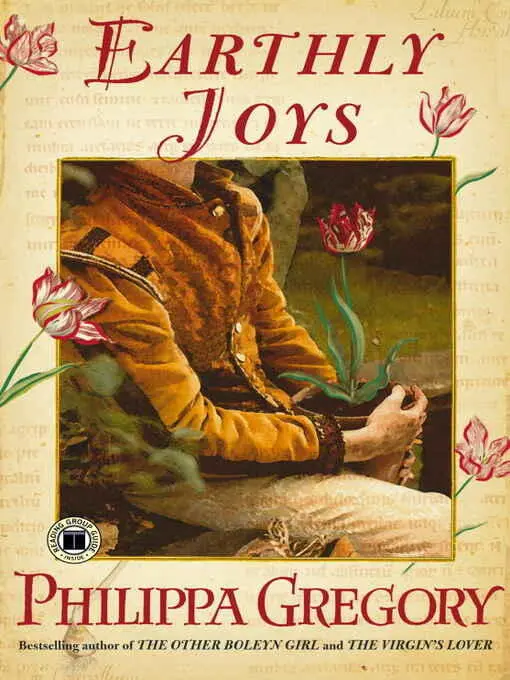
- Название:Earthly Joys
- Автор:
- Жанр:
- Год:неизвестен
- ISBN:нет данных
- Рейтинг книги:3 / 5. Голосов: 1
-
Избранное:Добавить в избранное
- Отзывы:
-
Ваша оценка:
Earthly Joys: краткое содержание, описание и аннотация
Предлагаем к чтению аннотацию, описание, краткое содержание или предисловие (зависит от того, что написал сам автор книги «Earthly Joys»). Если вы не нашли необходимую информацию о книге — напишите в комментариях, мы постараемся отыскать её.
Earthly Joys — читать онлайн ознакомительный отрывок
Ниже представлен текст книги, разбитый по страницам. Система сохранения места последней прочитанной страницы, позволяет с удобством читать онлайн бесплатно книгу «Earthly Joys», без необходимости каждый раз заново искать на чём Вы остановились. Поставьте закладку, и сможете в любой момент перейти на страницу, на которой закончили чтение.
Интервал:
Закладка:
“I was there,” John said. “Just as he wished.”
“But he was late, weeks late,” the king said, smiling ruefully. “Wasn’t that just like him?”
“And what is your favorite?” the queen demanded loudly.
“I think I like the Chinese fan the best,” J said. “It is so delicate and so fine-painted.”
He opened a drawer, took it out and laid it in her hand. “Oh! I must have one just like it!” she exclaimed. “Charles! Look!”
Reluctantly he looked up from the letter. “Very pretty,” he said.
“Come and see,” she commanded. “You can’t see the painting from there!”
He handed back the page of paper to John and went toward her. With a sense of relief, J saw that the question of how many of the exhibits had been the property of Lord Buckingham had completely slipped away.
“I must have one just like this!” she cried. “I shall borrow this and have it copied.”
J was not courtier enough to assent. John stepped quickly forward. “Your Majesty, we would be honored if you would have it as a gift,” he said.
“Do you not need it in your collection, to show to people?” she asked, opening her eyes wide.
John bowed. “The collection, the Ark itself, is all yours, Your Majesty, as everything lovely and rare must be yours. You shall decide what you leave here, and what you take.”
She laughed delightedly and for a moment J was afraid that her greed would outrun her desire to seem charming. “I shall leave everything here, of course!” she said. “But whenever you have something new and rare and pretty I shall come and see it.”
“We will be honored,” J said, with a sense of a danger narrowly avoided. “Will Your Majesty take a glass of wine?”
The queen turned for the door. “But who is this?” she asked as Frances leaped forward and opened the door for her. “A little footman?”
“I’m Frances,” the little girl said. She had forgotten all about the curtsey which Jane had reluctantly taught her. “I was waiting for you for ages.”
For a moment J thought that the queen would take offense. But then she laughed her girlish laugh. “I am sorry to keep you waiting!” she exclaimed. “But am I what you thought a queen would be?”
Both John and J moved forward, J smoothly standing beside Frances and giving her thin shoulder blade a swift admonitory pinch, while John filled the pause. “She was expecting Queen Elizabeth,” he said. “We have a miniature of Her Majesty, painted on ivory. She did not know that a queen could be so young and beautiful.”
Henrietta Maria laughed. “And a wife, and the mother of a son and heir,” she reminded him. “Unlike the poor heretic queen.” Frances gasped in horror and was about to argue but to J’s enormous relief the queen went past the little girl without another glance. Jane threw open the parlor door and curtseyed.
“I wasn’t expecting Queen Elizabeth, and anyway she wasn’t a heret-” Frances started to argue. J leaned heavily on her shoulder as the king went past.
“She is my first granddaughter and has been much indulged,” John explained.
The king looked down at her. “You must repay favor with duty,” he said firmly.
“I will,” Frances said easily. “But may I come and work for you and be your gardener, as my grandfather and father do? I am very good with seeds and I can take cuttings and some of them do grow.”
It would have cost the king nothing to smile and say yes; but he was always a man who could be ambushed by shyness, and by his own desire to be seen to do the right thing. With only one person had he been free of his need to set an example, to be kingly and wise in all things; and that man was long dead.
“M… maids and wives must stay at home,” he decreed, ignoring Frances’s shocked little face. “Everyone in their r… right place is what I wish for my kingdom now. You must obey your father and then your husband.” Then he passed on toward the parlor.
J threw a quick harassed glance at Frances’s appalled face, and followed him.
Frances looked up at her grandfather, and saw that his face was warm with sympathy. She turned and pitched into his arms.
“I think the king is a pig,” she wailed passionately into his coat. John, a lifelong royalist, could not disagree.
Mrs. Hurte went home that evening, pleasantly shocked and appalled by the queen’s jewels, the richness of her perfume, the king’s lustrous hair, his cane, his lace. As the wife of a mercer, she had taken particular note of their cloth and she was anxious to hurry home with news of French silk and Spanish lace, while English weavers and spinners went hungry. The king had a diamond on his finger the size of Frances’s fist, and the queen had pearls in her ears the size of pigeon’s eggs, and she had worn a cross, a crucifix, a most ungodly and unrighteous symbol. She had worn it like a piece of jewelry – heresy and vanity in one. She had worn it on her throat, an invitation to carnal thoughts as well. She was a heretical wicked woman and Mrs. Hurte could not wait to get home to her husband and confirm his worst fears.
“Come and see me next month,” she said, pressing Jane to her heart before she left. “Your father wants to see you, and bring Baby John.”
“I have to be here to guard the rarities when Father Tradescant and John are away,” Jane reminded her.
“When they are both here then,” her mother said. “Do come. Your father will want to know about Oatlands too. Did you see the quality of the lace she wore on her head? It would buy you a house inside the city walls, I swear it.”
Jane packed her mother into the wagon and handed her the basket with the empty jars and the crumpled tablecloths.
“No wonder the country is in the state it is,” Mrs. Hurte said, deliciously shocked.
Jane nodded, and stood back from the wagon as the man flipped the reins on the horses’ backs.
“God bless you,” Mrs. Hurte called lovingly. “Wasn’t she a scandal!”
“A scandal,” Jane agreed and stood at the back gate and waved until the wagon was out of sight.
Spring 1635
Jane did not visit her mother all through the spring. Both John and J were either at Oatlands Palace or busy in the orchards and garden of Lambeth. There was always someone knocking at the garden door with a little plant in a pot, or some precious thing in a knotted handkerchief, and Jane would judge its value and buy it with the authority of a good housewife and a partner in the business. Then, there were the tulips to be watched into leaf and into flower. John had ordered an orangery to be built for them to raise up the tender plants and the builders needed to be watched as they knocked a doorway through into the main house. It was not until May that Jane felt she had enough leisure to leave the Ark and go to see her mother in the city. But then she went and stayed for a week.
The house was oddly empty without her. Frances did not miss her much; she was always her grandfather’s shadow, and when he was away she was always out in the garden with her father. But Baby John, nearly two, toddled round the house and demanded all day, “Where’s Mama? Where’s Mama?”
They expected her to come home rested and happy after a week’s cosseting in her old home, but when she finally returned she was tired and pale. The city had been unbearably hot, she said. There were more beggars on the streets than ever; she had seen a man dying in the gutter and had feared to touch him in case he was carrying the plague.
“What sort of country is this, that the act of a good Samaritan is too dangerous to do?” she demanded, genuinely grieved at the struggle between her conscience and her safety.
Her father and all the merchants were complaining that they were taxed for trading, and then taxed for selling, and then taxed for storing goods. They too were ordered to pay ship money, which was set by an assessor who would come around and guess how much you were worth by the appearance of your house and business, and there was no appeal against him.
Читать дальшеИнтервал:
Закладка:
Похожие книги на «Earthly Joys»
Представляем Вашему вниманию похожие книги на «Earthly Joys» списком для выбора. Мы отобрали схожую по названию и смыслу литературу в надежде предоставить читателям больше вариантов отыскать новые, интересные, ещё непрочитанные произведения.
Обсуждение, отзывы о книге «Earthly Joys» и просто собственные мнения читателей. Оставьте ваши комментарии, напишите, что Вы думаете о произведении, его смысле или главных героях. Укажите что конкретно понравилось, а что нет, и почему Вы так считаете.