Alison Weir - Captive Queen
Здесь есть возможность читать онлайн «Alison Weir - Captive Queen» весь текст электронной книги совершенно бесплатно (целиком полную версию без сокращений). В некоторых случаях можно слушать аудио, скачать через торрент в формате fb2 и присутствует краткое содержание. Год выпуска: 2010, ISBN: 2010, Издательство: BALLANTINE, Жанр: Историческая проза, на английском языке. Описание произведения, (предисловие) а так же отзывы посетителей доступны на портале библиотеки ЛибКат.
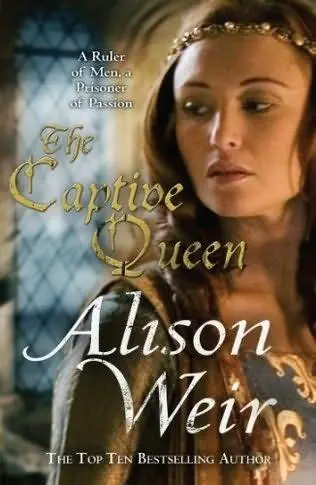
- Название:Captive Queen
- Автор:
- Издательство:BALLANTINE
- Жанр:
- Год:2010
- ISBN:978-0-345-52195-8
- Рейтинг книги:3 / 5. Голосов: 1
-
Избранное:Добавить в избранное
- Отзывы:
-
Ваша оценка:
Captive Queen: краткое содержание, описание и аннотация
Предлагаем к чтению аннотацию, описание, краткое содержание или предисловие (зависит от того, что написал сам автор книги «Captive Queen»). Если вы не нашли необходимую информацию о книге — напишите в комментариях, мы постараемся отыскать её.
Renowned for her highly acclaimed and bestselling British histories, Alison Weir has in recent years made a major impact on the fiction scene with her novels about Queen Elizabeth and Lady Jane Grey. In this latest offering, she imagines the world of Eleanor of Aquitaine, the beautiful twelfth-century woman who was Queen of France until she abandoned her royal husband for the younger man who would become King of England. In a relationship based on lust and a mutual desire for great power, Henry II and Eleanor took over the English throne in 1154, thus beginning one of the most influential reigns and tumultuous royal marriages in all of history. In this novel, Weir uses her extensive knowledge to paint a most vivid portrait of this fascinating woman.
Captive Queen — читать онлайн бесплатно полную книгу (весь текст) целиком
Ниже представлен текст книги, разбитый по страницам. Система сохранения места последней прочитанной страницы, позволяет с удобством читать онлайн бесплатно книгу «Captive Queen», без необходимости каждый раз заново искать на чём Вы остановились. Поставьте закладку, и сможете в любой момент перейти на страницу, на которой закончили чтение.
Интервал:
Закладка:
When the man was gone, Eleanor turned to her mother-in-law, who had also risen to her feet. The Empress had a rapt expression on her handsome face.
“So God has been just at last,” she said. “These nineteen long winters of the usurper’s rule I have prayed for this and beseeched Him to uphold my rights. Now He has spoken, and my son will wear the crown that I fought over so long and bitterly.” Her eyes were shining.
“Madame, I rejoice in this happy ending to your struggle,” Eleanor said sincerely. In this moment of triumph, she could afford to be generous to her enemy. Impelled by a shared sense of jubilation, the two women embraced and kissed, each planting cool lips on the other’s cheek.
“Come,” Eleanor said, taking the initiative. “We must assemble our little court and tell them the glad news. Then we shall gather a retinue and go to the cathedral and give thanks.” And she swept out of the chamber, her woolen skirts trailing regally behind her, and for the first time daring to take precedence before the Empress.
There was much to be done while they waited for Henry. Letters to be sent, announcing his accession, provision made for the governance of Aquitaine in its rulers’ absence, and administrative matters to be dealt with, for the duchy of Normandy was to be left in Matilda’s capable hands. As a matter of courtesy, Eleanor had invited Matilda to come to England with her and Henry, but she had declined, much to her daughter-in-law’s relief.
“I will never set foot there again,” the older woman had stoutly declared, “not after they insulted me so horribly, and drove me out—me, their rightful queen!”
Eleanor had heard that it was Matilda’s insufferable haughtiness and arrogance that had driven the English to abandon her cause, but she said nothing of this.
“If you change your mind, madame, or even if you come only for the coronation, you will be very welcome,” she said courteously, then turned to receive a travel-weary messenger who had just come from Henry.
“Is my lord on his way?” she asked.
“No, lady, he is besieging a castle.”
“What?” Eleanor could not believe her ears.
“Lady, he says he must teach his rebels a lesson, and will not be deterred from his purpose, neither by the news he is to be a king, nor by pleas for him to come quickly. And he sends also to say that, when he is victorious in the Vexin, he must put his affairs in order elsewhere before joining you.”
“He speaks sense,” Matilda ventured to say. “There is no point in going to England and leaving unrest in Normandy. England can wait a bit. Archbishop Theobald is a sound man, and is keeping things in order. By all accounts, the English are pleased that Henry is now their king, so we can expect little trouble there.”
“I just wish he were here with me, to share this triumph,” Eleanor said wistfully, rubbing her aching back. She turned back to the messenger. “Is my lord in good health?”
“Never better, lady,” the messenger replied cheerily, and relief coursed through her. That was one blessing, at least. She dismissed the man, then summoned her seamstress.
“You should rest, Eleanor,” Matilda said. “Remember your condition.”
“Did you, madame?” Eleanor asked.
The Empress had to smile.
“No, I was not very good at heeding the advice of my women, or the midwives,” she admitted. “Pregnancy was a great trial to me. Once I had borne Geoffrey three sons, I told him that was it. No more.” Her tone grew cooler and faded. Saying Geoffrey’s name had reminded her of how Eleanor and Geoffrey betrayed her, and of the reason for it. She was sage and just enough to admit that it was partly her fault, but she found it hard to forgive. Geoffrey had been her husband, and they had both dishonored her by rutting together. Yet she had come to concede that Eleanor had dignity and intelligence, and she was aware of a grudging admiration for her. She had made Henry the greatest prince in Christendom, this errant daughter-in-law of hers, and she would make a fine queen. That was enough to earn Matilda’s acceptance. But she knew she would never, ever like Eleanor, or approve of her—that much was certain.
When Henry did finally return, he found his wife, his mother, and the whole court immersed in a flurry of preparations for the journey to England.
“What’s all this?” he asked, astonished, coming into Eleanor’s chamber at noon with a sore head, after a night spent celebrating his accession with his barons, then his joyful reunion with his lady. There, on the bed, on the table, on stools, and on every available surface, were heaped piles of clothes, fine garments of silk, linen, and wool, many of them richly embroidered, gowns, bliauts , cloaks, chemises … Red-cheeked damsels were hastening to and fro, stowing some of it away in chests or adding even more items to the piles.
“We are packing.” Eleanor was swirling about before her mirror in a rich mantle lined with ermine. Henry looked at her admiringly as he came up behind her.
“I see you are dressed like a queen already,” he complimented her, pulling her hair aside and kissing her on the neck. “We make a handsome couple, eh?” he added, looking at their joint reflection.
“If you would take the trouble to dress a little more like a king, we’d make a very handsome couple,” Eleanor said tartly as she swiveled out of his grasp, then put the mantle into the arms of Mamille. Henry looked down ruefully at his hunting clothes; he rarely wore anything else, and only donned state robes when it was necessary to impress on formal occasions. The riding gear was clean and of good cloth, but mended in places. He had wielded the needle himself, as Eleanor watched in astonishment. “Why can’t you ask your valet to do that for you?” she had asked. “That’s no job for the Duke of Normandy and Aquitaine!”
“Why, when I can do it myself?” Henry had replied.
She secretly applauded his lack of grandeur. It made him all the more approachable. You knew where you stood with him. There was no false facade.
Henry threw himself on the bed, shoving aside a pile of veils, and began munching an apple.
“Mind those veils!” Eleanor cried, and hastened to rescue them. “Torqueri spent a long time hemming and pressing these,” she reproved. “And get your muddy boots off the bed!”
Crunching, Henry amiably complied.
“Exactly how many veils are there?” he inquired, eyeing the great pile.
“Too many to count,” Eleanor said, distracted. “Florine and Faydide, have you packed my shoes?”
“All fourteen pairs,” Florine told her.
“And the forty-two gowns,” Faydide added.
“Forty-two?” Henry echoed. “You don’t need forty-two gowns.”
“I must impress our new subjects,” she answered.
“They’ll be accusing us of extravagance,” he muttered.
“The warm undershirts, madame,” Torqueri said. Henry eyed them suspiciously. Eleanor caught his expression.
“I have heard that it can be freezing cold in England,” she said. “These are to wear beneath my gowns, over my chemise.”
“For one awful moment I thought you were going to wear them in bed!” Henry grinned. The ladies giggled.
“I might yet do so, if England is as bitter in December as they say,” Eleanor warned.
“Over my dead body,” Henry growled.
“It might be!” She laughed. “How are your preparations progressing?”
“I’m all packed, and the escort is assembling,” he told her. “I am taking the usual rabble of barons and bishops—they all want a share of the booty. It’ll be hard restraining them when they get to Westminster. I had to include my brother Geoffrey, the little bastard—my mother insisted.”
Читать дальшеИнтервал:
Закладка:
Похожие книги на «Captive Queen»
Представляем Вашему вниманию похожие книги на «Captive Queen» списком для выбора. Мы отобрали схожую по названию и смыслу литературу в надежде предоставить читателям больше вариантов отыскать новые, интересные, ещё непрочитанные произведения.






Обсуждение, отзывы о книге «Captive Queen» и просто собственные мнения читателей. Оставьте ваши комментарии, напишите, что Вы думаете о произведении, его смысле или главных героях. Укажите что конкретно понравилось, а что нет, и почему Вы так считаете.