Alison Weir - Captive Queen
Здесь есть возможность читать онлайн «Alison Weir - Captive Queen» весь текст электронной книги совершенно бесплатно (целиком полную версию без сокращений). В некоторых случаях можно слушать аудио, скачать через торрент в формате fb2 и присутствует краткое содержание. Год выпуска: 2010, ISBN: 2010, Издательство: BALLANTINE, Жанр: Историческая проза, на английском языке. Описание произведения, (предисловие) а так же отзывы посетителей доступны на портале библиотеки ЛибКат.
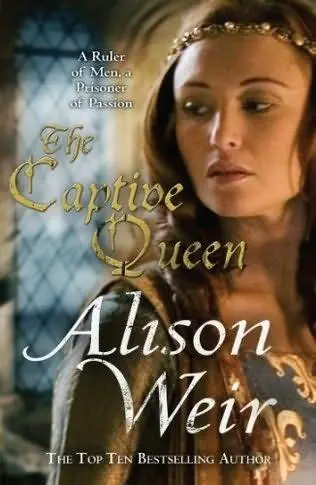
- Название:Captive Queen
- Автор:
- Издательство:BALLANTINE
- Жанр:
- Год:2010
- ISBN:978-0-345-52195-8
- Рейтинг книги:3 / 5. Голосов: 1
-
Избранное:Добавить в избранное
- Отзывы:
-
Ваша оценка:
Captive Queen: краткое содержание, описание и аннотация
Предлагаем к чтению аннотацию, описание, краткое содержание или предисловие (зависит от того, что написал сам автор книги «Captive Queen»). Если вы не нашли необходимую информацию о книге — напишите в комментариях, мы постараемся отыскать её.
Renowned for her highly acclaimed and bestselling British histories, Alison Weir has in recent years made a major impact on the fiction scene with her novels about Queen Elizabeth and Lady Jane Grey. In this latest offering, she imagines the world of Eleanor of Aquitaine, the beautiful twelfth-century woman who was Queen of France until she abandoned her royal husband for the younger man who would become King of England. In a relationship based on lust and a mutual desire for great power, Henry II and Eleanor took over the English throne in 1154, thus beginning one of the most influential reigns and tumultuous royal marriages in all of history. In this novel, Weir uses her extensive knowledge to paint a most vivid portrait of this fascinating woman.
Captive Queen — читать онлайн бесплатно полную книгу (весь текст) целиком
Ниже представлен текст книги, разбитый по страницам. Система сохранения места последней прочитанной страницы, позволяет с удобством читать онлайн бесплатно книгу «Captive Queen», без необходимости каждый раз заново искать на чём Вы остановились. Поставьте закладку, и сможете в любой момент перейти на страницу, на которой закончили чтение.
Интервал:
Закладка:
In Petronilla’s wake, again at Henry’s behest, had come Eleanor’s two bastard half brothers, William and Joscelin, whom he had appointed to join her household knights. Eleanor thanked Henry appreciatively for his thoughtfulness and warmly embraced the two eager young men who so much resembled her.
At last the great retinues were gathered, and Henry and Eleanor formally bade farewell to the Empress Matilda and set off on the road to Barfleur, where their ships were waiting to transport them to England.
13
Normandy and England, 1154
“This should make a good impression on my new subjects!” Henry declared, waving an expansive hand at the long procession of magnates and bishops, each with their retinues and baggage carts, that trailed into the distance behind them. Inwardly, Eleanor thought that the English might see the King’s great train as a pack of scavengers come to bleed their country dry, but she was confident that Henry’s reputation was such that his followers would heed the honorable lead he intended to give them, and deal honestly with his new subjects.
She smiled up at him from her litter; she was too far advanced in pregnancy to ride beside him, and not relishing being jolted along the rutted tracks that passed for roads, but was making light of her discomfort and trying to relax on the piled cushions beneath her, pulling her fur-lined cloak closer about her to protect herself from the freezing wind. She would not complain, she had resolved, because she knew Henry wanted to get to England as quickly as possible, and she just wanted the long journey to be over.
It was when they were making an overnight stop in Caen that Henry espied Bernard de Ventadour skulking among the varlets of his household.
“What’s he doing here?” he muttered to himself, and beckoned the troubadour over. Bernard, who was hoping that his master had not seen him, and was on the point of fleeing, had the grace to look terrified.
“Sire?” he almost squeaked.
“I thought I told you not to leave England without my permission!” Henry said fiercely.
“I—I know, sire, but your whole retinue was returning with you, and your knights needed entertaining …”
“Blast my knights!” Henry roared. “You disobeyed me, you scum.” The troubadour quailed.
“Now hear this,” Henry went on, “and never disobey me again, or you will rue it painfully. You are to leave here now, without delay.”
“But sire, where shall I go?” asked Bernard.
“Anywhere but here!”
“But I cannot go back to Ventadour …”
“No, that you cannot, and my good lady has told me why.” Henry had the satisfaction of seeing the young man wince. “You’ll have to find somewhere else.”
Tears filled Bernard’s eyes. “This is a great grief to me, sire,” he wept. “I know not what to do or where to go.”
“Take my advice and go as far away as possible. You might try your talents with the Count of Toulouse.”
“Sire, may I speak frankly?” Bernard was frantic.
Henry folded his arms and looked at him. “I’m waiting,” he said brusquely.
“There is a lady, sire—”
“By God there is!” Henry erupted.
“Nay, sire, not Madame the Duchess—another lady.” Bernard hung his head.
“Hah!” Henry pointed at him. “Another lady! You don’t waste much time.” And he doubled up with laughter.
“Sire, I love her, and could never leave her …”
Henry stopped laughing.
“Toulouse!” he barked. “Get your gear and go. And let me not see your face again.”
Bernard scuttled away. There was no lady; his heart was broken and he knew himself defeated. That night, lodged at an evil-smelling inn, he hastily composed a poem to Eleanor, in which he mournfully sang her praises for the last time and told her that her lord had forced him to leave her. Then he gave it to his servant, who galloped off in search of the royal cavalcade. Eleanor, reading the grubby parchment two days later, sighed in exasperation, then screwed it up and threw it in the River Vire.
Henry peered over the stone parapet of the tower of St. Nicholas’s Church, the wind and rain lashing his face and soaking his short woolen cloak. Below him, the shallow waters of the port of Barfleur churned and seethed in the storm, and there was not a soul to be seen in the prosperous little village; the inhabitants, grasping lot though they were, had all retreated to their houses in the teeth of the bad weather.
“How much longer are we to be holed up here?” he fumed to the ship’s master.
“I beg ye, be patient, Lord King,” the weather-beaten man shouted against the gale. “Them currents down there can be mighty swift. Ye’ll have heard of the White Ship.”
Henry had heard of it, too many times, from his mother, whose brother had gone down with it on that terrible night thirty-four years before, and he’d heard of it again over the past few days, from the mariners, who always seemed to relish recounting tales of disaster. Of course, if the White Ship hadn’t sunk, drowning the heir to England, he wouldn’t be standing here now, waiting to take possession of that kingdom. And standing here was all he seemed to be doing; he was almost stamping with impatience.
“By the eyes of God, it’s not far to sail!” he argued. “Do you realize, man, that England has been without a king for six weeks? Why, my very throne might be in jeopardy because of this delay.”
“Lord King,” the master said evenly, “it is not me that commands the heavens.”
“No,” Henry muttered, “but when I command you to set forth, I expect to be obeyed. That’s five times you have defied me now.”
“And it might be five times I’ve saved your life, Lord King,” the man replied sagely. “Better for England to have a king across the sea than no king at all.”
There was no arguing with that, but Henry was not in the mood to be put off by wise words of caution.
“Thank you for your consideration,” he snapped sarcastically. “God knows, we might be here forever. No, my mind is made up. We sail today.”
The seaman was about to protest again when Queen Eleanor, her heavily pregnant figure swathed in a black hooded mantle, suddenly appeared at the tower door.
“I had to get some air,” she said, turning her face up to the elements, not minding the buffeting wind and smattering raindrops. “They’ve lit so many braziers I am suffocating in my chamber. Petronilla especially feels the cold. God’s blood, it’s wild, this weather!”
She battled her way through the tempest to Henry, who folded his arms around her.
“My lady, our ship’s master here is unwilling to put to sea,” he told her, “but I am of a mind to brave the elements and be on our way.”
“That’s madness, Lord King,” the master cried, “especially with the Lady Queen near her time.”
“Well, my lady?” Henry asked, ignoring him. “What do you say?”
“A little weather never bothered me,” Eleanor replied, more cheerfully and bravely than she felt. She knew that Henry would have his way, whatever anyone said, so it was prudent to make the best of things—although that sky looked black and angry, and the gusts were fearsome …
“I would not put you through this,” he told her, “or young William, but God knows what’s happening in England without me. Is Archbishop Theobald truly the man to keep those unruly English barons in check?”
“The last reports suggested he was doing brilliantly,” Eleanor reminded him.
“Yes, but for how long?” Henry fretted. He knew, none better, how those same barons had defied the weak Stephen: how they had built their castles without waiting for his license, then terrorized the countryside, using the civil war as a pretext for unspeakable depredations and atrocities. No, his mind was made up. There was greater risk in staying here than in braving the sea.
Читать дальшеИнтервал:
Закладка:
Похожие книги на «Captive Queen»
Представляем Вашему вниманию похожие книги на «Captive Queen» списком для выбора. Мы отобрали схожую по названию и смыслу литературу в надежде предоставить читателям больше вариантов отыскать новые, интересные, ещё непрочитанные произведения.






Обсуждение, отзывы о книге «Captive Queen» и просто собственные мнения читателей. Оставьте ваши комментарии, напишите, что Вы думаете о произведении, его смысле или главных героях. Укажите что конкретно понравилось, а что нет, и почему Вы так считаете.