Alison Weir - Captive Queen
Здесь есть возможность читать онлайн «Alison Weir - Captive Queen» весь текст электронной книги совершенно бесплатно (целиком полную версию без сокращений). В некоторых случаях можно слушать аудио, скачать через торрент в формате fb2 и присутствует краткое содержание. Год выпуска: 2010, ISBN: 2010, Издательство: BALLANTINE, Жанр: Историческая проза, на английском языке. Описание произведения, (предисловие) а так же отзывы посетителей доступны на портале библиотеки ЛибКат.
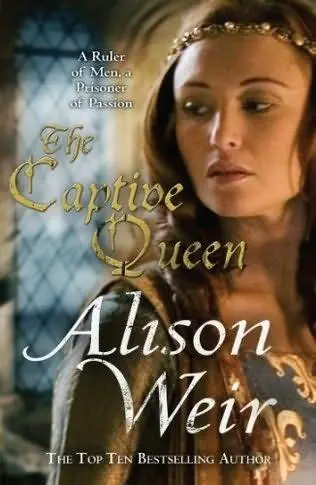
- Название:Captive Queen
- Автор:
- Издательство:BALLANTINE
- Жанр:
- Год:2010
- ISBN:978-0-345-52195-8
- Рейтинг книги:3 / 5. Голосов: 1
-
Избранное:Добавить в избранное
- Отзывы:
-
Ваша оценка:
Captive Queen: краткое содержание, описание и аннотация
Предлагаем к чтению аннотацию, описание, краткое содержание или предисловие (зависит от того, что написал сам автор книги «Captive Queen»). Если вы не нашли необходимую информацию о книге — напишите в комментариях, мы постараемся отыскать её.
Renowned for her highly acclaimed and bestselling British histories, Alison Weir has in recent years made a major impact on the fiction scene with her novels about Queen Elizabeth and Lady Jane Grey. In this latest offering, she imagines the world of Eleanor of Aquitaine, the beautiful twelfth-century woman who was Queen of France until she abandoned her royal husband for the younger man who would become King of England. In a relationship based on lust and a mutual desire for great power, Henry II and Eleanor took over the English throne in 1154, thus beginning one of the most influential reigns and tumultuous royal marriages in all of history. In this novel, Weir uses her extensive knowledge to paint a most vivid portrait of this fascinating woman.
Captive Queen — читать онлайн бесплатно полную книгу (весь текст) целиком
Ниже представлен текст книги, разбитый по страницам. Система сохранения места последней прочитанной страницы, позволяет с удобством читать онлайн бесплатно книгу «Captive Queen», без необходимости каждый раз заново искать на чём Вы остановились. Поставьте закладку, и сможете в любой момент перейти на страницу, на которой закончили чтение.
Интервал:
Закладка:
“I know, but I have just had news from Aquitaine. Some of your vassals are in rebellion. I want you to remain here while I go and teach them a lesson.”
“Rebellion?” Eleanor echoed.
“It seems they don’t like me,” Henry muttered, “but it’s nothing I can’t handle.”
“I could quell them,” she told him. “They will listen to me.”
“And that’s precisely why I am going in your stead, so that they learn to listen to me as well.”
“Henry, I insist—”
“Eleanor, my mind is made up. Don’t worry, my Lady Mother won’t eat you up while I’m gone. She’s got enough of the statesman in her to appreciate the folly of upsetting me, when her power here derives from me.”
“But Henry, you need her to govern Normandy, and she knows it,” Eleanor protested. “That’s an empty threat. She has no need to fear you.”
“Yes, but she has every need to fear you,” he retorted. “Normandy has a duchess now—why should she not rule it in my absence?”
“And when we are summoned to England? I don’t want to stay here!”
“I have many dependable Norman barons, my sweetheart. No, never fear, my mother will behave herself. And you have your ladies and young William to occupy you.”
“You make it sound as if that should be enough to content me,” Eleanor complained. “Take me with you. Let us not be parted again.”
“No,” Henry declared. “It will not be for long, and war is man’s work. Then we can look forward to another reunion.” He grinned at her suggestively.
Again Eleanor experienced that hateful feeling of being trapped and helpless.
“You just don’t understand, do you?” she fumed. “I am the Duchess of Aquitaine, and I am fit for higher things than the company of women and babies. When there is trouble in my domains, I should be with you, putting things right. We said we would do these things together , Henry! And, as you seem to have forgotten already, we have just been parted for sixteen months— sixteen months —yet you are going to leave me again. I can’t believe you would even think of that, not after last night.”
Henry came to her and caught her roughly in his arms.
“Do you think I want to leave you?” He sighed. “Ah, Eleanor, in an ideal world we would be together always, but I have vast domains to rule, and that means I must continually be on the move. Listen. I know you for an intelligent woman, and I do value your political ability, but I need to assert my authority in Aquitaine, and I need to do it alone. When those godforsaken vassals of yours have learned who’s in charge, we will rule the duchy as equals. In the meantime, all I ask is that you stay here in safety with our son.”
“Very well then,” she conceded after a pause, still simmering, “but summon me as soon as you can.”
“No, I will return to you here,” Henry said.
“But why?” she asked in dismay.
“There is news from England,” he said. “I have not yet had a chance to tell you or my mother. King Stephen is ill; it can now only be a matter of time. We must hold ourselves in readiness, and for that reason we should stay here in Normandy. It is only a short distance across the Channel from England.”
“But you are going south,” Eleanor pointed out. “What if the summons comes while you are away?”
“I shall ride like the wind and be here in ten minutes!” Henry chuckled. “And I’ll bring your rebellious vassals with me. The promise of rich pickings in England might make them like me more.”
12
Rouen, 1154
It was late October. In the solar of the royal palace, the two richly garbed royal ladies sat sewing by a brazier. The wind was howling outside, and the colorful tapestries on the walls stirred in the draft from the slit windows.
“Bring me more silks,” the Empress commanded, and her waiting woman scuttled away. Another appeared with goblets of cognac, which she placed on the table.
“I wish there was news of Henry,” Eleanor said, taking a sip. “Oh, that’s warming.”
“I expect the weather is as bad in the Vexin as it is here,” Matilda said. Her manner toward her daughter-in-law was still merely polite, but months of familiarity had eroded the sharp edge of the glacier. Thrown together by virtue of their rank, both women had had to make the best of it.
“I worry about Henry. He is still not over his illness.” Eleanor shuddered as she recalled her beloved’s close brush with death the month before, after he had been laid low with a rampant, burning fever. Thanks to his vigorous constitution, and no thanks to his inept doctors, he pulled through, but not before his wife and his mother had suffered some searingly anxious moments.
“I worry too, but it is imperative that he puts down this revolt,” Matilda said.
“I know that, madame, but he was still suffering fits of the shivers the night before he left.” And he had been too fatigued to make love.
“I know my son. He is strong, and a fighter. He will recover. But he hates being ill and, as you have no doubt discovered, he will never admit to any weakness, nor will he be told what to do.” The Empress smiled dourly, then turned her gimlet gaze on the younger woman. “You have heard the news about your former husband, King Louis?”
“That he has remarried—yes,” Eleanor said, rising to throw another log on the brazier. “I wish him nothing but happiness—and his bride nothing but fortitude.”
“They are saying that this Castilian princess, Constance, won him by her modesty,” Matilda murmured, “and that his subjects think he is better married than he had been.”
Eleanor ignored the barbs. She had grown too used to them. “More likely he was won by the prospect of a rich dowry from her father, King Alfonso,” she retorted. “At least he has now made peace with Henry and stopped calling himself Duke of Aquitaine. That really did irk me!”
She shifted in her chair and rested her hands on her swollen belly. She was five months gone with child, and finding the waiting tedious. She longed to be back in the saddle, riding in the fresh air, her hawk on her glove.
Mamille de Roucy burst into the room then, her rosy round face flushed with excitement. The Empress frowned at her deplorable lack of ceremony, but the damsel did not notice.
“Mesdames, there is a messenger arrived from England, much travel-stained! He says he is come from Archbishop Theobald and must see the duke urgently.”
Eleanor sat bolt upright. The Empress looked at her, and in the two pairs of eyes that met, hope was springing.
“Did you tell him that Duke Henry is not here?” Eleanor asked.
“I did, madame. He is asking to see you instead.”
“Then send him in.”
Eleanor rose, a proud and regal figure in her scarlet gown of fine wool with long hanging oversleeves. Her head was bare, her long hair plaited and bound around the slim gold filet that denoted her rank. Thus did the exhausted messenger see her when he was shown into her presence. His admiring glance paid tribute to the beauty of her face and the voluptuousness of her fecund body. He fell to his knees before her.
“Lady, allow me to be the first to salute you as Queen of England!” he cried. “King Stephen, whom God assoil, has departed this life. He died on the twenty-fifth day of October.”
“Praise be to God,” Matilda breathed exultantly, crossing herself. Eleanor did likewise, not being quite able to take in the glad tidings. She was a queen again, queen of that strange northern land beyond the sea, of which she had heard so many tales. Everything that she and Henry had schemed and hoped for had come to pass.
“I thank you for bringing me this news,” she told the messenger, giving him her hand to kiss. “The duke—nay, the King!—must be informed at once. I pray you, refresh yourself in the kitchens, then make all haste to the Vexin to my lord, and bid him return without delay, so that he may hasten to take possession of his kingdom. God speed you!”
Читать дальшеИнтервал:
Закладка:
Похожие книги на «Captive Queen»
Представляем Вашему вниманию похожие книги на «Captive Queen» списком для выбора. Мы отобрали схожую по названию и смыслу литературу в надежде предоставить читателям больше вариантов отыскать новые, интересные, ещё непрочитанные произведения.







Обсуждение, отзывы о книге «Captive Queen» и просто собственные мнения читателей. Оставьте ваши комментарии, напишите, что Вы думаете о произведении, его смысле или главных героях. Укажите что конкретно понравилось, а что нет, и почему Вы так считаете.