Alison Weir - Captive Queen
Здесь есть возможность читать онлайн «Alison Weir - Captive Queen» весь текст электронной книги совершенно бесплатно (целиком полную версию без сокращений). В некоторых случаях можно слушать аудио, скачать через торрент в формате fb2 и присутствует краткое содержание. Год выпуска: 2010, ISBN: 2010, Издательство: BALLANTINE, Жанр: Историческая проза, на английском языке. Описание произведения, (предисловие) а так же отзывы посетителей доступны на портале библиотеки ЛибКат.
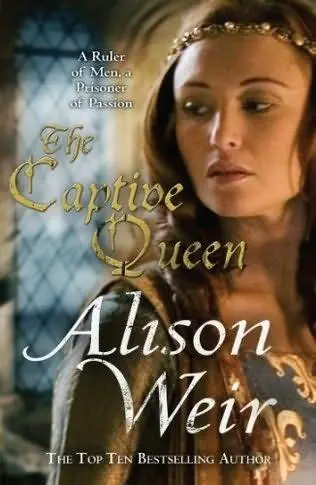
- Название:Captive Queen
- Автор:
- Издательство:BALLANTINE
- Жанр:
- Год:2010
- ISBN:978-0-345-52195-8
- Рейтинг книги:3 / 5. Голосов: 1
-
Избранное:Добавить в избранное
- Отзывы:
-
Ваша оценка:
Captive Queen: краткое содержание, описание и аннотация
Предлагаем к чтению аннотацию, описание, краткое содержание или предисловие (зависит от того, что написал сам автор книги «Captive Queen»). Если вы не нашли необходимую информацию о книге — напишите в комментариях, мы постараемся отыскать её.
Renowned for her highly acclaimed and bestselling British histories, Alison Weir has in recent years made a major impact on the fiction scene with her novels about Queen Elizabeth and Lady Jane Grey. In this latest offering, she imagines the world of Eleanor of Aquitaine, the beautiful twelfth-century woman who was Queen of France until she abandoned her royal husband for the younger man who would become King of England. In a relationship based on lust and a mutual desire for great power, Henry II and Eleanor took over the English throne in 1154, thus beginning one of the most influential reigns and tumultuous royal marriages in all of history. In this novel, Weir uses her extensive knowledge to paint a most vivid portrait of this fascinating woman.
Captive Queen — читать онлайн бесплатно полную книгу (весь текст) целиком
Ниже представлен текст книги, разбитый по страницам. Система сохранения места последней прочитанной страницы, позволяет с удобством читать онлайн бесплатно книгу «Captive Queen», без необходимости каждый раз заново искать на чём Вы остановились. Поставьте закладку, и сможете в любой момент перейти на страницу, на которой закончили чтение.
Интервал:
Закладка:
Eleanor thought she would never see daylight again, shut up as she was with her women in this pitching, stinking cabin with its alarmingly creaking timbers. Outside, the unforgiving Channel continued its howling, relentless assault, surging against the vessel’s sides and tossing it mercilessly on the crashing waves. The wind screamed, and the ship rolled, and every time it did, the ladies emitted little shrieks or threw up once more into the overflowing basins.
All I will ever ask you for, O Lord, is for my feet to be on dry land, Eleanor prayed silently, as she lay on her wooden cot, clutching at the side for dear life, and trying to ignore the heaving of her own stomach. Beside her lay little William, tight in the crook of her arm, and in her swollen belly the babe kicked, affrighted no doubt by the unaccustomed tumult.
She could hear men shouting above the storm, and the tethered horses neighing and rearing in terror. The baggage stored in the hold was inexorably sliding about as the ship lurched from side to side, and ominous thumps announced its latest whereabouts. She had not seen Henry once since they set sail, for the master had been firm about the women keeping to their quarters, and for all she knew—or cared, she told herself—her husband could have gone overboard. He might at least have come to inquire how she was coping in this hell.
She buried her nose in the rough pillow to escape the stench of vomit and the latrine pail. How long had they been at sea? She had utterly lost track of time, and only knew that they had all endured hours of torture locked in this fetid cabin. In the next cot, Petronilla was weeping noisily. She had consumed a lot of wine in a hurry before forcibly being persuaded to board the ship, and had paid dearly for it since, but it loosed her tongue, and her terrified ramblings were threatening to drive the other women hysterical.
“We’re going to die,” she moaned. “I will never see my sweet babes again.” This only provoked more frightened sobs and squeals. Any minute now they would all be wailing uncontrollably.
“Enough!” Eleanor said sternly. “Sailors face these storms all the time, and survive them.” She was gratified to hear herself sounding more confident than she felt. The women subsided, suppressing their cries and their fears. She spoke more gently to them, offering words of comfort and reassurance that she wished she could believe herself.
The night hours—presumably it was night—seemed endless. For most of them, Eleanor remained in that twilight state between sleeping and waking, too strung up to fall into slumber and so attain the oblivion she craved. At one point, though, she must have nodded off, for when she next came to, a watery light was penetrating the oiled linen stretched over the single window, and the sea had miraculously stilled. God had answered her prayer.
She offered little William her breast; mercifully, he was his usual, sunny self, unfazed by the terrible hours they had just endured; how blissful it must be, she thought, to be so young and innocent that one has no conception of the perils and dangers of this world. She kissed her son’s soft, downy head, feeling for the hundredth time that sweet surge of all-consuming maternal love, this time coupled with thankfulness that both of them had been safely delivered from the tempest. As soon as they made land, she promised, she would seek out the nearest church and express due gratefulness to God.
She rose, shook her women awake, and made them fetch fresh garments and a comb from the iron-banded chest that housed her most prized possessions and had not therefore been entrusted to the hold. This day she must dress like a queen, for she and Henry were setting foot for the first time in their new kingdom, and their subjects would surely come crowding to greet them. She donned her rich Byzantine robe, which fell in stately folds over her high belly, and let her long hair fall regally loose under a simple gold circlet. Then she emerged from the noisome cabin into the fresh, cold morning air, to find Henry standing not a few feet away at the ship’s side, looking across a calm estuary to wide, sandy beaches and a vast expanse of woodland beyond.
“My lady,” he said, doffing his cap. His barons and clerics bowed courteously as Eleanor came to join him. She noticed he had forsaken his customary hunting gear for a fashionable tunic ornamented with wide bands of embroidery, worn beneath the short cloak he had recently made popular, earning himself the nickname “Curtmantle.” His coppery hair curled endearingly around his ears beneath the ducal crown of Normandy. He looked every inch the king, with his high, majestic features and erect mien, and her earlier resentment was forgotten in the heady joy of the moment: she was grateful to be alive, and proud to be standing beside him as his consort.
There was no one to greet them when they disembarked. Of course, no one knew when or where to expect them. They were, for the moment, a small party, because the other ships were scattered in the storm and had hopefully made land farther along the coast.
“We ride at once to our capital city of Winchester to secure the royal treasure and receive the homage of our English barons!” Henry announced to his company, and himself led the way on his magnificent battle charger. “The others had instructions to meet up with us there if we got separated,” he explained to Eleanor. “I have sent ahead to Archbishop Theobald, commanding him to summon the magnates.”
It was a cold day, but bright with winter sunshine. The land lay damp and glistening after the storm, and the litter’s wheels made sucking noises as they were dragged resisting through the mud on the waterlogged track. The Abbess Isabella had been right, Eleanor reflected, looking out eagerly from her litter: this kingdom of England did look a lot like Normandy and the Île de France. It was green and well wooded, gently undulating with shady glades, glittering streams, heaths, and moorland. For most of their journey, though, they were riding through a great forest, its dense trees—mighty oaks, as well as chestnut, ash, and beech—bare of leaves. Here and there deer could be glimpsed in the distance, and solid, sturdy little ponies, most of them bay, brown, or gray.
“Good hunting hereabouts!” Henry enthused. “This is the New Forest, established by William the Conqueror, purely for the pleasures of the chase. The forest laws he laid down are very strict. None must poach the king’s deer on pain of death—or, in his day, mutilation.”
“Mutilation?” Eleanor’s eyebrows shot up.
“My great-grandfather was a just but harsh king. He abolished hanging, but replaced it with castration or mutilation.” Henry grinned. “It was very effective, of course. In those days you could walk from one end of the kingdom to the other with your bosom full of gold, and no man would dare molest you.”
“That’s hardly surprising!” Eleanor giggled.
“My great-uncle, King William Rufus, was shot dead with an arrow in this very forest,” Henry went on. “He had fallen out with the Church, and was generally unpopular. Some said he preferred boys to women, and the bishops, God bless them, got themselves all worked up over the extravagant clothes he and his courtiers liked to wear. His death was supposed to have been a tragic accident, with a man called Tyrell shooting the King instead of the beast he said he was aiming for, but I often wonder.”
“You think he was murdered?” Eleanor asked.
“It’s more than possible,” Henry said slowly, “although it’s not the done thing to accuse one’s own grandfather of regicide!”
“King Henry was responsible?”
“Well, he got the crown by it. Didn’t wait for the formalities—he immediately raced off to Winchester to lay hands on the royal treasure, much as we are doing now, my queen, although perhaps not with the same urgency!”
Читать дальшеИнтервал:
Закладка:
Похожие книги на «Captive Queen»
Представляем Вашему вниманию похожие книги на «Captive Queen» списком для выбора. Мы отобрали схожую по названию и смыслу литературу в надежде предоставить читателям больше вариантов отыскать новые, интересные, ещё непрочитанные произведения.




Обсуждение, отзывы о книге «Captive Queen» и просто собственные мнения читателей. Оставьте ваши комментарии, напишите, что Вы думаете о произведении, его смысле или главных героях. Укажите что конкретно понравилось, а что нет, и почему Вы так считаете.