Bernard Cornwell - The Winter King
Здесь есть возможность читать онлайн «Bernard Cornwell - The Winter King» весь текст электронной книги совершенно бесплатно (целиком полную версию без сокращений). В некоторых случаях можно слушать аудио, скачать через торрент в формате fb2 и присутствует краткое содержание. Год выпуска: 1997, Издательство: MacMillan Publishers, Жанр: Историческая проза, на английском языке. Описание произведения, (предисловие) а так же отзывы посетителей доступны на портале библиотеки ЛибКат.
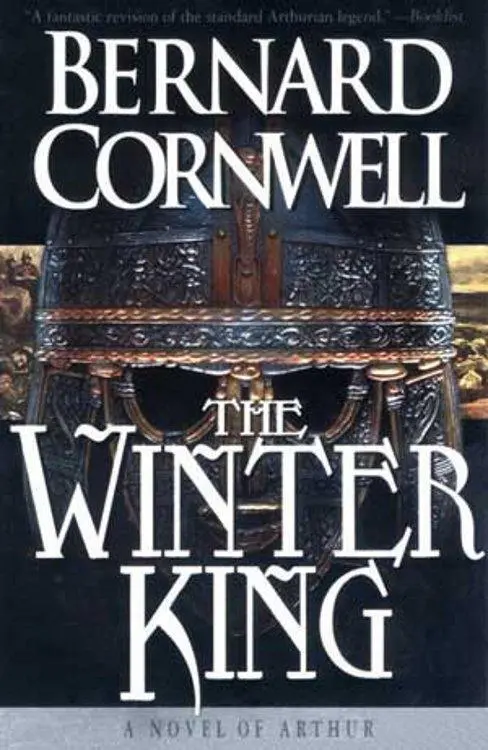
- Название:The Winter King
- Автор:
- Издательство:MacMillan Publishers
- Жанр:
- Год:1997
- ISBN:нет данных
- Рейтинг книги:4 / 5. Голосов: 1
-
Избранное:Добавить в избранное
- Отзывы:
-
Ваша оценка:
The Winter King: краткое содержание, описание и аннотация
Предлагаем к чтению аннотацию, описание, краткое содержание или предисловие (зависит от того, что написал сам автор книги «The Winter King»). Если вы не нашли необходимую информацию о книге — напишите в комментариях, мы постараемся отыскать её.
Fifth century Britain lies on the edge of darkness. Memories of Roman civilization are fading; the pagan Gods are retreating before the spread of Christianity; the Saxons are snapping and snarling at the borders. Only fragile bonds unite the unruly kingdoms of Britain against the invaders, bonds cemented by the vigour of the High King, Uther Pendragon. But the Pendragon is failing, and his heir is no strong leader but a child, born on a bitter winter night.
Only one man could keep Uther's throne safe,only he could hold the warring kingdoms together to face their true enemy, the Saxons. That man is Arthur: soldier, statesman, Merlin's protege, Uther's illegitimate son. But he has been banished, exiled by his own father to Brittany. Derfel, one of his spearmen, narrates the story of Arthur's return and of his quest for peace: embattled, bloody and, finally, triumphant.
The Winter King is a magnificent tale of the Dark Ages and the reality of war and political strife in a land where religion vied with magic for the souls of the people. It portrays Arthur the man rather than the legend, a military genius who, with a small band of warriors bound to him by loyalty and love, struggled to keep alive a flicker of civilization.
The Winter King — читать онлайн бесплатно полную книгу (весь текст) целиком
Ниже представлен текст книги, разбитый по страницам. Система сохранения места последней прочитанной страницы, позволяет с удобством читать онлайн бесплатно книгу «The Winter King», без необходимости каждый раз заново искать на чём Вы остановились. Поставьте закладку, и сможете в любой момент перейти на страницу, на которой закончили чтение.
Интервал:
Закладка:
“I was born to the King's lover, not to his wife,” Galahad leaned close to me and explained softly. “But Father has been good to me and insists on calling me prince.”
King Ban was now arguing with Father Celwin about some obscure point of Christian theology. Ban was debating with courteous enthusiasm while Celwin was spitting insults and both men were enjoying themselves hugely. “Your father tells me you and Lancelot are both warriors,” I said to Galahad.
“Both?” Galahad laughed. “My dear brother employs poets and bards to sing his praises as the greatest warrior of Armorica, but I've yet to see him in the shield-line.”
“But I have to fight,” I said sourly, 'to preserve his inheritance."
“The kingdom's lost,” Galahad said carelessly. “Father has spent his money on buildings and manuscripts, not soldiers, and here in Ynys Trebes we're too far from our people so they'd rather retreat to Broceliande than look to us for help. The Franks are winning everywhere. Your job, Derfel, is to stay alive and get safe home.”
His honesty made me look at him with a new interest. He had a broader, blunter face than his brother, and a more open one; the kind of face you would be glad to see on your right-hand side in the shield-line. A man's right side was the one defended by his neighbour's shield, so it served to be on good terms with that man, and Galahad, I felt instinctively, would be an easy man to like. “Are you saying we shouldn't fight the Franks?” I asked him quietly.
“I'm saying the fight is lost, but yes, you're oath-bound by Arthur to fight, and every moment that Ynys Trebes lives is a moment of light in a dark world. I'm trying to persuade Father to send his library to Britain, but I think he'd rather cut his own heart out first. But when the time comes, I'm sure, he'll send it away. Now' he pushed his gilded chair away from the table 'you and I must leave. Before,” he added softly, 'the fili recite. Unless, of course, you have a taste for unending verses about the glories of moonlight on reed beds?"
I stood and rapped the table with one of the special eating knives that King Ban provided his guests. Those guests now eyed me warily. “I have an apology to make,” I said, 'not just to you all, but to my Lord Lancelot. Such a great warrior as he deserved a better companion for supper. Now, forgive me, I need to sleep."
Lancelot did not respond. King Ban smiled, Queen Elaine looked disgusted and Galahad hurried me first to where my own clothes and weapons waited, then down to the flame lit quay where a boat waited to take us ashore. Galahad, still dressed in his toga, was carrying a sack that he slung on to the small boat's deck. It fell with a clang of metal. “What is it?” I asked.
“My weapons and armour,” he said. He untied the boat's painter, then leaped aboard. “I'm coming with you.”
The boat glided from the quay under a dark sail. The water rippled at the bow and splashed gently down the hull's length as we drew off into the bay. Galahad was stripping himself of the toga, which he tossed to the boatman, before dressing in war gear, while I stared back at the palace on the hill. It hung in the sky like a sky ship sailing into clouds, or maybe like a star come down to earth; a place of dreams; a refuge where a just King and a beautiful Queen ruled and where poets sang and old men could study the wingspan of angels. It was so beautiful, Ynys Trebes, so utterly beautiful. And, unless we could save it, doomed utterly.
Two years we fought. Two years against all odds. Two years of splendour and vileness. Two years of slaughter and feast, of broken swords and shattered shields, of victory and disaster, and in all those months and in all those sweated fights when brave men choked on their own life blood and ordinary men did deeds they never dreamed possible, I never saw Lancelot once. Yet the poets said he was the hero of Benoic, the most perfect warrior, the fighter of fighters. The poets said that preserving Benoic was Lancelot's fight, not mine, not Galahad's, not Culhwch's, but Lancelot's. But Lancelot spent the war in bed, begging his mother to bring him wine and honey.
No, not always in bed. Lancelot was sometimes at a fight, but always a mile behind so that he could be first back to Ynys Trebes with his news of victory. He knew how to tear a cloak, batter a sword edge, rumple his oiled hair and even cut his face so that he staggered home looking the hero, and then his mother would have the fili compose a new song and the song would be carried to Britain by traders and seamen so that even in distant Rheged, north of Elmet, they believed that Lancelot was the new Arthur. The Saxons feared his coming, while Arthur sent him the gift of an embroidered sword belt with a richly enamelled buckle.
“You think life should be fair?” Culhwch asked me when I complained about the gift.
“No, Lord,” I said.
“Then don't waste breath on Lancelot,” Culhwch said. He was the cavalry leader left behind in Armorica when Arthur went to Britain, and also a cousin of Arthur's, though he bore no resemblance to my Lord. Culhwch was a squat, fiercely bearded, long-armed brawler who asked nothing of life but a plentiful supply of enemies, drink and women. Arthur had left him in command of thirty men and horses, but the horses were all dead and half the men were gone so that now Culhwch fought on foot. I joined my men to his and so accepted his command. He could not wait for the war in Benoic to end so that he could fight again at Arthur's side. He adored Arthur.
We fought a strange war. When Arthur had been in Armorica the Franks were still some miles to the east where the land was flat and cleared of trees and thus ideal for his heavy horsemen, but now the enemy was deep inside the woods that cloaked the hills of central Benoic. King Ban, like Tewdric of Gwent, had put his faith in fortifications, but where Gwent was ideally placed for massive forts and high walls, the woods and hills of Benoic offered the enemy too many paths that passed by the hilltop fortresses garrisoned by Ban's dispirited forces. Our job was to give those forces hope again and we did it by using Arthur's own tactics of hard marches and surprise attacks. The wooded hills of Benoic were made for such battles and our men were peerless. There are few joys to compare with the fight that follows an ambush well sprung, when the enemy is strung out and has his weapons sheathed. I put new scars on Hywelbane's long edge.
The Franks feared us. They called us forest wolves and we adopted the insult as our symbol and wore grey wolf-tails on our helmets. We howled to frighten them, kept them awake night after night, stalked them for days and sprang our ambushes when we wanted and not when they were ready, yet the enemy was many and we were few, and month by month our numbers shrank.
Galahad fought with us. He was a great fighter, yet he was also a scholar who had delved into his father's library and he would talk at night of old Gods, new religions, strange countries and great men. I remember one night when we camped in a ruined villa. A week before it had been a thriving settlement with its own fulling mill, pottery and dairy, but the Franks had been there and now the villa was a smoking ruin, splashed by blood, its walls tumbled and its spring poisoned with the corpses of women and children. Our sentries were guarding the paths in the woods so we had the luxury of a fire on which we roasted a brace of hares and a kid. We drank water and pretended it was wine.
“Falernian,” Galahad said dreamily, holding his clay cup to the stars as though it were a golden flask.
“Who's he?” Culhwch asked.
“Falernian, my dear Culhwch, is a wine, a most pleasant Roman wine.”
“I never did like wine,” Culhwch said, then yawned hugely. “A woman's drink. Now Saxon ale! There's a drink for you.” Within minutes he was asleep.
Читать дальшеИнтервал:
Закладка:
Похожие книги на «The Winter King»
Представляем Вашему вниманию похожие книги на «The Winter King» списком для выбора. Мы отобрали схожую по названию и смыслу литературу в надежде предоставить читателям больше вариантов отыскать новые, интересные, ещё непрочитанные произведения.







Обсуждение, отзывы о книге «The Winter King» и просто собственные мнения читателей. Оставьте ваши комментарии, напишите, что Вы думаете о произведении, его смысле или главных героях. Укажите что конкретно понравилось, а что нет, и почему Вы так считаете.