Bernard Cornwell - The Winter King
Здесь есть возможность читать онлайн «Bernard Cornwell - The Winter King» весь текст электронной книги совершенно бесплатно (целиком полную версию без сокращений). В некоторых случаях можно слушать аудио, скачать через торрент в формате fb2 и присутствует краткое содержание. Год выпуска: 1997, Издательство: MacMillan Publishers, Жанр: Историческая проза, на английском языке. Описание произведения, (предисловие) а так же отзывы посетителей доступны на портале библиотеки ЛибКат.
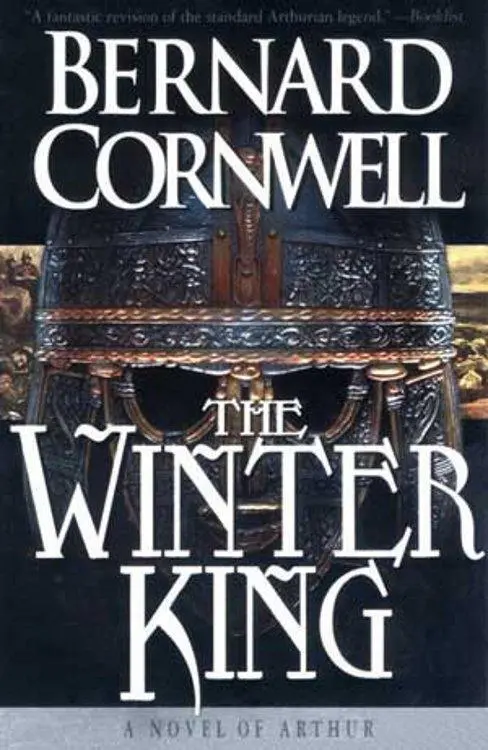
- Название:The Winter King
- Автор:
- Издательство:MacMillan Publishers
- Жанр:
- Год:1997
- ISBN:нет данных
- Рейтинг книги:4 / 5. Голосов: 1
-
Избранное:Добавить в избранное
- Отзывы:
-
Ваша оценка:
The Winter King: краткое содержание, описание и аннотация
Предлагаем к чтению аннотацию, описание, краткое содержание или предисловие (зависит от того, что написал сам автор книги «The Winter King»). Если вы не нашли необходимую информацию о книге — напишите в комментариях, мы постараемся отыскать её.
Fifth century Britain lies on the edge of darkness. Memories of Roman civilization are fading; the pagan Gods are retreating before the spread of Christianity; the Saxons are snapping and snarling at the borders. Only fragile bonds unite the unruly kingdoms of Britain against the invaders, bonds cemented by the vigour of the High King, Uther Pendragon. But the Pendragon is failing, and his heir is no strong leader but a child, born on a bitter winter night.
Only one man could keep Uther's throne safe,only he could hold the warring kingdoms together to face their true enemy, the Saxons. That man is Arthur: soldier, statesman, Merlin's protege, Uther's illegitimate son. But he has been banished, exiled by his own father to Brittany. Derfel, one of his spearmen, narrates the story of Arthur's return and of his quest for peace: embattled, bloody and, finally, triumphant.
The Winter King is a magnificent tale of the Dark Ages and the reality of war and political strife in a land where religion vied with magic for the souls of the people. It portrays Arthur the man rather than the legend, a military genius who, with a small band of warriors bound to him by loyalty and love, struggled to keep alive a flicker of civilization.
The Winter King — читать онлайн бесплатно полную книгу (весь текст) целиком
Ниже представлен текст книги, разбитый по страницам. Система сохранения места последней прочитанной страницы, позволяет с удобством читать онлайн бесплатно книгу «The Winter King», без необходимости каждый раз заново искать на чём Вы остановились. Поставьте закладку, и сможете в любой момент перейти на страницу, на которой закончили чтение.
Интервал:
Закладка:
Uther was saving his small energy for the most important business of the day, which came after dusk. It was a dark twilight and Tewdric's servants had fetched a dozen more blazing torches into the hall. It had also begun to rain hard and the hall became chill as streams of water found holes in the roof and dripped on to the floor or ran in rivulets down the rough brick walls. It was suddenly so cold that a brazier, an iron basket full four feet across, was filled with logs and set ablaze close to the High King's feet. The royal shields were moved and Tewdric's throne shifted aside so that the brazier's warmth could reach Uther. The woodsmoke drifted about the room, eddying in the high shadows as it searched for a way out to the beating rain.
Uther at last stood to address the High Council. He was unsteady and so leaned on a great boar-spear as he spoke his mind about his kingdom. Dumnonia, he said, had a new ed ling and the Gods must be thanked for that mercy, but the Edling was weak, a baby and had a crippled foot. Murmurs greeted the confirmation of that rumoured ill omen, but subsided as Uther lifted a hand for silence. The smoke wreathed about him, giving him a spectral look as though his soul was already clad in his Otherworld's shadow-body. Gold glinted at his neck and on his wrists, and a thin fillet of gold, the High King's crown, circled his straggling white hairs.
“I am old,” he said, 'and I will not live long." He calmed the protests with another feeble wave of his hand.
“I do not claim my kingdom to be above any other in this land, but I do say that if Dumnonia falls to the Saxons then all Britain will fall. If Dumnonia falls then we lose our links to Armorica and our brethren beyond the sea. If Dumnonia falls then the Saxon will have divided the land of Britain and a divided land cannot survive.” He paused, and for a second I thought he was too tired to continue, but then that great bull's head reared up and he spoke on. “The Saxons must not reach the Severn Sea!” he shouted that creed, which had been at the very heart of his ambitions all these years. So long as the Saxons were hemmed in by Britons then there was a chance that they could one day be driven back into the German Sea, but if they once reached our western coast then they would have divided Dumnonia from Gwent and the Britons of the south from the Britons of the north. “The men of Gwent,” Uther went on, 'are our greatest warriors,“ and here he nodded in tribute to Agricola, 'but it is no secret that Gwent lives on Dumnonian bread. Dumnonia must be held or Britain will be lost. I have a grandson and the kingdom is his! The kingdom is Mordred's to rule when I die. That is my law!” And here he stamped his spear on the platform and for a moment the old hard force of the Pendragon shone from his eyes. Whatever else would be decided here the kingdom would not pass from
Uther's line, for that was Uther's l?w and everyone in the hall now knew it. All that remained was to decide how the crippled child should be protected until he was old enough to assume the kingship for himself.
And so the talking began, although everyone knew what had already been decided. Why else was Gundleus slouching so cocksure in his throne? Yet some men still advanced other candidates for Norwenna's hand. Prince Gereint, the Lord of the Stones who held Dumnonia's Saxon borderlands, proposed Meurig ap Tewdric, Gwent's Edling, but everyone in the hall knew that the proposal was merely a way of flattering Tewdric and would never be accepted because Meurig was a mere nose-picking child who had no chance of holding Dumnonia against the Saxons. Gereint, his duty done, sat and listened as one of Tewdric's counsellors proposed Prince Cuneglas, Gorfyddyd's eldest son and thus the Edling of Powys. A marriage to the enemy's crown prince, the counsellor claimed, would forge a peace between Powys and Dumnonia, the two most powerful British kingdoms, but the suggestion was ruthlessly beaten down by Bishop Bedwin who knew his master would never bequeath his kingdom to the care of a man who was the son of Tewdric's bitterest enemy.
Tristan, Prince of Kernow, was another candidate, but he demurred, knowing full well that no one in Dumnonia would trust his father, King Mark. Meriadoc, Prince of Stronggore, was suggested, but Stronggore, a kingdom east of Gwent, was already half lost to the Saxons and if a man could not hold his own kingdom how could he hold another? What of the royal houses in Armorica, someone asked, but no one knew whether the princes across the sea would abandon their new land of Brittany to defend Dumnonia.
Gundleus. It all came back to Gundleus.
But then Agricola spoke the name that almost every man in the hall both wanted to hear and feared to hear. The old soldier stood, his Roman armour bright and his shoulders braced, and he looked Uther the Pendragon straight in his rheumy eyes. “Arthur,” Agricola said. “I propose Arthur.” Arthur. The name resounded in the hall, then the dying echo was drowned by the sudden clatter of staves thumping on the floor. The applauding spearmen were warriors of Dumnonia, men who had followed Arthur into battle and knew his worth, but their rebellion was brief. Uther the Pendragon, High King of Britain, raised his own spear and brought it down once. There was an immediate silence in which only Agricola still dared to challenge the High King. “I propose that Arthur marries Norwenna,” he said respectfully, and even I, young as I was, knew that Agricola must be speaking for his master, King Tewdric, and that puzzled me for I had thought that Gundleus was Tewdric's candidate. If Gundleus could be detached from his friendship with Powys then the new alliance of Dumnonia, Gwent and Siluria would hold all the land on either bank of the Severn Sea and that triple alliance would be a bulwark against both Powys and the Saxons. I should have known, of course, that Tewdric, in suggesting Arthur, was inviting a refusal that would have to be recompensed by a favour.
“Arthur ap Neb,” Uther said and that last word was greeted with a gasp of horrified surprise 'is not of the blood." There could be no argument with such a decree and Agricola, accepting his defeat, bowed and sat. Neb meant nobody, and Uther was denying that he was Arthur's father, thereby stating that Arthur had no royal blood and could not therefore marry Norwenna. A Belgic bishop argued for Arthur by protesting that kings had ever been chosen from the nobility and that customs which had served in the past should serve in the future, but his querulous objection was stilled by one fierce look from Uther. Rain whirled in through one of the high windows and hissed in the fire.
Bishop Bed win stood again. It might have seemed that until this moment all talk of Norwenna's future had been so much wasted breath, yet at least the alternatives had been aired and men of sense could thus understand the reasoning behind the announcement Bed win now made.
Gundleus of Siluria, Bedwin said mildly, was a man without a wife. There was a murmur in the hall as men remembered the rumours of Gundleus's scandalous marriage to his low-born lover, Ladwys, but Bedwin blithely ignored the disturbance. Some weeks before, the Bishop continued, Gundleus had visited Uther and made his peace with the High King and it was now Uther's pleasure that Gundleus should marry Norwenna and be a protector, he repeated the word, a protector to Mordred's kingdom. As an earnest of his good intention Gundleus had already paid a price in gold to King Uther and that price had been accepted as fitting. There were those, Bishop Bedwin admitted airily, who might not trust a man who had until so recently been an enemy, but as a further earnest of his change of heart Gundleus of Siluria had agreed to abandon Siluria's ancient claim to the kingdom of Gwent and, further, he would become a Christian by being publicly baptised in the River Severn beneath Glevum's walls the very next morning. The Christians who were present all called out hallelujah, but I was watching the Druid Tanaburs and wondered why the wicked old fool showed no sign of disapproval as his master so publicly disavowed the old religion.
Читать дальшеИнтервал:
Закладка:
Похожие книги на «The Winter King»
Представляем Вашему вниманию похожие книги на «The Winter King» списком для выбора. Мы отобрали схожую по названию и смыслу литературу в надежде предоставить читателям больше вариантов отыскать новые, интересные, ещё непрочитанные произведения.

Обсуждение, отзывы о книге «The Winter King» и просто собственные мнения читателей. Оставьте ваши комментарии, напишите, что Вы думаете о произведении, его смысле или главных героях. Укажите что конкретно понравилось, а что нет, и почему Вы так считаете.