Bernard Cornwell - The Winter King
Здесь есть возможность читать онлайн «Bernard Cornwell - The Winter King» весь текст электронной книги совершенно бесплатно (целиком полную версию без сокращений). В некоторых случаях можно слушать аудио, скачать через торрент в формате fb2 и присутствует краткое содержание. Год выпуска: 1997, Издательство: MacMillan Publishers, Жанр: Историческая проза, на английском языке. Описание произведения, (предисловие) а так же отзывы посетителей доступны на портале библиотеки ЛибКат.
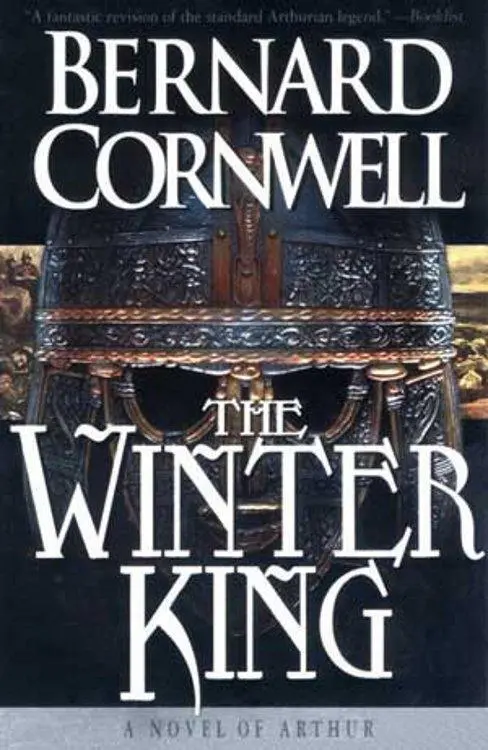
- Название:The Winter King
- Автор:
- Издательство:MacMillan Publishers
- Жанр:
- Год:1997
- ISBN:нет данных
- Рейтинг книги:4 / 5. Голосов: 1
-
Избранное:Добавить в избранное
- Отзывы:
-
Ваша оценка:
The Winter King: краткое содержание, описание и аннотация
Предлагаем к чтению аннотацию, описание, краткое содержание или предисловие (зависит от того, что написал сам автор книги «The Winter King»). Если вы не нашли необходимую информацию о книге — напишите в комментариях, мы постараемся отыскать её.
Fifth century Britain lies on the edge of darkness. Memories of Roman civilization are fading; the pagan Gods are retreating before the spread of Christianity; the Saxons are snapping and snarling at the borders. Only fragile bonds unite the unruly kingdoms of Britain against the invaders, bonds cemented by the vigour of the High King, Uther Pendragon. But the Pendragon is failing, and his heir is no strong leader but a child, born on a bitter winter night.
Only one man could keep Uther's throne safe,only he could hold the warring kingdoms together to face their true enemy, the Saxons. That man is Arthur: soldier, statesman, Merlin's protege, Uther's illegitimate son. But he has been banished, exiled by his own father to Brittany. Derfel, one of his spearmen, narrates the story of Arthur's return and of his quest for peace: embattled, bloody and, finally, triumphant.
The Winter King is a magnificent tale of the Dark Ages and the reality of war and political strife in a land where religion vied with magic for the souls of the people. It portrays Arthur the man rather than the legend, a military genius who, with a small band of warriors bound to him by loyalty and love, struggled to keep alive a flicker of civilization.
The Winter King — читать онлайн бесплатно полную книгу (весь текст) целиком
Ниже представлен текст книги, разбитый по страницам. Система сохранения места последней прочитанной страницы, позволяет с удобством читать онлайн бесплатно книгу «The Winter King», без необходимости каждый раз заново искать на чём Вы остановились. Поставьте закладку, и сможете в любой момент перейти на страницу, на которой закончили чтение.
Интервал:
Закладка:
“Come,” Nimue whispered to me, “I've heard enough.” We slipped off the pedestal and eased our way through the crowd that filled the vestibule beneath the hall's outer pillars. To my shame I held my cloak up to my beardless chin so that no one would see my torque as I followed Nimue down the steps into the windy square that was lit on all sides by blustering torch flames. A small rain was spitting out of the west to make the stones of the square shine in the firelight. Tewdric's uniformed guards stood motionless all around the square's edge as Nimue led me into the very centre of the wide space where she stopped and suddenly began to laugh. At first it was a chuckle, then it was the laughter of jest that turned into a fierce mockery that changed into a defiant howl that beat up past the roofs of Glevum to echo out towards the heavens and end in a maniacal screech as wild as the death cry of a cornered beast. She turned around as she sounded the screech, turned sunwise from the north to the east to the south to the west and so back north again, and not one soldier stirred. Some of the Christians in the portico of the great building looked at us in anger, but did not interfere. Even Christians recognized someone being touched by the Gods, and none of them dared lay a hand on Nimue.
When her breath was ended she sank down to the stones. She was silent; a tiny figure crouched beneath a black cape, a shapeless thing shuddering at my feet. “Oh, little one,” she finally said in a tired voice, job, my little one."
“What is it?” I asked. I confess I was more tempted by the smell of roasting pork that came from Uther's hall than by whatever momentary trance had so exhausted Nimue.
She held out her scarred left hand and I hauled her to her feet. “We have one chance,” she said to me in a small, frightened voice, 'just one chance, and if we lose it then the Gods will go from us. We will be abandoned by the Gods and left to the brutes. And those fools in there, the Mouse Lord and his followers, will ruin that chance unless we fight them. And there are so many of them and so very few of us." She was looking into my face, crying desperately.
I did not know what to say. I had no skills with the spirit world, even though I was Merlin's foundling and the child of Bel. “Bel will help us, won't He?” I asked helplessly. “He loves us, doesn't He?”
“Loves us!” She snatched her hand away from mine. “Loves us!” she repeated scornfully. "It is not the task of Gods to love us. Do you love Druidan's pigs? Why, in Bel's name, should a God love us? Love!
What do you know of love, Derfel, son of a Saxon?"
“I know I love you,” I said. I can blush now when I think of a young boy's desperate lunges at a woman's affection. It had taken every nerve in my body to make that statement, every ounce of courage I hoped I possessed, and after I had blurted out the words I blushed in the rain-swept firelight and wished I had kept silent.
Nimue smiled at me. “I know,” she said, “I know. Now come. A feast for our supper.” These days, these my dying days that I spend writing in this monastery in Powys's hills, I sometimes close my eyes and see Nimue. Not as she became, but as she was then: so full of fire, so quick, so confident. I know I have gained Christ and through His blessing I have gained the whole world too, but for what I have lost, for what we have all lost, there is no end to the reckoning. We lost everything. The feast was wonderful.
The High Council began in mid-morning, after the Christians had held yet another ceremony. They held a terrible number of them, I thought, for every hour of the day seemed to demand some new genuflection to the cross, but the delay served to give the princes and warriors time to recover from their night of drinking, boasting and fighting. The High Council was held in the great hall that was again lit by torches, for although the spring sun was shining brightly the hall's few windows were high and small, less suited for letting the light in than the smoke out, though even that they did badly. Uther, the High King, sat on a platform raised above the dais reserved for the kings, ed lings and princes. Tewdric of Gwent, the Council's host, sat below Uther and on either side of Tewdric's throne were a dozen other thrones filled this day by client kings or princes who paid tribute to Uther or Tewdric. Prince Cadwy of Isca was there, and King Melwas of the Belgae and Prince Gereint, Lord of the Stones, while distant Kernow, the savage kingdom at Britain's western tip, had sent its ed ling Prince Tristan, who sat swathed in wolf fur at the dais's edge next to one of the two vacant thrones. In truth the thrones were nothing more than chairs fetched from the feasting hall and tricked out with saddle cloths and in front of each chair, resting on the floor and leaning against the dais, were the shields of the kingdoms. There had been a time when thirty-three shields might have rested against the dais, but now the tribes of Britain fought amongst themselves and some of the kingdoms had been buried in Lloegyr by Saxon blades. One of the purposes of this High Council was to make peace between the remaining British kingdoms, a peace that was already threatened because Powys and Siluria had not come to the Council. Their thrones were empty, mute witness to those kingdoms' continuing enmity towards Gwent and Dumnonia.
Directly before the kings and princes, and beyond a small open space that had been left for the speech-making, sat the counsellors and chief magistrates of the kingdoms. Some of the councils, like those of Gwent and Dumnonia, were huge, while others comprised only a handful of men. The magistrates and counsellors sat on the floor that I now saw was decorated with thousands of tiny coloured stones arranged into a huge picture that showed between the seated bodies. The counsellors had all fetched blankets to make themselves pillows for they knew that the High Council's deliberations could last well beyond nightfall. Behind the counsellors, and present only as observers, stood the armed warriors, some with their favourite hunting dogs leashed at their side. I stood with those armed warriors, my bronze Cernunnos-headed torque all the authority I needed to be present. Two women were at the Council, only two, yet even their presence had caused murmurs of protest among the waiting men until a flicker of Uther's eyes had stilled the grumbling. Morgan sat directly in front of Uther. The counsellors had edged away from her so that she had sat alone until Nimue had walked boldly through the hall door and threaded her way through the seated men to take a place beside her. Nimue had entered with such calm assurance that no one had tried to stop her. Once seated she stared up at High King Uther as though daring him to eject her, but the King ignored her arrival. Morgan also ignored her young rival who sat very still and very straight-backed. She was dressed in her white linen shift with its thin leather slave belt and among the heavy-caped, grey-haired men she looked slight and vulnerable.
The High Council began, as all councils did, with a prayer.
Merlin, if he had been present, would have called on the Gods, but instead Bishop Conrad of Gwent offered a prayer to the Christian God. I saw Sansum sitting in the ranks of the Gwent counsellors and noted the fierce look of hatred he shot at the two women when they did not bow their heads as the Bishop prayed. Sansum knew the women came in Merlin's place.
After the prayer the challenge was given by Owain, Dumnonia's champion who had taken on Tewdric's best men two days before. A brute, Merlin always called Owain, and he looked like a brute as he stood before the High King with his face still blood-scabbed from the fight, with his sword drawn and with a thick wolf-fur cloak draped around the humped muscles of his huge shoulders. “Does any man here,” he growled, 'dispute Uther's right to the High Throne?"
Читать дальшеИнтервал:
Закладка:
Похожие книги на «The Winter King»
Представляем Вашему вниманию похожие книги на «The Winter King» списком для выбора. Мы отобрали схожую по названию и смыслу литературу в надежде предоставить читателям больше вариантов отыскать новые, интересные, ещё непрочитанные произведения.


Обсуждение, отзывы о книге «The Winter King» и просто собственные мнения читателей. Оставьте ваши комментарии, напишите, что Вы думаете о произведении, его смысле или главных героях. Укажите что конкретно понравилось, а что нет, и почему Вы так считаете.