Bernard Cornwell - The Winter King
Здесь есть возможность читать онлайн «Bernard Cornwell - The Winter King» весь текст электронной книги совершенно бесплатно (целиком полную версию без сокращений). В некоторых случаях можно слушать аудио, скачать через торрент в формате fb2 и присутствует краткое содержание. Год выпуска: 1997, Издательство: MacMillan Publishers, Жанр: Историческая проза, на английском языке. Описание произведения, (предисловие) а так же отзывы посетителей доступны на портале библиотеки ЛибКат.
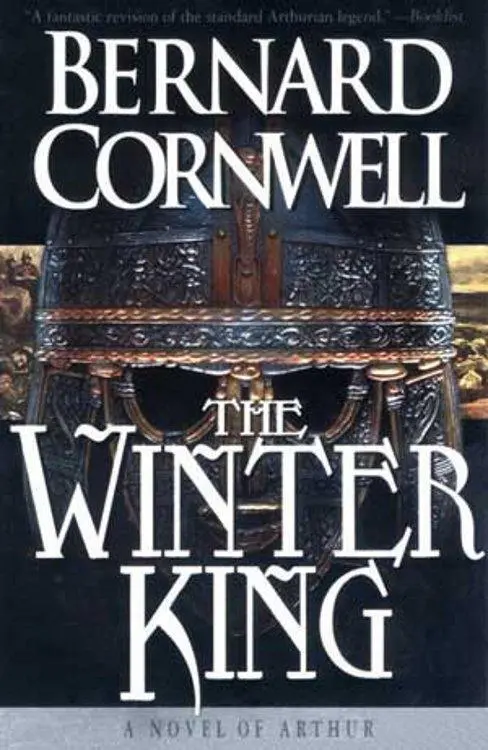
- Название:The Winter King
- Автор:
- Издательство:MacMillan Publishers
- Жанр:
- Год:1997
- ISBN:нет данных
- Рейтинг книги:4 / 5. Голосов: 1
-
Избранное:Добавить в избранное
- Отзывы:
-
Ваша оценка:
The Winter King: краткое содержание, описание и аннотация
Предлагаем к чтению аннотацию, описание, краткое содержание или предисловие (зависит от того, что написал сам автор книги «The Winter King»). Если вы не нашли необходимую информацию о книге — напишите в комментариях, мы постараемся отыскать её.
Fifth century Britain lies on the edge of darkness. Memories of Roman civilization are fading; the pagan Gods are retreating before the spread of Christianity; the Saxons are snapping and snarling at the borders. Only fragile bonds unite the unruly kingdoms of Britain against the invaders, bonds cemented by the vigour of the High King, Uther Pendragon. But the Pendragon is failing, and his heir is no strong leader but a child, born on a bitter winter night.
Only one man could keep Uther's throne safe,only he could hold the warring kingdoms together to face their true enemy, the Saxons. That man is Arthur: soldier, statesman, Merlin's protege, Uther's illegitimate son. But he has been banished, exiled by his own father to Brittany. Derfel, one of his spearmen, narrates the story of Arthur's return and of his quest for peace: embattled, bloody and, finally, triumphant.
The Winter King is a magnificent tale of the Dark Ages and the reality of war and political strife in a land where religion vied with magic for the souls of the people. It portrays Arthur the man rather than the legend, a military genius who, with a small band of warriors bound to him by loyalty and love, struggled to keep alive a flicker of civilization.
The Winter King — читать онлайн бесплатно полную книгу (весь текст) целиком
Ниже представлен текст книги, разбитый по страницам. Система сохранения места последней прочитанной страницы, позволяет с удобством читать онлайн бесплатно книгу «The Winter King», без необходимости каждый раз заново искать на чём Вы остановились. Поставьте закладку, и сможете в любой момент перейти на страницу, на которой закончили чтение.
Интервал:
Закладка:
Uther's body was burned in the ancient manner. Bed win would have preferred to give the High King a Christian burial, but the rest of the council refused to sanction such sacrilege and so his swollen corpse was laid on a pyre on the summit of Caer Macs and there put to the flames. His sword was melted by the smith Ystrwth and the molten steel was poured into a lake so that Gofannon, the Blacksmith God of the Otherworld, could forge the sword anew for Uther's reborn soul. The burning metal hissed as it struck the water and its steam flew like a thick cloud as the seers stooped over the lake to foretell the kingdom's future in the tortured shapes adopted by the cooling metal. They reported good news, despite which Bishop Bedwin was careful to send his swiftest messengers south to Armorica to summon Arthur while slower men travelled north into Siluria to tell Gundleus that his stepson's kingdom was now in need of its official protector.
Uther's bale fire burned for three nights. Only then were the flames allowed to die, a process hastened by a mighty storm that swept in from the Western Sea. Great clouds heaped the sky, lightning harrowed the dead man's land and heavy rain beat across a broad swathe of growing crops. In Ynys Wydryn we crouched in the huts and listened to the drumming rain and the bellowing thunder and watched the water cascade in streams from the thatched roofs. It was during that storm that Bishop Bedwin's messenger brought the kingdom's great dragon banner to Mordred. The messenger had to shout like a mad thing to attract the attention of anyone inside the stockade, but finally Hywel and I opened the gate and once the storm had passed and the wind had died we planted the flag before Merlin's hall as a sign that Mordred was now king over Dumnonia. The baby was not the High King, of course, for that was an honour which was only granted to a king acknowledged by other kings as one above them all, nor was Mordred the Pendragon, for that title only went to a High King who had won his position in battle. Indeed, Mordred was not even the proper King of Dumnonia yet, nor would he be until he had been carried to Caer Cadarn and there proclaimed with sword and shout above the kingdom's royal stone, but he was the banner's owner and so the red dragon flew before Merlin's high hall. The banner was a square of white linen as broad and high as the shaft of a warrior's spear. It was held spread by willow wit hies threaded into its hems and was attached to a long elm staff that was crowned with a golden figure of a dragon. The dragon embroidered on the banner itself was made of red wool that leeched its dye in the rain to smear the lower linen pink. The arrival of the banner was followed within days by the King's Guard, a hundred men led by Owain, the champion, whose task was to protect Mordred, King of Dumnonia. Owain brought a suggestion from Bishop Bedwin that Norwenna and Mordred should move south to Durnovaria, a suggestion Norwenna eagerly adopted for she wanted to raise her son in a Christian community rather than in the Tor's blatantly pagan air, but before the arrangements could be made there came bad news from the north country. Gorfyddyd of Powys, hearing of the High King's death, had sent his spearmen to attack Gwent and the men of Powys were now burning, looting and taking captives deep inside Tewdric's territory. Agricola, Tewdric's Roman commander, was fighting back, but the treacherous Saxons, undoubtedly in league with Gorfyddyd, had brought their own war-bands into Gwent and suddenly our oldest ally was fighting for his kingdom's very existence. Owain, who would have escorted Norwenna and the babe south to Durnovaria, took his warriors north to help King
Tewdric instead and Ligessac, who was once again the commander of Mordred's guard, insisted that the baby would be safer behind Ynys Wydryn's easily defended land bridge than in Caer Cadarn or Durnovaria, and so Norwenna reluctantly remained at the Tor.
We held our breath to see whose side Gundleus of Siluria would choose and the answer came swiftly. He would fight for Tewdric against his old ally Gorfyddyd. Gundleus sent a message to Norwenna saying that his levies would cross the mountain passes to attack Gorfyddyd's men from the rear and that as soon as the war-bands of Powys had been defeated he would come south to protect his bride and her royal son.
We waited for news, watching the distant hills day and night for the beacons that would tell us of disaster or the approach of enemies, and yet, despite the war's uncertainties, those were happy days. The sun healed the storm-beaten land and dried the grain while Norwenna, even though she was mired in the pagan Tor, seemed more confident now that her son was King. Mordred was always a grim child, with red hair and a stubborn heart, but in those gentle days he seemed happy enough as he played with his mother or with Ralla, his wet nurse, and her dark-haired son. Ralla's husband, Gwlyddyn the carpenter, carved Mordred a set of animals: ducks, hogs, cows and deer, and the King loved to play with them even though he was still too young to know just what they were. Norwenna was happy when her son was happy. I used to watch her tickling Mordred to make him laugh, cradling him when he was hurt and loving him always. She called him her little King, her ever-loving-lover-boy, her miracle, and Mordred chuckled back and warmed her unhappy heart. He crawled naked in the sun and we could all see how his left foot was clubbed and grown inwards like a clenched fist, but otherwise he grew strong on Ralla's milk and his mother's love. He was baptized in the stone church beside the Holy Thorn. News of the war came and it was all good. Prince Gereint had broken a Saxon war-band on Dumnonia's eastern border, while further north Tewdric had destroyed another force of Saxon raiders. Agricola, leading the rest of Gwent's army in alliance with Owain of Dumnonia, had driven Gorfyddyd's invaders back into Powys's hills. Then a messenger came from Gundleus which said that Gorfyddyd of Powys was seeking peace, and the messenger threw two captured Powysian swords at Norwenna's feet as a token of her husband's victory. Better still, the man reported, Gundleus of Siluria was even now on his way south to collect his bride and her precious son. It was time, Gundleus said, that Mordred was proclaimed King on Caer Cadarn. Nothing could have been sweeter to Norwenna's ears and, in her gladness, she gave the messenger a heavy gold bracelet before sending him south to pass on her husband's message to Bedwin and the council. “Tell Bedwin,” she ordered the messenger, 'that we shall acclaim Mordred before the harvest. God speed your horse!"
The messenger rode south and Norwenna began preparing for the acclamation ceremony at Caer Cadarn. She ordered the monks of the Holy Thorn to be ready to travel with her, though she peremptorily forbade either Morgan or Nimue to attend because from this day on, she declared, Dumnonia would be a Christian kingdom and its heathen witches would be kept far from her son's throne. Gundleus's victory had emboldened Norwenna, encouraging her to exercise an authority that Uther would never have allowed her to wield.
We waited for Morgan or Nimue to protest their exclusion from the ceremony of acclamation, but both women took the prohibition with a surprising calm. Morgan, indeed, simply shrugged her black shoulders, though at dusk that night she carried a bronze cauldron into Merlin's chambers and there secluded herself with Nimue. Norwenna, who had invited the head monk of the Holy Thorn and his wife to dine on the Tor, commented that the witches were brewing evil and everyone in the hall laughed. The Christians were victorious.
I was not so sure of their victory. Nimue and Morgan disliked each other, yet now they were closeted together and I suspected that only a matter of the direst importance could bring about such a reconciliation. But Norwenna had no doubts. Uther's death and her husband's victories were bringing her a blessed freedom and soon she would leave the Tor and assume her rightful place as the King's mother in a Christian court where her son would grow in Christ's image. She was never so happy as on that night when she ruled supreme; a Christian in the heart of Merlin's pagan hall. But then Morgan and Nimue reappeared.
Читать дальшеИнтервал:
Закладка:
Похожие книги на «The Winter King»
Представляем Вашему вниманию похожие книги на «The Winter King» списком для выбора. Мы отобрали схожую по названию и смыслу литературу в надежде предоставить читателям больше вариантов отыскать новые, интересные, ещё непрочитанные произведения.



Обсуждение, отзывы о книге «The Winter King» и просто собственные мнения читателей. Оставьте ваши комментарии, напишите, что Вы думаете о произведении, его смысле или главных героях. Укажите что конкретно понравилось, а что нет, и почему Вы так считаете.