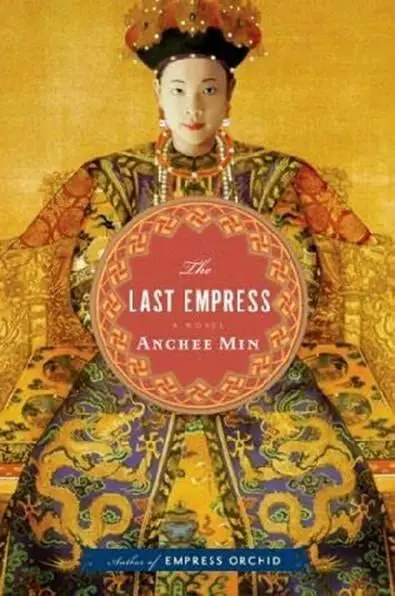
Anchee Min - The Last Empress
Здесь есть возможность читать онлайн «Anchee Min - The Last Empress» весь текст электронной книги совершенно бесплатно (целиком полную версию без сокращений). В некоторых случаях можно слушать аудио, скачать через торрент в формате fb2 и присутствует краткое содержание. Жанр: Историческая проза, на английском языке. Описание произведения, (предисловие) а так же отзывы посетителей доступны на портале библиотеки ЛибКат.
- Название:The Last Empress
- Автор:
- Жанр:
- Год:неизвестен
- ISBN:нет данных
- Рейтинг книги:4 / 5. Голосов: 1
-
Избранное:Добавить в избранное
- Отзывы:
-
Ваша оценка:
The Last Empress: краткое содержание, описание и аннотация
Предлагаем к чтению аннотацию, описание, краткое содержание или предисловие (зависит от того, что написал сам автор книги «The Last Empress»). Если вы не нашли необходимую информацию о книге — напишите в комментариях, мы постараемся отыскать её.
The Last Empress is the story of Orchid"s dramatic transition from a strong-willed, instinctive young woman to a wise and politically savvy leader. Moving from the intimacy of the concubine quarters into the spotlight of the world stage, Orchid must not only face the perilous condition of her empire but also a series of devastating personal losses, as first her son and then her adopted son succumb to early death. Yearning only to step aside, and yet growing constantly into her role, only she-allied with the progressives, but loyal to the conservative Manchu clan of her dynasty-can hold the nation"s rival
factions together.
Anchee Min offers a powerful revisionist portrait based on extensive research of one of the most important figures in Chinese history. Viciously maligned by the western press of the time as the "Dragon Lady," a manipulative, blood-thirsty woman who held onto power at all costs, the woman Min gives us is a compelling, very human leader who assumed power reluctantly, and who sacrificed all she had to protect those she loved and an empire that was doomed to die.
The Last Empress — читать онлайн бесплатно полную книгу (весь текст) целиком
Ниже представлен текст книги, разбитый по страницам. Система сохранения места последней прочитанной страницы, позволяет с удобством читать онлайн бесплатно книгу «The Last Empress», без необходимости каждый раз заново искать на чём Вы остановились. Поставьте закладку, и сможете в любой момент перейти на страницу, на которой закончили чтение.
Интервал:
Закладка:
Li Hung-chang had his own way of fighting the court. He lived outside Peking and came to the capital only when seeking permission to expand his businesses. When he realized that he needed a political voice at court, he created partnerships with his powerful friends, Manchu and Han Chinese alike. Besides Prince Kung, Li had friendly governors in key provinces. His most important partnership was with the governor of Canton, Chang Chih-tung, who built China's largest modern iron foundry. Li made a deal with the Canton governor: instead of ordering the material for his railway from foreign companies, he got it from Canton. The two men were described as "the Northern Li and the Southern Chang."
I received both men in private audiences. Both deserved the honor, but I also realized the importance of staying involved. There had been enough incidents when I had ended up being the last to know.
Every governor was aware that my approval at the court carried weight, and winning me over had become a vital part of court politics. As a result, people wished to impress me, which led to flattery and dishonesty. Although outrageous lies would not pass my peasant's common sense, I couldn't avoid being fooled sometimes.
"People change," I told my adopted son during an intermission at the court. "Manchu royal decadence is a perfect living example."
Guang-hsu was learning fast. One day he asked why Li Hung-chang bought me gifts, like the cases of French champagne that had recently been delivered.
"To secure his relationship with the throne," I replied. "He needs protection."
"Are you pleased with the gifts?" Guang-hsu asked. "What about the English toothbrush and toothpaste he sent? Wouldn't you have preferred an antique Han vase or some other beautiful object? Most ladies would."
"I am more pleased with the toothbrush and paste," I replied. "And I especially liked Li's handwritten how-to manual. Now I get to protect my teeth from falling out and can also contemplate how to prevent the country from its own decay."
I insisted that Guang-hsu attend my private audiences with Li Hung-chang and Chang Chih-tung. My son learned that it was I who had picked Chang to be the governor of Canton after he had won first place in the civil service examination as a young man.
Guang-hsu asked Chang, "Did you study as hard as I do?"
The governor cleared his throat and looked to me for help.
"If you want to know the truth, Guang-hsu," I said, smiling, "you see, he had to compete with millions of students to win, while you-"
"While I won without sweat." Guang-hsu understood. "I can tell my tutor what grade I want and he'll give it to me."
"Well, Your Majesty deserves the privilege." The governor bowed.
"You know your good grades are not real," I couldn't help but respond to my son.
"That's not totally correct, Mother," Guang-hsu argued. "I sweat differently. Other children can afford to play, because they don't have to bear the responsibility of a nation."
"That's exactly right, Your Majesty." Both governors nodded and smiled.
By the time Guang-hsu was nine, he demonstrated an admirable dedication to the role of Emperor. He even asked to be given less water to drink in the morning so that he wouldn't have to go to the chamber pot during an audience. He didn't want to miss anything.
His education included Western studies. For the first time in palace history, two tutors in their twenties were hired. They were from Peking's foreign-language school and were here to help teach the throne English.
I enjoyed listening to Guang-hsu practice his lessons. The young tutors tried to keep a straight face when he mispronounced words. Playfulness seemed to be the best encouragement. I remembered how Tung Chih's tutors took the fun out of learning by disciplining him too much. When Prince Kung had attempted to introduce Tung Chih to Western culture, one senior tutor had resigned in protest and another threatened suicide.
My dream for Tung Chih was being realized through Guang-hsu. Tutor Weng was introducing him to the idea of the universe, and Li Hung-chang and Chang Chih-tung were offering him their knowledge of the world, gained through experience.
Li Hung-chang also sent Guang-hsu Western books in translation, which Chang also relished, telling the young Emperor stories of his dealings with foreign merchants, diplomats, missionaries and sailors in Canton.
I disagreed with Tutor Weng's emphasis on classic Chinese literature. The classics dwelled too much on fiction and fatalism. "Guang-hsu must learn the true makeup of his people," I insisted.
I felt so blessed with Guang-hsu's progress that I invited peony and chrysanthemum growers to come to the palace to check the soil in my garden. I couldn't wait for the time I would be able to spend my days thinking of nothing but growing flowers.
When Guang-hsu repeatedly expressed his desire to devote his life to Nuharoo and me, I felt uneasy. Nuharoo believed that it had nothing to do with his early trauma. "He was taught piety by his tutors, that is all," she said.
My instinct told me that my sister had broken something inside the boy, something we were yet to discover. I suspected my own role in the matter. How much was Guang-hsu affected when he was wrenched from the family nest? However terrible it had been, it was his nest. The palace offered him a meaningful existence, but at the price of tremendous pressure. I never stopped questioning myself. Left alone, would Guang-hsu have fallen into reckless dissipation like the rest of the Manchu royals? What right did I have to determine the course of the boy's life?
Around the age of forty-five I had become uncertain of the life I had chosen for myself. When I first entered the Forbidden City, I never doubted my aspirations to live there. Now I felt even more strongly about what I had missed and what had been taken away from me-the freedom to wander, the right to love and, most of all, the right to be myself.
I would never forget Chinese New Year's celebrations in Wuhu. I had enjoyed the harvest, the fresh rice, salted and roasted soybeans and picked vegetables. All the girls gathered together with their treats and watched local opera performances. I missed visiting relatives and friends. Although I had every luxury and my duties were often rewarding, Imperial glory also meant loneliness and living in constant fear of rebellion and assassination.
Tung Chih's death had changed my perspective toward life. I didn't miss his being the Emperor, I missed holding his tiny feet in my palms when he was born, missed the first time he smiled his toothless smile. I missed taking him to gardens and watching him run free. His favorite thing to do was to fashion willow branches into play horsewhips. Nothing was about being Emperor, but being with each other.
Tung Chih's death had robbed me of happiness, and I was determined to prevent Guang-hsu from being robbed of the same. I avoided anything that would cause regret and remorse, or so I thought. I wasn't sure that I was escaping it.
I wanted to see Guang-hsu become the Emperor on his own terms, not mine. I wished to see him become a man before a ruler. I knew Chinese teachings wouldn't do much to help that, but I hoped that the Western studies might give him that chance.
My attendance at the audiences and Nuharoo's preoccupation with her religious ceremonies often left Guang-hsu at the mercy of the eunuchs after his schooling. I would later discover that several of Guang-hsu's attendants had been extraordinarily malicious. I expected that An-te-hai's death would agitate the eunuch population, causing insecurity and even rage. But I never expected this expression of revenge.
Behind my back, the eunuchs wrapped the nine-year-old Guang-hsu in a heavy blanket and rolled him in the snow. The blanket made him sweat profusely, but his uncovered limbs were exposed to the cold. When I became suspicious about his chronic coughing, the eunuchs withheld information until I investigated and found out the truth.
Читать дальшеИнтервал:
Закладка:
Похожие книги на «The Last Empress»
Представляем Вашему вниманию похожие книги на «The Last Empress» списком для выбора. Мы отобрали схожую по названию и смыслу литературу в надежде предоставить читателям больше вариантов отыскать новые, интересные, ещё непрочитанные произведения.



Обсуждение, отзывы о книге «The Last Empress» и просто собственные мнения читателей. Оставьте ваши комментарии, напишите, что Вы думаете о произведении, его смысле или главных героях. Укажите что конкретно понравилось, а что нет, и почему Вы так считаете.