Anchee Min - The Last Empress
Здесь есть возможность читать онлайн «Anchee Min - The Last Empress» весь текст электронной книги совершенно бесплатно (целиком полную версию без сокращений). В некоторых случаях можно слушать аудио, скачать через торрент в формате fb2 и присутствует краткое содержание. Жанр: Историческая проза, на английском языке. Описание произведения, (предисловие) а так же отзывы посетителей доступны на портале библиотеки ЛибКат.
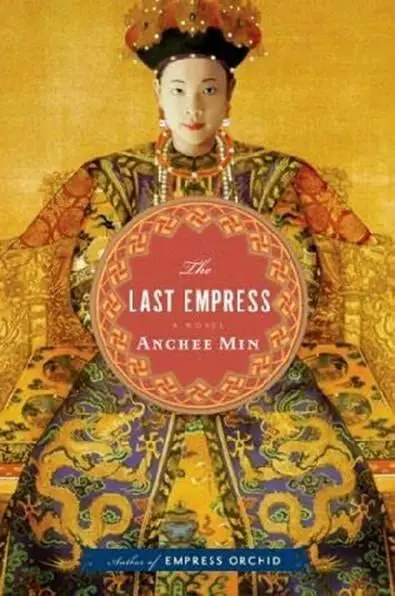
- Название:The Last Empress
- Автор:
- Жанр:
- Год:неизвестен
- ISBN:нет данных
- Рейтинг книги:4 / 5. Голосов: 1
-
Избранное:Добавить в избранное
- Отзывы:
-
Ваша оценка:
The Last Empress: краткое содержание, описание и аннотация
Предлагаем к чтению аннотацию, описание, краткое содержание или предисловие (зависит от того, что написал сам автор книги «The Last Empress»). Если вы не нашли необходимую информацию о книге — напишите в комментариях, мы постараемся отыскать её.
The Last Empress is the story of Orchid"s dramatic transition from a strong-willed, instinctive young woman to a wise and politically savvy leader. Moving from the intimacy of the concubine quarters into the spotlight of the world stage, Orchid must not only face the perilous condition of her empire but also a series of devastating personal losses, as first her son and then her adopted son succumb to early death. Yearning only to step aside, and yet growing constantly into her role, only she-allied with the progressives, but loyal to the conservative Manchu clan of her dynasty-can hold the nation"s rival
factions together.
Anchee Min offers a powerful revisionist portrait based on extensive research of one of the most important figures in Chinese history. Viciously maligned by the western press of the time as the "Dragon Lady," a manipulative, blood-thirsty woman who held onto power at all costs, the woman Min gives us is a compelling, very human leader who assumed power reluctantly, and who sacrificed all she had to protect those she loved and an empire that was doomed to die.
The Last Empress — читать онлайн бесплатно полную книгу (весь текст) целиком
Ниже представлен текст книги, разбитый по страницам. Система сохранения места последней прочитанной страницы, позволяет с удобством читать онлайн бесплатно книгу «The Last Empress», без необходимости каждый раз заново искать на чём Вы остановились. Поставьте закладку, и сможете в любой момент перейти на страницу, на которой закончили чтение.
Интервал:
Закладка:
Dressed in his robe patterned with tall grass, Tutor Weng charmed his student by praising his knowledge. "However," the teacher said and pivoted his head, "his predictions were not magical but the result of hard work."
"Please explain!" Guang-hsu couldn't wait.
"Your Majesty, have you ever read a real letter composed by Chu-ko Liang?"
Guang-hsu shook his head.
"I would like to show you a letter. Are you interested?" The tutor bent over until his face was inches from his student's.
"I would be delighted!" cried Guang-hsu.
The title was "On Departure." It was a letter of advice from the ancient prime minister to his Emperor. Chu-ko Liang, who was very ill, was about to lead his army against the northern invaders. The departure was his final effort to rescue his failing kingdom.
"'Your father, my friend Emperor Liu, died in the middle of achieving his goal,'" Tutor Weng began to read. "'Although the Three Kingdoms has been established, the known truth is that our kingdom is the weakest. Your Majesty must realize that the reason you have been served well is because the ministers and generals lived to repay your father's kindness and trust.' In other words, Guang-hsu, it is crucial that you rule with fairness and justice and know who your true friends are."
Guang-hsu listened attentively as the venerable minister went on to recommend people whom he trusted-all the characters Guang-hsu knew well from the book he'd read.
Artfully, Tutor Weng presented the ancient situation to mirror the present. By placing Guang-hsu in the historical moment, he offered a valuable perspective.
Like Guang-hsu, this was the first time I truly comprehended the ancient classic. I realized that the elements Tutor Weng illustrated for my son were at the heart of Chinese morality.
Tutor Weng was near tears when he recited the last paragraph: "'The late Emperor knew that I was a careful person, and it was why he gave me such a grand responsibility. I could not sleep at night, worrying that there might be things I could have done but hadn't.'" Tutor Weng put down his book and raised his chin toward the ceiling and began to recite from memory: "'I am asking to be punished by death if I fail to defeat the northern enemy on this trip. I am leaving you with the dynasty's most intelligent and experienced officers.'" The tutor looked at Guang-hsu. "Join me now, Your Majesty."
Together, student and teacher read: "'I hope you have the mercy to make use of them. As for myself, Your Majesty, I have been given trust and friendship by your father. To devote my life to his son, until the day I die, would be my pleasure and happiness."
It started to happen in my sleep. I could hear the cracking of my thought-jammed skull. I could feel it while dressing or when I sat down to eat. Having "dead thoughts," or being "sick of having the same thoughts," was how I expressed the feeling. It was getting to me. The doctors said that it had to do with approaching old age.
When I was younger, I was used to my dark thoughts. They came and went like companions. I wasn't afraid of them. Often I let myself sink deep into the ocean bed of my mind and explore the murky terrain. Nuharoo said that she had the same experiences and the same sinking feelings. It was why she had turned to Buddhism. It was to save her from falling.
I called myself a Buddhist and even claimed to be able to see the Buddha beyond the wooden statue. In truth, however, I could not. "It doesn't cost much to offer food and animals to every altar in the palace," An-te-hai used to advise. "My lady, worshiping many gods will ensure an abundance of luck."
"Insincerity will be your true misfortune," Nuharoo predicted. "Lady Yehonala, you will never find peace of mind."
I didn't doubt that she was right, so I tried to help myself. Yet often it wasn't Buddha's voice but An-te-hai's that I would hear. "It is the dealing of the inner life cycle, my lady. It is death and birth. You are alive if you are aware of your dealings. But if you feel that you have given up, that is the beginning of the end."
I had always been afraid of spiritual death, so I sought meaning in everyday existence. Tung Chih, Yung Lu and An-te-hai were my elements. Fighting hopelessness had been my existence. I found myself achieving balance and harmony along the way, though I never questioned how I achieved it or whether I was only fooling myself.
I hadn't opened any doors since becoming an empress. In a dream I opened a door. I was surprised to see that red and pink flowers covered my entire courtyard. A heavy rain had fallen. The flowers were whipped down, but they still appeared full of vitality. Their wet heads drank the water from puddles. One by one the flowers began to rise like court officials. Their fragrance was strong, a mixture of gardenias and rotten vegetables.
Li Lien-ying brought in a dream interpreter, who asked what else I had seen in my dream. I told him that I had seen windows.
"What is inside the windows?" the interpreter asked.
"Red- and pink-faced women," I replied. "They squeezed into the windows like a bunch of poison poppies competing for sunshine. Every one of them had an extraordinarily long and thin neck."
The interpreter's hand moved quickly in the air as if taking notes on an invisible pad.
"Whose window was it?" The interpreter closed his eyes.
"I don't remember."
"I am getting to the bottom of it. I am ready to unlock the meaning of your dream, but you must provide that last detail. Let me ask you again: whose window was it?"
"It is my husband's window, I think."
"Where is it located?"
"At the Hall of Spiritual Nurturing."
"That's it! And then you summoned a fruit picker."
Shocked, I said that he was right.
"And with that fruit picker you took down the poppy heads one by one."
"Yes, I did."
"You then gathered those poppy heads in a basket, put them in a grinder and made soup."
I admitted that it all happened as he described.
"The problem is the soup. You should not have drunk it."
"But it was only a dream."
"It interprets truth."
"What truth?"
The man paused.
Quickly Li Lien-ying placed a bag of taels in his hand. The interpreter resumed, asking whether it was safe to utter what he knew.
Li Lien-ying assured him. The man drew in a breath and said, exhaling, "My lady, you have been poisoned by your own sickness."
I asked what kind of sickness. The man was reluctant to answer, but said that it contained elements of jealousy, resentment and secret yearnings for intimacy.
It was then that I asked him to stop.
"What would you advise?" Li Lien-ying said, grabbing the man's sleeve.
The interpreter said that he knew of no effective treatment. "We'll try anything," Li Lien-ying begged.
"Wait until autumn is deep. Leave Her Majesty's door open from evening until dawn. The purpose is to invite crickets in. The crickets will do the labor of suffering for her-they will sing themselves to death."
"How many crickets should I invite?" Li Lien-ying asked.
"As many as you can. There is a trick to luring them. You must place fresh grass and shelled soybeans in the room. Also lay wet bricks in each corner. The crickets will come to eat and then look for mating partners. They will sing throughout the night. Consider your treatment a success if you find dead crickets under your bed the following morning."
By the time I got used to the singing of crickets and waking up to find their dead bodies in my shoes, my dreams began to change. They became less frightening, more about my being tired and trying to escape.
I was again able to appreciate the beauty of the turning seasons. Walking along the garden paths had never meant so much to me. I would watch a worm-damaged plant swing in the wind and marvel at its way of surviving. I would feel the force of life and experience rapture at the simple sight of insects sucking nectar from flower hearts. I would find myself breathing freely, and I would feel the spirit of Tung Chih and An-te-hai.
Читать дальшеИнтервал:
Закладка:
Похожие книги на «The Last Empress»
Представляем Вашему вниманию похожие книги на «The Last Empress» списком для выбора. Мы отобрали схожую по названию и смыслу литературу в надежде предоставить читателям больше вариантов отыскать новые, интересные, ещё непрочитанные произведения.




Обсуждение, отзывы о книге «The Last Empress» и просто собственные мнения читателей. Оставьте ваши комментарии, напишите, что Вы думаете о произведении, его смысле или главных героях. Укажите что конкретно понравилось, а что нет, и почему Вы так считаете.