Anchee Min - The Last Empress
Здесь есть возможность читать онлайн «Anchee Min - The Last Empress» весь текст электронной книги совершенно бесплатно (целиком полную версию без сокращений). В некоторых случаях можно слушать аудио, скачать через торрент в формате fb2 и присутствует краткое содержание. Жанр: Историческая проза, на английском языке. Описание произведения, (предисловие) а так же отзывы посетителей доступны на портале библиотеки ЛибКат.
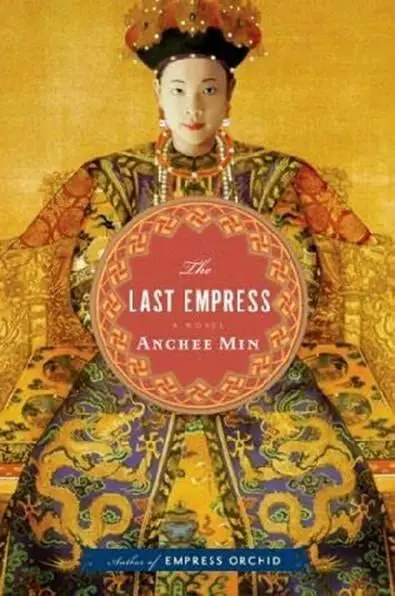
- Название:The Last Empress
- Автор:
- Жанр:
- Год:неизвестен
- ISBN:нет данных
- Рейтинг книги:4 / 5. Голосов: 1
-
Избранное:Добавить в избранное
- Отзывы:
-
Ваша оценка:
The Last Empress: краткое содержание, описание и аннотация
Предлагаем к чтению аннотацию, описание, краткое содержание или предисловие (зависит от того, что написал сам автор книги «The Last Empress»). Если вы не нашли необходимую информацию о книге — напишите в комментариях, мы постараемся отыскать её.
The Last Empress is the story of Orchid"s dramatic transition from a strong-willed, instinctive young woman to a wise and politically savvy leader. Moving from the intimacy of the concubine quarters into the spotlight of the world stage, Orchid must not only face the perilous condition of her empire but also a series of devastating personal losses, as first her son and then her adopted son succumb to early death. Yearning only to step aside, and yet growing constantly into her role, only she-allied with the progressives, but loyal to the conservative Manchu clan of her dynasty-can hold the nation"s rival
factions together.
Anchee Min offers a powerful revisionist portrait based on extensive research of one of the most important figures in Chinese history. Viciously maligned by the western press of the time as the "Dragon Lady," a manipulative, blood-thirsty woman who held onto power at all costs, the woman Min gives us is a compelling, very human leader who assumed power reluctantly, and who sacrificed all she had to protect those she loved and an empire that was doomed to die.
The Last Empress — читать онлайн бесплатно полную книгу (весь текст) целиком
Ниже представлен текст книги, разбитый по страницам. Система сохранения места последней прочитанной страницы, позволяет с удобством читать онлайн бесплатно книгу «The Last Empress», без необходимости каждый раз заново искать на чём Вы остановились. Поставьте закладку, и сможете в любой момент перейти на страницу, на которой закончили чтение.
Интервал:
Закладка:
I still missed Yung Lu terribly, but had the strength to bear it.
17
I had been sitting in front of the mirror since three in the morning. I opened my eyes and saw that the wide board that held my hair made my head look like a giant mushroom.
"How do you like it, my lady?" Li Lien-ying asked.
"It's fine. Let's finish as quickly as possible." I rose so that he could get me into the heavily layered court robe.
I hardly paid attention to how I looked these days. My mind had been dealing with Russia to the north, British India to the west, French Indochina to the south, and Japan to the east.
A number of countries and territories-including Korea, the Ryu-kyu Islands, Annam and Burma-that had sent representatives and tribute to us during Tung Chih's reign, sent them less frequently, and soon not at all. The fact that China was unable to claim back its privileges showed that our standing was diminishing. With every defection, our outer defenses were further weakened.
I now wished that Tutor Weng would quit his pointless displays of sincerity and get on with preparing Guang-hsu for the business of rule. Lacking flexibility and cunning, Nuharoo and I were unable to adopt a line of conduct when problems threatened to overwhelm us. No one seemed to understand that our country had been heading downhill for centuries. China was like a diseased and dying person, only now the rot of the body had become visible.
Like a hungry tiger, Japan had been hiding in the bushes, waiting for the moment to attack. In the past we underestimated the degree of its hunger. We had been too kind to our small and resource-poor neighbor from ancient times. Had I known that Japan's Meiji Emperor had stirred up his nation to swoop down and rob us, I would have encouraged the court to concentrate solely on defense.
Ten years earlier, in 1868, while I was concentrating my energy on establishing elementary schools in the countryside, Japan's Emperor had set in motion a full-scale reform, transforming its feudal system into a powerful modern capitalistic society. China had no idea what it meant when Japan began pressing to expand in a bracelet extending from its main islands in the north to Formosa in the south. Formosa, which the Mandarins called Taiwan, had been an island state paying tribute to the Chinese throne for centuries. In 1871, when some sailors from the Ryukyu Islands were murdered there by what most likely were local bandits, the Japanese seized on the incident as an excuse to interfere.
The Imperial bureaucracy and our own naiveté led us to fall for Japan's conspiracy. At first we tried to clarify that we were not to blame. Our Board of Foreign Affairs offered a carelessly worded response to Japan's demand for reparations: "We cannot be responsible for the actions of savages beyond the pale of civilization." This was interpreted by the Japanese as an invitation to take over the island state.
Without warning, the Japanese army invaded, claiming revenge on behalf of the people of the Ryukyu Islands.
It was too late when our provincial governor there realized that he had not only let the Japanese supplant us in the Ryukyus, but also relinquished our authority over the 250-mile-long, vitally important island of Taiwan.
After days of discussion and delay, our court concluded that China could not take on the new military power of Japan. We ended up paying 500,000 taels to Japan as an indemnity, only to receive more bad news six years later, when Japan "accepted" the Ryukyu Islands' official "surrender."
The British were also determined to extract all they could from any incident. In 1875 a British interpreter, A. R. Margary, was murdered in our southwestern Yunnan province. Margary was accompanying an expedition to reconnoiter trade routes from Burma into the mountains of Yunnan, Kweichow and Szechuan, provinces rich in minerals and ore. The foreigners paid no attention to warning signs of danger from Moslem rebels. The interpreter was ambushed and killed by either bandits or the rebels.
The British representative Sir Thomas Wade forced China's hand over a new treaty, to which I sent Li Hung-chang, then the viceroy of Chihli province, to negotiate. The Chefoo Convention was signed, by which several more ports were opened for trade with Western nations, including my hometown of Wuhu, on the Yangtze River.
With his hair smoothly braided in the back, the fifty-five-year-old Li Hung-chang came to beg for forgiveness. He was in his black court robe, embroidered with the brown and red symbols of bravery and luck. Although thin-framed, Li's posture was erect and his expression solemn. He had a southerner's fair skin, and his small, single-lidded eyes glowed with intelligence. His nose looked long on his chiseled face, and his lips were hidden behind a neatly trimmed beard.
"The British are trying to send another expedition from India through Burma, to delineate the Burmese-Chinese frontier," Li Hung-chang reported while on his knees.
"Are you implying that Burma has been annexed by Britain?"
"Precisely, Your Majesty."
I believed that if I had the viceroy's devotion, I would have China's stability. Against the court's advice, I continued Li Hung-chang's appointment as China's most important provincial official. Li would hold the same post in Chihli for twenty-three years.
I purposely ignored the fact that Li was overdue for rotation to another part of the empire. It was my intention to allow him to increase his wealth, connections and power. I was behind Li's reorganization and modernization of the northern military forces, under the name of the "New Army," which wags called the Li family army. I was fully aware that the field commanders were directly beholden to Li Hung-chang rather than to the throne.
My trust of Li Hung-chang was based on my sense of him as a man of Confucian values. He trusted me because I had proven to him that I would never take his loyalty for granted. In my view, the only thing the throne could offer was the return of trust and loyalty. I believed that a rebel would be less likely to start an uprising if he was given a province to own. I not only gave Li free rein, but also made him want to serve me.
It was a good business for both of us. Li's profits were one of China's major sources of tax revenue. By 1875 our government was completely dependent on Li Hung-chang. For example, while Li's soldiers supervised the shipment of salt to Peking, which allowed him to oversee the salt monopoly, I received revenue from him to keep China running.
Li Hung-chang never asked the throne to fund his army. This didn't mean that he paid the soldiers from his own coffers. As a smart businessman, he used his own provincial treasury. I was sure that he spent a fortune bribing the Manchu princes who otherwise would have stood in his way. Li also provided so much employment for the nation that if he were to collapse, the country's economy would soon follow. Convinced that China should make widespread improvements, Li built weapons factories, shipyards, coal plants and railways. With my approval and support he also funded China's first postal and telegraph services, its first schools of technology and schools for foreign-language interpreters.
I was unable to push through Li's proposal to establish China's first navy because most court members refused to adopt his sense of urgency. "Too costly" was the official excuse. Li Hung-chang was accused of scaring the nation in order to get his personal armed force funded by the government.
Letters of complaint from conservatives, especially the Manchu Iron-hats, kept coming in. Nothing Li Hung-chang did could please them. The Ironhats grumbled that he was taking their share of the profits, and they threatened revenge. If Li Hung-chang had not cloaked all his deals in secrecy and had his loyalists planted everywhere, he could easily have been assassinated. Still, he was blackmailed for taking kickbacks from commercial contracts and bribes from foreign traders. The conservatives warned me that it was only a matter of time before Li would stage a coup and put himself on the throne.
Читать дальшеИнтервал:
Закладка:
Похожие книги на «The Last Empress»
Представляем Вашему вниманию похожие книги на «The Last Empress» списком для выбора. Мы отобрали схожую по названию и смыслу литературу в надежде предоставить читателям больше вариантов отыскать новые, интересные, ещё непрочитанные произведения.







Обсуждение, отзывы о книге «The Last Empress» и просто собственные мнения читателей. Оставьте ваши комментарии, напишите, что Вы думаете о произведении, его смысле или главных героях. Укажите что конкретно понравилось, а что нет, и почему Вы так считаете.