Thomas Keneally - Schindler's Ark
Здесь есть возможность читать онлайн «Thomas Keneally - Schindler's Ark» весь текст электронной книги совершенно бесплатно (целиком полную версию без сокращений). В некоторых случаях можно слушать аудио, скачать через торрент в формате fb2 и присутствует краткое содержание. Город: London, Год выпуска: 1982, ISBN: 1982, Издательство: Hodder and Stoughton, Жанр: Историческая проза, на английском языке. Описание произведения, (предисловие) а так же отзывы посетителей доступны на портале библиотеки ЛибКат.
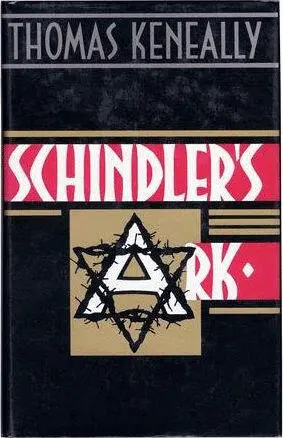
- Название:Schindler's Ark
- Автор:
- Издательство:Hodder and Stoughton
- Жанр:
- Год:1982
- Город:London
- ISBN:0-340-27838-2
- Рейтинг книги:4 / 5. Голосов: 1
-
Избранное:Добавить в избранное
- Отзывы:
-
Ваша оценка:
Schindler's Ark: краткое содержание, описание и аннотация
Предлагаем к чтению аннотацию, описание, краткое содержание или предисловие (зависит от того, что написал сам автор книги «Schindler's Ark»). Если вы не нашли необходимую информацию о книге — напишите в комментариях, мы постараемся отыскать её.
Schindler’s List
Working with the actual testimony of Schindler’s Jews, Thomas Keneally artfully depicts the courage and shrewdness of an unlikely savior, a man who is a flawed mixture of hedonism and decency and who, in the presence of unutterable evil, transcends the limits of his own humanity. From From
A mesmerizing novel based on the true story of Oskar Schindler, a German industralist who saved and succored more than 1000 Jews from the Nazis at enormous financial and emotional expense. How the German Oskar Schindler came to save more than one thousand Polish Jews during the Holocaust is one of the most fascinating stories of the century. Although millions are now learning about Schindler through Steven Spielberg’s recent Academy Award-winning film, his achievement first gained prominence with Keneally’s 1982 “facticious” novel (which is also the basis for the film). Keneally’s account is less melodramatic than the motion picture, and although he does not fully explain how a hedonistic German could have been so altered by the plight of the Jewish workers in his factory, he does make Schindler less enigmatic than the big-screen version. Ben Kingsley, one of the film's stars, reads in a calculatedly matter-of-fact tone, letting the story's power alone convey its complicated emotions. Highly recommended.
Michael Adams, Fairleigh Dickinson Univ. Lib., Madison, N.J.
Schindler's Ark — читать онлайн бесплатно полную книгу (весь текст) целиком
Ниже представлен текст книги, разбитый по страницам. Система сохранения места последней прочитанной страницы, позволяет с удобством читать онлайн бесплатно книгу «Schindler's Ark», без необходимости каждый раз заново искать на чём Вы остановились. Поставьте закладку, и сможете в любой момент перейти на страницу, на которой закончили чтение.
Интервал:
Закладка:
Schindel had left Genia that morning with neighbors—he was her guardian in the ghetto; her parents were still hiding in the countryside, intending to slip back into the ghetto, which had been, until today, less perilous. This morning Genia, always her own woman, had wandered away from the woman who was minding her back to the house where she lived with her uncle. There she had been arrested. It was in this way that Oskar Schindler, from the park, had been drawn by her motherless presence in the column in Krakusa Street.
Taking off his surgical coat, Dr. Schindel rushed to the square and saw her almost at once, sitting on the grass, affecting composure within the wall of guards. Dr. Schindel knew how faked the performance was, having had to get up often enough to soothe her night terrors.
He moved around the periphery of the square and she saw him. Don’t call out, he wanted to say; I’ll work it out. He didn’t want a scene because it could end badly for both of them. But he didn’t need to be concerned, for he could see her eyes grow mute and unknowing. He stopped, transfixed by her pitiably admirable cunning. She knew well enough at the age of three years not to take the short-term comfort of calling out to uncles. She knew that there was no salvation in engaging the interest of the SS in Uncle Idek. He was composing a speech he intended to make to the large Oberscharführer who stood by the execution wall. It was better not to approach the authorities too humbly or through anyone of lesser rank. Looking back again to the child, he saw the suspicion of a flutter of her eyes, and then, with a dazzling speculator’s coolness, she stepped between the two guards nearest to her and out of the cordon. She moved with an aching slowness which, of course, galvanized her uncle’s vision, so that afterward he would often see behind his closed eyes the image of her among the forest of gleaming SS knee boots. In Plac Zgody, no one saw her. She maintained her part-stumbling, part-ceremonial bluffer’s pace all the way to Pankiewicz’ corner and around it, keeping to the blind side of the street. Dr. Schindel repressed the urge he had to applaud. Though the performance deserved an audience, it would by its nature be destroyed by one.
He felt he could not move directly behind her without disclosing her feat. Against all his usual impulses, he believed that the instinct which had taken her infallibly out of Plac Zgody would provide her with a hiding place. He returned to the hospital by the alternative route to give her time.
Genia returned to the front bedroom in Krakusa Street that she shared with her uncle. The street was deserted now, or, if a few were by cunning or false walls still there, they did not declare themselves. She entered the house and hid under the bed. From the corner of the street, Idek, returning to the house, saw the SS, in a last sweep, come knocking. But Genia did not answer. She would not answer him when he arrived himself. It was just that he knew where to look, in the gap between curtain and window sash, and saw, shining in the drabness of the room, her red shoe beneath the hem of the bedspread.
By this time, of course, Schindler had returned his horse to the stable. He was not on the hill to see the small but significant triumph of red Genia’s return to the place where the SS had first found her. He was already in his office at DEF, shut away for a time, finding the news too heavy to share with the day shift. Much later, in terms uncharacteristic of jovial Herr Schindler, Cracow’s favorite party guest, Zablocie’s big spender, in terms, that is, which showed—behind the playboy facade—an implacable judge, Oskar would lay special weight on this day. “Beyond this day,” he would claim, “no thinking person could fail to see what would happen. I was now resolved to do everything in my power to defeat the system.”
CHAPTER 16
The SS kept at work in the ghetto until Saturday evening. They operated with that efficiency which Oskar had observed in the executions in Krakusa Street. Their thrusts were hard to predict, and people who had escaped on Friday were caught on Saturday. Genia survived the week, however, through her precocious gift for maintaining silence and for being imperceptible in scarlet.
Over in Zablocie, Schindler did not dare believe that this red child had survived the Aktion process. He knew from talking to Toffel and other acquaintances from police headquarters in Pomorska Street that 7,000 people had been cleared from the ghetto. A Gestapo official from the Jewish Affairs Office was delighted to confirm the clearance. Up in Pomorska Street, among the paper pushers, the June Aktion was voted a triumph.
Oskar had now become more exact about this sort of information. He knew, for example, that the Aktion had been under the overall management of one Wilhelm Kunde but had been led by SS Obersturmführer Otto von Mallotke. Oskar kept no dossier, but he was preparing for another era when he would make a full report to either Canaris or the world. It would be made earlier than he expected. For the moment, he inquired after matters which he had in the past treated as temporary lunacies. He got his hard news from police contacts, but also from clearheaded Jews like Stern. Intelligence from other parts of Poland was piped into the ghetto, in part through Pankiewicz’ pharmacy, by the partisans of the People’s Army. Dolek Liebeskind, leader of the Akiva Halutz Resistance Group, also brought in information from other ghettos as a result of his official traveling job with the Jewish Communal Self-Help, an organization which the Germans—with half an eye on the Red Cross—permitted to exist.
It was no use bringing such tidings to the Judenrat. The Judenrat Council did not consider it civilly advisable to tell the ghetto dwellers anything about the camps. People would merely be distressed; there would be disorder in the streets, and it would not go unpunished. It was always better to let people hear wild rumors, decide they were exaggerated, fall back on hope. This had been the attitude of most Jewish Councillors even under decent Artur Rosenzweig. But Rosenzweig was gone. The salesman David Gutter, helped by his Germanic name, would soon become president of the Judenrat. Food rations were now diverted not only by certain SS officials but by Gutter and the new Councillors, whose vicar in the streets was high-booted Symche Spira. The Judenrat therefore had no interest anymore in informing the ghetto people about their probable destinations, since they were confident that they themselves would not be made to travel.
The beginning of knowledge for the ghetto, and the clinching news for Oskar, was the return to Cracow—eight days after he’d been shipped off from Prokocim—of the young pharmacist Bachner. No one knew how he had got back inside the ghetto, or the mystery of why he returned to a place from which the SS would simply send him off on another journey. But it was, of course, the pull of the known that brought Bachner home.
All the way down Lwówska and into the streets behind Plac Zgody he carried his story. He had seen the final horror, he said.
He was mad-eyed, and in his brief absence his hair had silvered. All the Cracow people who had been rounded up in early June had been taken nearly to Russia, he said, to the camp of Bełżec. When the trains arrived at the railway station, the people were driven out by Ukrainians with clubs. There was a frightful stench about the place, but an SS man had kindly told people that that was due to the use of disinfectant. The people were lined up in front of two large warehouses, one marked “CLOAK ROOM” and the other “VALUABLES.” The new arrivals were made to undress, and a small Jewish boy passed among the crowd handing out lengths of string with which to tie their shoes together. Spectacles and rings were removed. So, naked, the prisoners had their heads shaved in the hairdresser’s, an SS NCO telling them that their hair was needed to make something special for U-boat crews. It would grow again, he said, maintaining the myth of their continued usefulness. At last the victims were driven down a barbed-wire passage to bunkers which had copper Stars of David on their roofs and were labeled BATHS AND INHALATION ROOMS. SS men reassured them all the way, telling them to breathe deeply, that it was an excellent means of disinfection. Bachner saw a little girl drop a bracelet on the ground, and a boy of three picked it up and went into the bunker playing with it. In the bunkers, said Bachner, they were all gassed. And afterward, squads were sent in to disentangle the pyramid of corpses and take the bodies away for burial. It had taken barely two days, he said, before they were all dead, except for him. While waiting in an enclosure for his turn, he’d somehow got to a latrine and lowered himself into the pit. He’d stayed there three days, the human waste up to his neck. His face, he said, had been a hive of flies.
Читать дальшеИнтервал:
Закладка:
Похожие книги на «Schindler's Ark»
Представляем Вашему вниманию похожие книги на «Schindler's Ark» списком для выбора. Мы отобрали схожую по названию и смыслу литературу в надежде предоставить читателям больше вариантов отыскать новые, интересные, ещё непрочитанные произведения.










Обсуждение, отзывы о книге «Schindler's Ark» и просто собственные мнения читателей. Оставьте ваши комментарии, напишите, что Вы думаете о произведении, его смысле или главных героях. Укажите что конкретно понравилось, а что нет, и почему Вы так считаете.