Dan Smith - The Child Thief
Здесь есть возможность читать онлайн «Dan Smith - The Child Thief» весь текст электронной книги совершенно бесплатно (целиком полную версию без сокращений). В некоторых случаях можно слушать аудио, скачать через торрент в формате fb2 и присутствует краткое содержание. Город: New York, Год выпуска: 2013, ISBN: 2013, Издательство: Pegasus Books, Жанр: Историческая проза, Триллер, на английском языке. Описание произведения, (предисловие) а так же отзывы посетителей доступны на портале библиотеки ЛибКат.
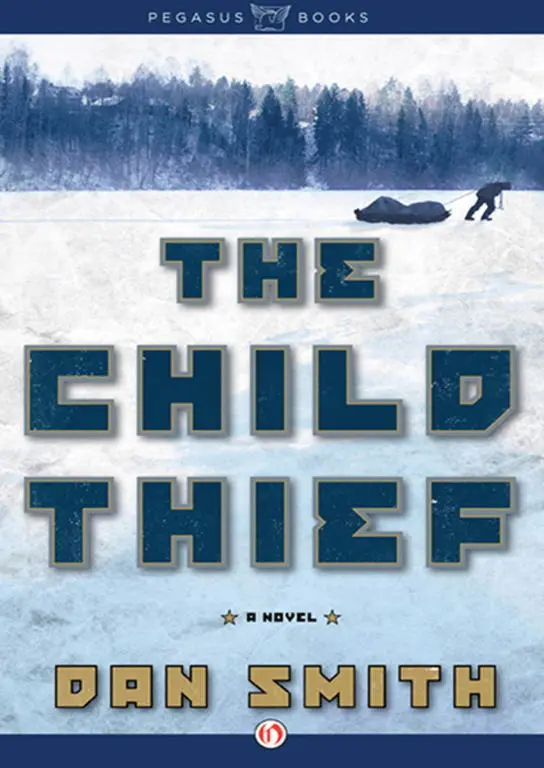
- Название:The Child Thief
- Автор:
- Издательство:Pegasus Books
- Жанр:
- Год:2013
- Город:New York
- ISBN:9781480419445
- Рейтинг книги:5 / 5. Голосов: 1
-
Избранное:Добавить в избранное
- Отзывы:
-
Ваша оценка:
The Child Thief: краткое содержание, описание и аннотация
Предлагаем к чтению аннотацию, описание, краткое содержание или предисловие (зависит от того, что написал сам автор книги «The Child Thief»). Если вы не нашли необходимую информацию о книге — напишите в комментариях, мы постараемся отыскать её.
and
, a troubled First World War veteran races across the frozen steppe of 1930s Ukraine to save a child from a shadowy killer with unthinkable plans. December 1930, Western Ukraine. Luka is a war veteran who now wants a quiet life with his family. His village has, so far, remained hidden from the advancing Soviet brutality, but everything changes the day the stranger arrives, pulling a sled bearing a terrible cargo. The villager’s fear turns deadly and they think they can save themselves, but their anger has cursed them: when calm is restored, a little girl has vanished. Luka is the only man with the skills to find who could have stolen a child in these frozen lands - and besides, the missing girl is best friend to Luka’s daughter, and he swears he will find her. Together with his sons, Luka sets out in pursuit across lands ravaged by war and gripped by treachery. Soon they realise that the man they are tracking is no ordinary criminal, but a skilful hunter with the child as the bait in his twisted game. It will take all of Luka's strength to battle the harshest of conditions, and all of his wit to stay a step ahead of Soviet authorities. And though his toughest enemy is the man he tracks, his strongest bond is a promise to his family back at home.
The Child Thief — читать онлайн бесплатно полную книгу (весь текст) целиком
Ниже представлен текст книги, разбитый по страницам. Система сохранения места последней прочитанной страницы, позволяет с удобством читать онлайн бесплатно книгу «The Child Thief», без необходимости каждый раз заново искать на чём Вы остановились. Поставьте закладку, и сможете в любой момент перейти на страницу, на которой закончили чтение.
Интервал:
Закладка:
‘It doesn’t matter.’ He leaned back again, drinking the last of the horilka but keeping the bottle in his hands, looking at it for a moment as if lamenting its emptiness. ‘You could be the Devil and it would be none of my concern. I’m not here to investigate your crimes. I’m here to make sure the peasants join the kolkhoz and that the kulaks are dealt with. As an officer of the OGPU, I don’t care what you’ve done; I’m not that kind of policeman. You could have cut a hundred children and it would be none of my business. My job is to feed the camps and to make you damn Ukrainians do as you’re told.’
‘I’ m Russian. Like you.’
‘I don’t care. As a policeman, I don’t care. But as a man…’ Now he stared right into me. ‘As a man , I care what you’ve done. If there’s even the slightest chance you did that to that little girl—’
‘So how do you justify how many children you’ve deported?’
Lermentov stared at me for a second, then told me the lie he must have told himself every night. ‘They’re all in good health when they leave me.’
‘And their fathers?’
‘This is different.’
‘Different how? You destroy their lives. Don’t try to justify it by saying it’s your job; that you send them away in good health. You know what’s going to happen to them. Their families too.’
‘Yes.’ Lermentov clenched his hands into fists. He glanced at the guards before leaning forward and lowering his voice. ‘And I barely sleep at night. I do my job and I drink and I try to sleep and I hope that when this is finished I can go home to my—’ He stopped and glanced away.
‘Family,’ I said. ‘That’s what you were going to say. Family. You have a wife. And a child?’
The policeman snapped his head round, setting his jaw tight.
It had been a guess, but I knew from Lermentov’s reaction that I was right. And with that turn of the head – that telling change in the policeman’s expression – came a strengthening of my resolve. Lermentov had a weakness that I could exploit. He was drunk and he had an Achilles heel. There was something that made this man human.
The policeman stared.
‘You do, don’t you? A son? A daughter?’
He looked away.
‘A daughter. What’s her name? How old is she?’
‘That’s none of your business.’
‘No, but it’s why you want to punish me. Because you think there’s a chance I hurt Dariya. It gives you an excuse. But I didn’t hurt her. You’re punishing her by taking her away, don’t you see that? By separating us, you’re making her suffer.’
‘I do my job.’ Lermentov held the bottle by its neck, his fist so tight his knuckles were white.
‘And you’re punishing me because you hate that your job demands you send children to labour camps.’
‘I’m punishing you for what you did to her.’
‘And Dariya? Why punish her? Let her stay here. You know what happens to people on those trains. In those camps. Don’t send her away. She’ll die and you know it.’
‘Shut up.’
‘Please,’ I said. ‘If you must punish me, then do it, but not Dariya. You have a daughter; I can see it in your eyes.’
‘ Shut up .’
‘You know this is wrong.’ I leaned forward, putting my fingers together as if in prayer. ‘You know that what you’re doing is wrong. Would you do it to your own child?’
‘You know nothing of my own child. You, a man who cuts the flesh from little girls.’
‘I would never do that.’
‘Lies.’ Lermentov spoke through his teeth. ‘No one tells the truth any more.’
‘Please,’ I said. ‘Let her stay here. Think of your own daughter.’ I stood, raising my hands, almost unable to control myself.
‘Sit down.’
I tried to reach out to Lermentov, not to hurt him but to plead with him. I wanted to put my hands on his tunic and pull him towards me, and for a moment I almost managed it. ‘Let her stay here. Let someone take care of her. Think of your own—’
But my words were cut short as Lermentov struck out with the bottle he was holding. He swung it hard against my head, the same place where he had hit me with the crucifix, and for a while I saw nothing. I heard nothing. My world was nothing.
The cold bit so hard that it hurt. There was a throbbing ache in my back that lived at the base of my spine and pulsated along its length. My fingers and toes were numb, and I couldn’t feel my face. I opened my eyes and discovered a harsh pain in my head.
‘Luka?’
I took a deep breath of cold air that gripped my lungs and made me cough hard.
‘Luka?’
I tried to sit up, but my arms and legs wouldn’t move and I felt a slow ease of panic creep into my consciousness. I fought to keep it away and concentrated on moving.
‘Luka?’
I ignored the voice and focused on my arms, but they refused to do as I wanted.
‘Luka, they tied you.’
That explained why I couldn’t move. I wasn’t paralysed, I was bound. My hands were tied together behind my back, and my feet were fastened with the same binding. I was roped like a pig that’s to be slaughtered. I was also naked. Dehumanised. Made less than nothing.
I moved my head, hardly feeling my cheek scraping across the cold wooden floor, but the voice was coming from behind me, so I couldn’t see who was speaking. I took another deep breath and rolled over. The hard wood was cruel against my spine, my shoulders, my elbows. Arms and legs pulled against each other in their bindings and it was a struggle to turn so that I flopped without grace onto my other side and found myself staring at Konstantin Petrovich. Both of us naked but for our beards.
‘Are you all right?’ I asked him.
‘Cold.’
‘Where are we?’ I tried to look around, but my vision was restricted. By my head there was a wall and by my feet a construction that had once supported a bell. We were in the belfry. I had seen the bell when I first came to the village, broken and abandoned by the church steps, a symbol of the casting out of religion. The wall that ran around this part of the bell tower was low, probably waist height if I were to stand, and I could just about see over it to the sky beyond. It was night. There was a pitched roof over us, and in its beams old cobwebs shifted in the wind.
‘How long have I been here?’
‘A few minutes.’ Kostya’s voice was weak.
I tried to remember how long it had been between Kostya leaving the prison room and Lermentov coming to interrogate me. It wasn’t long, but it was long enough for a man to be close to death. Beaten and left to freeze in the bell tower.
‘You married?’ I asked Kostya.
‘No.’
‘My wife… she doesn’t know where I am.’ I looked at Kostya and saw he was crying. There were tears on his cheeks and frozen patches in his beard. There was blood on his face too, places on his body where he had been beaten. Some of the bruises were old – they had spread the width of his thighs, covered his upper arms and shoulders. There were other marks on his chest, almost a perfect match for the base of the same crucifix Lermentov had used to beat me.
‘I don’t want to die,’ Kostya said.
‘You won’t,’ I told him.
‘It’s so cold.’
‘But we’re sheltered.’ It was difficult to speak, my teeth chattered so much. My whole body shook with the cold, and I still couldn’t feel my fingers and toes. ‘And they’ll come for us. We’re precious workers; they won’t let us die.’
‘It’ll be too late.’
‘No,’ I said. ‘We’ll be fine.’
Kostya closed his eyes, squeezing them tight. This close to him, and with just enough light from the stars and the moon, I saw how his wrinkles were exaggerated by the expression, lines spreading from the corners of his eyes and reaching into his hairline. They were not lines that had grown from years of laughter; they were the marks of a hard life. A man who had aged before his time.
Читать дальшеИнтервал:
Закладка:
Похожие книги на «The Child Thief»
Представляем Вашему вниманию похожие книги на «The Child Thief» списком для выбора. Мы отобрали схожую по названию и смыслу литературу в надежде предоставить читателям больше вариантов отыскать новые, интересные, ещё непрочитанные произведения.









Обсуждение, отзывы о книге «The Child Thief» и просто собственные мнения читателей. Оставьте ваши комментарии, напишите, что Вы думаете о произведении, его смысле или главных героях. Укажите что конкретно понравилось, а что нет, и почему Вы так считаете.