Dan Smith - The Child Thief
Здесь есть возможность читать онлайн «Dan Smith - The Child Thief» весь текст электронной книги совершенно бесплатно (целиком полную версию без сокращений). В некоторых случаях можно слушать аудио, скачать через торрент в формате fb2 и присутствует краткое содержание. Город: New York, Год выпуска: 2013, ISBN: 2013, Издательство: Pegasus Books, Жанр: Историческая проза, Триллер, на английском языке. Описание произведения, (предисловие) а так же отзывы посетителей доступны на портале библиотеки ЛибКат.
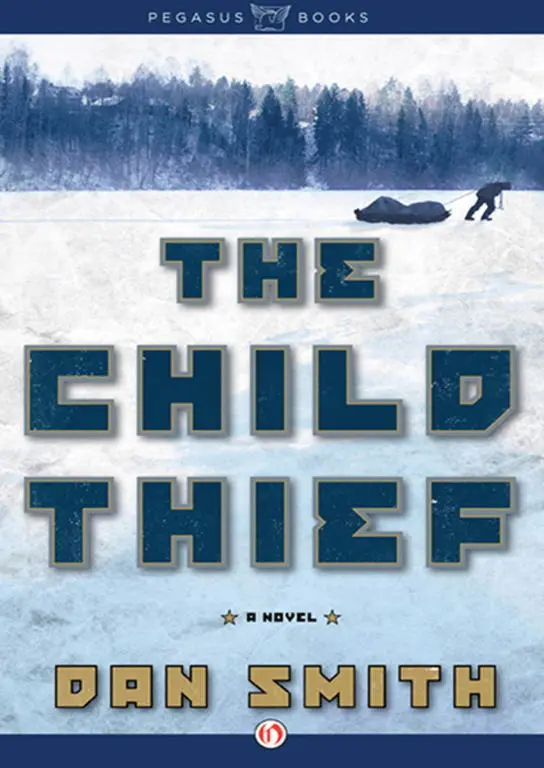
- Название:The Child Thief
- Автор:
- Издательство:Pegasus Books
- Жанр:
- Год:2013
- Город:New York
- ISBN:9781480419445
- Рейтинг книги:5 / 5. Голосов: 1
-
Избранное:Добавить в избранное
- Отзывы:
-
Ваша оценка:
The Child Thief: краткое содержание, описание и аннотация
Предлагаем к чтению аннотацию, описание, краткое содержание или предисловие (зависит от того, что написал сам автор книги «The Child Thief»). Если вы не нашли необходимую информацию о книге — напишите в комментариях, мы постараемся отыскать её.
and
, a troubled First World War veteran races across the frozen steppe of 1930s Ukraine to save a child from a shadowy killer with unthinkable plans. December 1930, Western Ukraine. Luka is a war veteran who now wants a quiet life with his family. His village has, so far, remained hidden from the advancing Soviet brutality, but everything changes the day the stranger arrives, pulling a sled bearing a terrible cargo. The villager’s fear turns deadly and they think they can save themselves, but their anger has cursed them: when calm is restored, a little girl has vanished. Luka is the only man with the skills to find who could have stolen a child in these frozen lands - and besides, the missing girl is best friend to Luka’s daughter, and he swears he will find her. Together with his sons, Luka sets out in pursuit across lands ravaged by war and gripped by treachery. Soon they realise that the man they are tracking is no ordinary criminal, but a skilful hunter with the child as the bait in his twisted game. It will take all of Luka's strength to battle the harshest of conditions, and all of his wit to stay a step ahead of Soviet authorities. And though his toughest enemy is the man he tracks, his strongest bond is a promise to his family back at home.
The Child Thief — читать онлайн бесплатно полную книгу (весь текст) целиком
Ниже представлен текст книги, разбитый по страницам. Система сохранения места последней прочитанной страницы, позволяет с удобством читать онлайн бесплатно книгу «The Child Thief», без необходимости каждый раз заново искать на чём Вы остановились. Поставьте закладку, и сможете в любой момент перейти на страницу, на которой закончили чтение.
Интервал:
Закладка:
‘It’s a troika, ’ I said. ‘We’re being tried.’
‘Tried? For what?’
‘Our crimes, Yuri. It looks like we’re leaving. Perhaps now there’ll be a chance.’
‘A chance for what?’
‘To get away, of course.’ I was thinking that trapped inside this room I was powerless, but outside, without the walls to contain me, there might be a moment, just a moment , for me to use to my advantage.
‘Have you seen how many soldiers are in this village?’ Yuri said.
‘It doesn’t matter. If there’s the slightest chance—’
‘You’re no good to that little girl if you’re dead.’
‘And I’m no good to her in here, either.’ I kept an eye to the keyhole, watching the men take Evgeni from the church. ‘You know, you never said why they put you in here, Yuri.’
‘Didn’t I?’
But already the soldiers were approaching the door, and I took my eye from the keyhole, moving back to where I had been sitting. And when they took Yuri, bringing light into the room, he turned to look me in the eye. ‘I’ll tell you another time,’ he said. And then I was left alone in the room.
I went back to the keyhole, seeing Yuri sitting with his back to me, a soldier on either side. His shoulders were slumped and his head hanging so his chin was almost on his chest. He would be feeling some relief at his release from the room, but at the same time it may have become a refuge for him. Inside the room he was safe; it was only when removed from it that he was threatened. But at least he was outside, and at least something was happening. Sometimes waiting is the worst thing.
It was only a few moments before the soldiers pulled Yuri from the seat and he began walking towards the main door of the church. Still hanging his head, his feet shuffling, he waited for them to open it and usher him out into the daylight. They all disappeared and the door closed, only to reopen a few moments later.
They would come for me next.
I went to the corner of the room, feeling for the piece of bread and the cup of water the men had saved. I swallowed the dry bread and drank the last of the water, putting the empty metal cup on the floor and stepping on it with as much force as I could muster in my bare feet. I crushed the cup flat and picked it up, feeling the sharp point where the edges had come together. I slipped it into my trouser pocket and sat with my back to the wall, waiting for them to come.
The blood was gone from the tabletop. The crutifix was pushed to one side. There was no bottle of borilka , no satchel, no parcel of flesh.
Instead there was a book, the left page filled with handwritten names and information. The page on the right was half full.
Sergei Artemevich Lermentov held a pen in his hand. He barely looked up as the guards ushered me to the chair.
‘How long have I been here?’ I asked.
‘Name?’
I waited for a moment, watching the other men sitting either side of the policeman. Anatoly Ivanovich, the farm labourer turned party faithful, sat on Lermentov’s right-hand side. On his left sat another man, short and stocky, bearded. He was wearing a cloth cap and a woollen jacket. He would be another member of the local council. I studied them, wondering what kind of men they were. Hungry for power maybe, or just frightened like everybody else was.
‘Please. How long have I been here?’
‘Name?’ Lermentov repeated.
I rubbed my face. ‘Luka Mikhailovich Sidorov. But you know that. How long have I been here?’
Lermentov wrote in his book and looked up. ‘You are accused of crimes against the people.’
‘What crimes?’
‘Assaulting an OGPU officer—’
‘I didn’t touch you.’
‘—and owning a rifle.’ Lermentov leaned forward and spoke quietly, voicing the charge that was of no consequence to the regime: ‘And assaulting a child.’
‘No.’ I felt immense frustration at this charge. I owned a rifle, that much was true, and although I hadn’t laid a hand on Lermentov, I didn’t care about that lie because all three of these men knew I was not an enemy of the people. They knew I was not a counter-revolutionary but they really did think I had harmed Dariya, and the injustice of that accusation swelled my anger at the world immeasurably. The stranger who had come to Vyriv, pulling his own dead children on a sled, had been accused of the same thing by Dimitri. The child thief had managed to orchestrate that man’s guilt just as he had orchestrated mine. Whether it had been intentional or not, he had consigned us to similar fates: to be thought of as men who butchered children. And that fate was almost too much for me to bear.
In Vyriv they had hanged such a man from the tree in the centre of their village. I would be sentenced to a slower, harder death. Perhaps cutting forests in the frozen wastes of Siberia with a few grams of bread each day until either my mind or body gave up the will to continue. But either fate carried the same ultimate penalty, and even though the child thief was long gone, a frozen corpse in a deserted cabin, his game was won.
‘Where is she?’ I asked. ‘Is she safe?’
Lermentov looked to Anatoly Ivanovich. ‘Guilty?’
‘Guilty,’ Anatoly agreed.
‘Guilty,’ said the other man.
Lermentov wrote in his book, his penmanship slow and deliberate. The nib scratched on the paper as he wrote, and when he was finished he put down his pen and folded his hands. ‘You will go for correctional labour,’ he said. ‘Fifteen years.’
‘You always need more workers,’ I said.
‘Always.’
27
Outside the church, in the centre of Sushne, there were close to twenty people huddled together surrounded by guards. Men, women and children, some without coats, none of them carrying any belongings. Evgeni, Dimitri and Yuri were among them, stamping their feet, their arms crossed in front of them. Others were being brought from their homes to join them. One woman hurried to the prisoners and bundled into Dimitri’s arms, sobbing for everything they’d lose but grateful at least to be with her husband.
The soldiers pushed me out of the church and down the steps, so I was standing barefoot in the snow. I shifted from one foot to the other, trying to avoid the pain, but there was no use in it. Soon they were numb.
Lermentov came to stand beside me, capped and coated, looking down at my feet. It’s a long walk to the train,’ he said. ‘You may not last without shoes.’
I pretended not to hear, but Lermentov was already walking away as the guards herded me among the others. Lermentov was heading past the other prisoners to the village entrance, where a lone man was approaching on horseback. The soldier’s heavy coat and his budenovka were dusted with snow, and as he came close to where the people were huddled, pushing together for warmth, I recognised him as one of the men who had arrested me on the road into Sushne. He was the young man who had been uncomfortable with his comrade’s brutality. Andrei.
Andrei recognised me too, the expression in his face betrayed him, but he looked away as he dismounted and came close to speak to Lermentov.
The guards began to arrange the zeks into pairs, shoving us together, and I went where directed, keeping my eyes on Lermentov, wondering if I would be able to reach him before one of the guards shot me down. Compliant and malleable, I would surprise them, breaking ranks and heading straight for him. I put a hand into my pocket and felt the crushed metal cup, touching the sharp corner with one fingertip. There was so little for me to lose now. Perhaps I could reach the policeman and put the pointed edge to the soft hollow of his throat, force it into his flesh then take the pistol from his belt. Perhaps there was still a chance for me.
Читать дальшеИнтервал:
Закладка:
Похожие книги на «The Child Thief»
Представляем Вашему вниманию похожие книги на «The Child Thief» списком для выбора. Мы отобрали схожую по названию и смыслу литературу в надежде предоставить читателям больше вариантов отыскать новые, интересные, ещё непрочитанные произведения.









Обсуждение, отзывы о книге «The Child Thief» и просто собственные мнения читателей. Оставьте ваши комментарии, напишите, что Вы думаете о произведении, его смысле или главных героях. Укажите что конкретно понравилось, а что нет, и почему Вы так считаете.