Dan Smith - The Child Thief
Здесь есть возможность читать онлайн «Dan Smith - The Child Thief» весь текст электронной книги совершенно бесплатно (целиком полную версию без сокращений). В некоторых случаях можно слушать аудио, скачать через торрент в формате fb2 и присутствует краткое содержание. Город: New York, Год выпуска: 2013, ISBN: 2013, Издательство: Pegasus Books, Жанр: Историческая проза, Триллер, на английском языке. Описание произведения, (предисловие) а так же отзывы посетителей доступны на портале библиотеки ЛибКат.
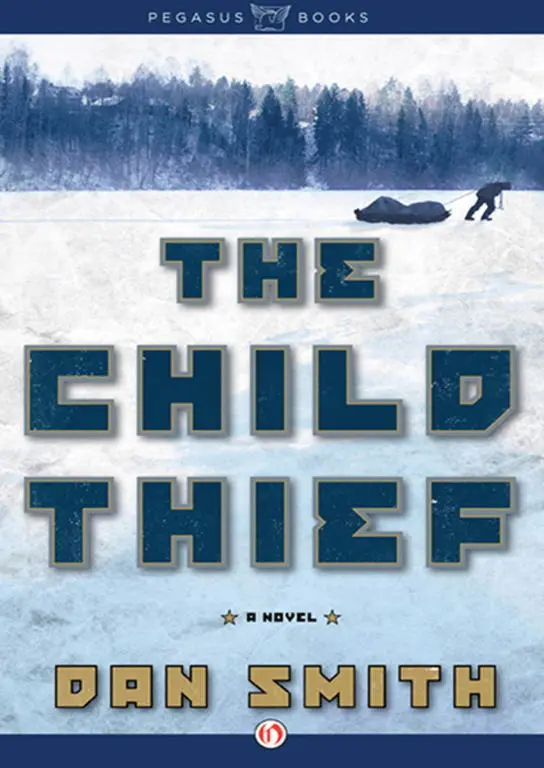
- Название:The Child Thief
- Автор:
- Издательство:Pegasus Books
- Жанр:
- Год:2013
- Город:New York
- ISBN:9781480419445
- Рейтинг книги:5 / 5. Голосов: 1
-
Избранное:Добавить в избранное
- Отзывы:
-
Ваша оценка:
The Child Thief: краткое содержание, описание и аннотация
Предлагаем к чтению аннотацию, описание, краткое содержание или предисловие (зависит от того, что написал сам автор книги «The Child Thief»). Если вы не нашли необходимую информацию о книге — напишите в комментариях, мы постараемся отыскать её.
and
, a troubled First World War veteran races across the frozen steppe of 1930s Ukraine to save a child from a shadowy killer with unthinkable plans. December 1930, Western Ukraine. Luka is a war veteran who now wants a quiet life with his family. His village has, so far, remained hidden from the advancing Soviet brutality, but everything changes the day the stranger arrives, pulling a sled bearing a terrible cargo. The villager’s fear turns deadly and they think they can save themselves, but their anger has cursed them: when calm is restored, a little girl has vanished. Luka is the only man with the skills to find who could have stolen a child in these frozen lands - and besides, the missing girl is best friend to Luka’s daughter, and he swears he will find her. Together with his sons, Luka sets out in pursuit across lands ravaged by war and gripped by treachery. Soon they realise that the man they are tracking is no ordinary criminal, but a skilful hunter with the child as the bait in his twisted game. It will take all of Luka's strength to battle the harshest of conditions, and all of his wit to stay a step ahead of Soviet authorities. And though his toughest enemy is the man he tracks, his strongest bond is a promise to his family back at home.
The Child Thief — читать онлайн бесплатно полную книгу (весь текст) целиком
Ниже представлен текст книги, разбитый по страницам. Система сохранения места последней прочитанной страницы, позволяет с удобством читать онлайн бесплатно книгу «The Child Thief», без необходимости каждый раз заново искать на чём Вы остановились. Поставьте закладку, и сможете в любой момент перейти на страницу, на которой закончили чтение.
Интервал:
Закладка:
They stooped to grip his thin shoulders, and when they lifted him, I saw how light my new friend was. The soldiers pulled him up with little effort and took him from the room, slamming the door closed behind them.
‘God help my brother,’ Evgeni said, the only words any of us spoke for some time.
Through the solid door I heard the muffled voices as they interrogated Kostya. I couldn’t make out any of the words, so it was still possible that he’d been put inside the cell to trick me, but any doubt was dismissed by the sound of Kostya’s beating.
When the interrogation was over and the church finally became quiet, I let out my breath as if I’d been holding it for the duration and waited for Kostya to be returned to us. But the door didn’t open again.
‘He was a good man,’ Evgeni said into the silence. ‘My brother was a good man.’
And when Lermentov began playing the garmoshka again, we knew Kostya would not be coming back.
25
When Kostya was taken, he took with him the hope of the other incarcerated men. Before, they had hardly spoken, but now they said nothing at all.
I tried to move about, find a comfortable position. If I stayed as I was for too long, pains developed. I tried sitting with my legs crossed, stretched out, with my back against the wall, or leaning forward. I tried standing, but my bare feet hurt, and I tried lying, but the floor was too hard. There was no comfort to be found in that room, and I understood it had been well chosen as a prison.
After some time Dimitri Markovich offered his lap as a pillow, and I realised that in their silence the men had been following an order of lying on each other, taking turns, looking for the briefest moment of sleep. So I accepted, and I put my head on Dimitri, snatching the slightest respite before he tapped me on the head and told me it was his turn.
But Dimitri was denied his sleep because once again the door opened and the soldiers came in. This time they had come for me.
They dragged me to the table and pushed me down into the chair. The crucifix was still there, but my satchel and the parcel of flesh were gone. Instead, there was a garmoshka and the bottle of horilka , now almost empty.
Sergei Artemevich Lermentov sat opposite, his eyes red and tired.
‘Where’s Dariya?’ I asked.
Lermentov didn’t reply.
‘Where is she? And where’s Kostya? How long have I been here?’
‘I ask the questions.’ His words were lazy and much of his officious manner had relaxed.
‘Of course, comrade.’
Lermentov looked over my shoulder and watched the guards standing behind me. ‘You’re not my comrade. You’re my prisoner. An enemy of the state. You have no comrades. You have no right to call anyone comrade.’
‘I’m not an enemy of the state.’
‘Conspirator, counter-revolutionary, criminal – what does it matter? You belong to the state now. You’re white coal. That’s what the guards will call you.’
‘And Dariya? My daughter?’
‘She’s got work in her,’ he said, looking away with a regretful expression. ‘Not much, I don’t think, but some. She’ll be sent to work.’
‘I thought you people call it re-education.’
‘No one talks about that any more.’ Lermentov continued to stare at nothing, as if his mind was elsewhere. ‘Now it’s just labour.’
I bit my lip, trying to compose myself. ‘Please,’ I said. ‘You have to believe I didn’t harm her.’
‘Who knows what to believe?’ Lermentov said quietly so that only I could hear it. He had seen my face when he showed me what had happened to Dariya. He had seen the shock in my eyes, and I hoped it was a look that was plaguing him. He’d been sure that I was responsible for what had happened to Dariya but now, perhaps, there was doubt.
‘If you have to send me away, then do it, but keep her here. Someone must be able to look after her.’
‘Nothing I can do for her.’ Lermentov sniffed hard and shook his head. ‘She can work so that’s what she has to do.’ He reached out for the bottle and pulled it towards him. ‘There’s enough for everybody.’ His words were slurred, his eyes distant. ‘We’re all workers now, and there are quotas to fill. “We need more workers,” they say, and in the north they dig and they cut and they build.’ He took a long drink from the bottle and banged it down on the table. ‘And when they say they need more workers, we send them more workers. This great country will be even greater because we have so many workers. Endless workers.’
‘But not children.’ I watched the inebriated policeman, seeing something other than hard coldness in him.
‘Everyone,’ Lermentov said. ‘We’re lucky to have so many people who will give their hands and feet to the glory of the revolution.’ He leaned back. ‘And even children must work.’ He took another drink and slouched in his chair, waving a hand as if nothing mattered.
‘But Dariya is so young.’
Lermentov looked up again and saw the guards watching him. Everyone was always watching each other. He sat upright, as if remembering what he was here for, the role he had to play. There was no crime other than against the state. The fate of one small girl meant nothing in the great scheme of things. ‘Have you remembered what happened to my prisoners yet?’
‘Please,’ I said again. ‘She’s just a girl.’
He faltered, looking at the guards once more before speaking. ‘Where are my prisoners?’
‘She’s only eight years old.’
He hardened his gaze, remembering his purpose and position. ‘ Where are my prisoners ?’
I sighed and shook my head and spoke as an automaton. ‘I saw tracks in the forest. I didn’t follow them. I was following my daughter. She came here and—’
‘Enough.’ Lermentov waved a hand.
I didn’t know what this man wanted from me. Even Lermentov didn’t know what he wanted from me. I was there simply because I’d been in the wrong place and because I owned a weapon. And Lermentov was there because he’d been sent. Neither of us wanted to be there. We were just two men who had lost control of their own circumstances, their own lives. Men who had been sucked into a great machine which pushed and pulled them in random directions that meant nothing to either of them.
‘Let me go,’ I said. ‘Let me take my daughter and go.’
‘I couldn’t do that even if I wanted to,’ he said. ‘It’s too late for that. Too late for all of us.’ Lermentov had probably never released a prisoner. He would never have been able to show any weakness or disobedience; never given anyone a reason to report him as a conspirator or an enemy of the state. ‘Anyway, you’re lying – trying to fool me into letting you take her away. She’s not your daughter, is she? I mean, what kind of man would cut his own child into pieces?’
‘I didn’t do that to her, and you know it. If you really think I did, I wouldn’t be here now. You’d have taken me into the forest and shot me.’
‘We don’t shoot workers.’
‘That’s not true.’
‘And if you didn’t do it, then who did?’
‘Someone else.’
‘Who?’
‘Another man. He stole her and he cut her. Please. Go to my hut and you’ll see. It’s close to where your soldiers found me. The man who did that to her is dead.’
Lermentov put his elbows on the surface of the table and looked me right in the eye. ‘You killed a man?’
‘No. I didn’t kill him.’
‘Then who?’
‘I…’ I dropped my gaze and thought about what Dariya had done. ‘Yes. I killed him.’
‘So you’re a murderer and a mutilator?’
‘No. I—’
Читать дальшеИнтервал:
Закладка:
Похожие книги на «The Child Thief»
Представляем Вашему вниманию похожие книги на «The Child Thief» списком для выбора. Мы отобрали схожую по названию и смыслу литературу в надежде предоставить читателям больше вариантов отыскать новые, интересные, ещё непрочитанные произведения.








Обсуждение, отзывы о книге «The Child Thief» и просто собственные мнения читателей. Оставьте ваши комментарии, напишите, что Вы думаете о произведении, его смысле или главных героях. Укажите что конкретно понравилось, а что нет, и почему Вы так считаете.