Dan Smith - The Child Thief
Здесь есть возможность читать онлайн «Dan Smith - The Child Thief» весь текст электронной книги совершенно бесплатно (целиком полную версию без сокращений). В некоторых случаях можно слушать аудио, скачать через торрент в формате fb2 и присутствует краткое содержание. Город: New York, Год выпуска: 2013, ISBN: 2013, Издательство: Pegasus Books, Жанр: Историческая проза, Триллер, на английском языке. Описание произведения, (предисловие) а так же отзывы посетителей доступны на портале библиотеки ЛибКат.
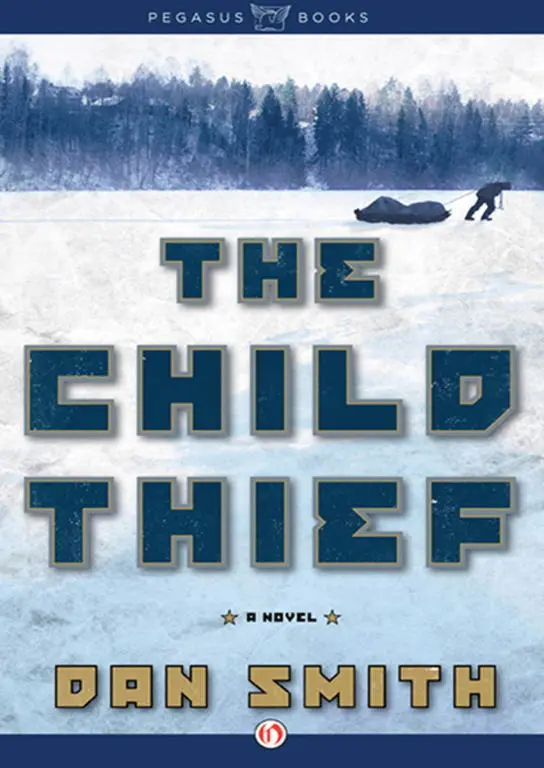
- Название:The Child Thief
- Автор:
- Издательство:Pegasus Books
- Жанр:
- Год:2013
- Город:New York
- ISBN:9781480419445
- Рейтинг книги:5 / 5. Голосов: 1
-
Избранное:Добавить в избранное
- Отзывы:
-
Ваша оценка:
The Child Thief: краткое содержание, описание и аннотация
Предлагаем к чтению аннотацию, описание, краткое содержание или предисловие (зависит от того, что написал сам автор книги «The Child Thief»). Если вы не нашли необходимую информацию о книге — напишите в комментариях, мы постараемся отыскать её.
and
, a troubled First World War veteran races across the frozen steppe of 1930s Ukraine to save a child from a shadowy killer with unthinkable plans. December 1930, Western Ukraine. Luka is a war veteran who now wants a quiet life with his family. His village has, so far, remained hidden from the advancing Soviet brutality, but everything changes the day the stranger arrives, pulling a sled bearing a terrible cargo. The villager’s fear turns deadly and they think they can save themselves, but their anger has cursed them: when calm is restored, a little girl has vanished. Luka is the only man with the skills to find who could have stolen a child in these frozen lands - and besides, the missing girl is best friend to Luka’s daughter, and he swears he will find her. Together with his sons, Luka sets out in pursuit across lands ravaged by war and gripped by treachery. Soon they realise that the man they are tracking is no ordinary criminal, but a skilful hunter with the child as the bait in his twisted game. It will take all of Luka's strength to battle the harshest of conditions, and all of his wit to stay a step ahead of Soviet authorities. And though his toughest enemy is the man he tracks, his strongest bond is a promise to his family back at home.
The Child Thief — читать онлайн бесплатно полную книгу (весь текст) целиком
Ниже представлен текст книги, разбитый по страницам. Система сохранения места последней прочитанной страницы, позволяет с удобством читать онлайн бесплатно книгу «The Child Thief», без необходимости каждый раз заново искать на чём Вы остановились. Поставьте закладку, и сможете в любой момент перейти на страницу, на которой закончили чтение.
Интервал:
Закладка:
Inside our prison a quiet voice began to sing ‘Ukraine Has Not Yet Perished’ – the anthem of what was, for a short time after the revolution, the Ukrainian People’s Republic. The song had been banned ten years before by the Soviet regime, but many still knew it by heart. Evgeni’s voice was weak and hoarse and almost drowned by the Russian song outside, but I heard the words: ‘Ukraine has not yet perished. The glory and the freedom.’
Kostya joined his brother, mumbling the words. There was no hearty bellowing of the song, just a jumbled pride and defiance, no one daring to sing too loudly.
‘Still upon us, brave brother, fate shall smile.’
I had heard it sung during the war and even afterwards, more recently, around the oak that stood in the centre of Vyriv. The oak that had seen too few good summers and too many bad winters.
‘Our enemies will vanish like dew in the sun.’
The oak which had borne the awful fruit of Dimitri’s mob.
‘We too shall rule in our country.’
Their singing was quiet – barely more than a whisper – but outside the garmoshka had stopped.
‘Soul and body we will lay down for our freedom.’
Then a loud banging on the door. ‘Do the counter-revolutionaries want to stand naked in the snow?’ It was the slurred voice of Sergei Artemevich Lermentov.
The singing stopped and there was silence.
‘That’s what I thought,’ Lermentov said to the dead wood. ‘That’s exactly what I thought.’
‘I don’t know what he wants me to tell him,’ I said to Kostya.
‘What does it matter what you tell him? He isn’t investigating anything; he’s humiliating you, making you something less than human. The OGPU, their job is not to discover crimes but to arrest people.’
‘The one with the beard,’ I said. ‘He’s not OGPU. He’s more like a farmer. Is he from your village?’
‘Anatoly Ivanovich,’ Kostya said, and it occurred to me that it was Kostya who spoke more than the others. It was he who had given me the water. Either he was a planted informant or he had earned these men’s respect in some other way.
‘You know him?’ I asked.
‘Of course. We all know each other – those of us that are left here, anyway. Anatoly is a lazy man. He didn’t have any land of his own, he just worked for those who did. They paid him money when they had it, or sometimes in food.’
‘And now he sits at the table with the OGPU.’
‘Yes.’
‘But he doesn’t like it,’ I said. ‘I can see the shame in his eyes.’
‘He protects himself,’ Evgeni said.
‘He says the right things,’ Kostya added. ‘He uses the language they like. He talks of “workers” and “proletariat” and “kulaks”. He denounces those who ever employed him and sees them arrested for being wealthy farmers.’
‘And you?’ I asked. ‘You never employed him?’
Kostya laughed. ‘We never had enough land to need him. And the others, they had almost nothing either. A pig maybe, a few acres of land, and now they’re on their way to labour camps or lying in a trench in the forest. Who knows.’
‘The trench would be better,’ said Yuri. He was sitting close to me but hadn’t spoken for some time and I’d almost forgotten he was even there. There was something about him I didn’t like, something to do with the way he had questioned me about my past.
‘Better?’ I asked. ‘It’s better to be dead?’
‘Of course. Taken away in cattle trucks like animals, fed only salted fish and given nothing to drink, then dropped in some godless place where the cold is deeper and hungrier than it is here. Siberia maybe, the White Sea. There are places where people are made to work so hard and for so long that they cut off their own hands and feet just to get some rest.’
‘Who told you that?’
‘Lermentov.’
‘Why are they doing this to us?’ Evgeni asked. ‘Why must they beat us and humiliate us?’
‘For a confession,’ said Yuri.
‘All they have to do is arrest us and send us away and be done with it. Why waste time with confessions?’
‘Maybe it makes this man Lermentov feel better,’ I said.
‘Feel better?’
‘He’s just doing his job. If he gets a confession, it probably makes it more legal for him. More right . Like he’s punishing a criminal instead of a man who was in the wrong place at the wrong time.’
‘It makes no difference,’ Evgeni said. ‘Enough beating and we’ll tell them anything. Admit to anything. Denounce our own neighbours. And all we do is sit here and let them treat us like this.’
‘What else can we do?’ said Kostya.
‘We can tell them to fuck themselves,’ Dimitri shouted. ‘What have we done? I tried to help a little girl. A little girl . And now I’m what? A counter-revolutionary? An enemy of the state?’
‘Shouting does no good,’ Kostya said
‘At least it means they know what we think.’
‘They already know what we think,’ I said. ‘And that man out there – Lermentov – he’s probably just as afraid as we are. You think he’s exempt? They can put him on a train to Siberia just like they can put us on one. He does what he has to.’
‘You want us to feel sorry for him, Luka?’
‘No. I’m just telling you how it is.’
‘So we do nothing?’ Yuri asked. ‘We just wait to be deported?’
‘Put a gun in my hand and I’ll shoot him, but other than that…’ I let the words trail away and thought back to the moment on the road when the soldiers had approached me. I wished now that I had tried to do something – shot them from their horses and dragged their bodies away from the track. ‘I have to get out of here,’ I said. ‘I can’t believe it’s come to this. I shouldn’t be here. It’s not where I’m supposed to be.’
‘Where are you supposed to be?’ asked Yuri. ‘Out there with your sons?’
‘Yes. There must be a way to get out.’
‘There’s nothing,’ Kostya said. ‘No escape.’
I shook my head in the darkness and thought about my sons out there in the cold, wondering if they had followed my tracks to the village. There was a small part of me that hoped they would bring their rifles and shoot every one of the soldiers in this village; that they would hand me a pistol so I could put it against the head of this man Lermentov and spill his brains all over the snow and the dirt. But my sons were not soldiers, and I prayed they had turned around when they realised my fate. I prayed they had returned home to Natalia and Lara. I even allowed myself a vague smile as I imagined them arguing about what they were going to do. I pictured them outside the village, hidden among the trees, watching, discussing.
Viktor would want to fight while Petro would pull him back, try to make him see sense.
I closed my eyes and wished I could remember my last words to them. I tried to see their faces.
Still the music played outside in the church. Lermentov’s repertoire was a mixture of old folk songs and songs of the revolution and labour and the motherland, but it wasn’t long before he was playing the same tunes again. Every now and then there was a lull in the music and I could hear the murmur of voices talking, sometimes loud laughter, and I guessed the policeman had drunk most or all of the horilka I had taken from the cabin where the child thief lay dead. At least I had that satisfaction. The child thief would take no more children.
It was warm and close in the room and I felt sleep beginning to take me. I didn’t know how long I slept for, perhaps until night, perhaps not, it was impossible to tell, but I was roused by the sound of the door being unlocked.
The dim light crept in, and I braced myself for the hands that would drag me from this cell. I waited for the soldiers to grab me and pull me to my feet, but they came past me and went to Kostya.
Читать дальшеИнтервал:
Закладка:
Похожие книги на «The Child Thief»
Представляем Вашему вниманию похожие книги на «The Child Thief» списком для выбора. Мы отобрали схожую по названию и смыслу литературу в надежде предоставить читателям больше вариантов отыскать новые, интересные, ещё непрочитанные произведения.








Обсуждение, отзывы о книге «The Child Thief» и просто собственные мнения читателей. Оставьте ваши комментарии, напишите, что Вы думаете о произведении, его смысле или главных героях. Укажите что конкретно понравилось, а что нет, и почему Вы так считаете.