Nicola Griffith - Hild
Здесь есть возможность читать онлайн «Nicola Griffith - Hild» весь текст электронной книги совершенно бесплатно (целиком полную версию без сокращений). В некоторых случаях можно слушать аудио, скачать через торрент в формате fb2 и присутствует краткое содержание. Город: New York, Год выпуска: 2013, ISBN: 2013, Издательство: Farrar, Straus and Giroux, Жанр: Историческая проза, на английском языке. Описание произведения, (предисловие) а так же отзывы посетителей доступны на портале библиотеки ЛибКат.
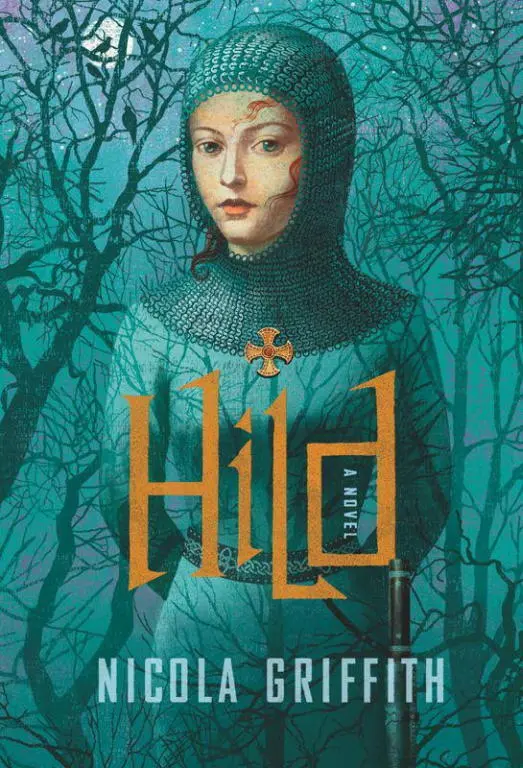
- Название:Hild
- Автор:
- Издательство:Farrar, Straus and Giroux
- Жанр:
- Год:2013
- Город:New York
- ISBN:978-0-374-28087-1
- Рейтинг книги:5 / 5. Голосов: 1
-
Избранное:Добавить в избранное
- Отзывы:
-
Ваша оценка:
Hild: краткое содержание, описание и аннотация
Предлагаем к чтению аннотацию, описание, краткое содержание или предисловие (зависит от того, что написал сам автор книги «Hild»). Если вы не нашли необходимую информацию о книге — напишите в комментариях, мы постараемся отыскать её.
But now she has only the powerful curiosity of a bright child, a will of adamant, and a way of seeing the world—of studying nature, of matching cause with effect, of observing her surroundings closely and predicting what will happen next—that can seem uncanny, even supernatural, to those around her.
Her uncle, Edwin of Northumbria, plots to become overking of the Angles, ruthlessly using every tool at his disposal: blood, bribery, belief. Hild establishes a place for herself at his side as the king’s seer. And she is indispensable—unless she should ever lead the king astray. The stakes are life and death: for Hild, for her family, for her loved ones, and for the increasing numbers who seek the protection of the strange girl who can read the world and see the future.
Hild is a young woman at the heart of the violence, subtlety, and mysticism of the early Middle Ages—all of it brilliantly and accurately evoked by Nicola Griffith’s luminous prose. Working from what little historical record is extant, Griffith has brought a beautiful, brutal world—and one of its most fascinating, pivotal figures, the girl who would become St. Hilda of Whitby—to vivid, absorbing life.
Hild — читать онлайн бесплатно полную книгу (весь текст) целиком
Ниже представлен текст книги, разбитый по страницам. Система сохранения места последней прочитанной страницы, позволяет с удобством читать онлайн бесплатно книгу «Hild», без необходимости каждый раз заново искать на чём Вы остановились. Поставьте закладку, и сможете в любой момент перейти на страницу, на которой закончили чтение.
Интервал:
Закладка:
“Light a rush,” Begu whispered. “Bring some milk. No, not milk, I forgot, some small beer and come talk to us. The lady Hild has had a bad dream. No no, not a dream dream, just a dream.”
They set the rush in its bowl on the shelf at the foot of the bed, and Begu lifted the cover and told Gwladus to get in.
“My feet are cold,” Gwladus said.
“Hild won’t mind. She burns like a forge. It’ll take her mind off things, anyway.”
So Hild found herself warming her bodywoman’s cold feet with her warm hands while Begu talked about this and that.
“… why’s she still breast-feeding Princess Eanflæd? She’s ten months old.”
Hild massaged Gwladus’s ankles, stroking the strong bone on the inside, thinking of the place to press to bring a birth more quickly.
“Maybe she doesn’t want another just yet,” Gwladus said. “Maybe she doesn’t want pawing at, and swelling, and nothing to look forward to but a growing ache in her back and the thing in her belly eating her from the inside.”
And then Hild understood. Gwladus was with child.
Hild leaned into the buffeting wind on the top of Ad Gefrin. She opened her mouth and let the wind whip her breath away. She loved it up here with the goats, loved the scudding clouds, the sun and shadow chasing each other over bent and silvered grass. From here she couldn’t hear the lowing of the little cattle the British lords drove in as tribute; she couldn’t hear the constant shuffle of hooves in the enclosure where ponies, smelling spring and the promise of green grass, pushed for room at the fence. Up here there was just the whistle of the wind, the occasional dull clank of a goat bell, the cry of a hawk circling, tilting, sliding down the air.
She liked Bebbanburg, but here she could see for miles. Here she could think.
Change was coming, and it wasn’t just spring, wasn’t just the first milk of the year, or stallions flaring their nostrils when the mares walked by, or little throstles pecking at the backs of the goats to carry away the soft hair for their nests. It wasn’t just the hammer and shout of the king’s new talking stage rising west of the great hall.
The thegns thought they understood. Oh, they would talk for two days, yes, the tide of conversation ebbing and flowing, but they knew the story of Edwin’s dream at the court of King Æthelberht long ago, and why should they deny him? What was one more god? Gods were like the flotsam that washed up with the waves, always coming and going, and those big enough to remain gradually were worn away by wind and water and time. But the thing must be talked about, beards tugged, and the last of the year’s mead drunk.
The thegns were wrong. The Christ and his priests were different. They were a storm that would change everything. They read. They would sweep the beach clean. But not of her. That was not her wyrd.
When the thegns understood their Witganmot wasn’t to be at the big oak, or even in hall over mead, but at the new talking stage, they muttered. It was Romish, not Anglisc. It wasn’t right. But then Coifi announced he had blessed a new totem to stand witness to their pledges. And wasn’t a totem better even than an oak?
Hild listened to the newly arrived thegns as they inspected the talking stage. It looked like a wedge of cheese, Tondhelm said, though higher at the edge than the point. He stood with two others on the stage at the wedge’s tip, careful not to brush against the still-drying paint on Coifi’s Woden totem. Tomorrow they’d sit with other listeners in rows rising to the back. The thing reeked of new wood. Hunric, a thegn from near Goodmanham who had ridden in with many men, said that there would be splinters in all their arses by moonrise the next night.
That night, after the main feasting, the queen withdrew from the great hall with her women and those who had ridden with their men to the Witganmot. Breguswith and Begu went with them to the women’s hall, but Hild stayed awhile with Oeric at her elbow. The men got down to the serious business of drinking. Cian and her hounds drank as mightily as the rest, or seemed to, though she suspected several were pacing themselves for the wrestling and boasting to come.
There was much gossip among the thegns, who had less to prove than the young gesiths: who had brought the most cattle for the king, who wore the most gold, who had a new wife, a new son. The scop sang songs of their ancestry, flattering them outrageously, his boy scooping up armlets and finger rings and sparkling daggers as the progressively drunk thegns sought to outdo each other in generosity.
Hild noticed that Hunric threw his smallest ring, and boasted merely that he had brought the most cattle, which was true, and that his son would beat anyone else’s son at anything—once he was grown. Given that his son still ran bare-legged with a wooden knife, this was a safe boast, one no one would remember in a dozen years. A canny man. Edwin, she saw, had raised his cup to Hunric and Hunric toasted him in return. Hild knew what Hunric didn’t: that the king was only amused by those he thought little of.
Faces grew redder and drinking competitions sprang up at every bench. Bets were laid. Soon they would start boasting about their horses, and the scop’s man—traditionally the keeper of the boasts—would set up the racing for the morning. Meanwhile, the scop’s praise grew more extravagant. The thegns roared: The scop was teasing Tondhelm about a brain as small as his ear finger and a prick bigger than his arm.
She picked her way through the raucous men—who were too worried about what other men might be thinking of them to bother with a woman—to Cian, who was telling some involved story about the little sheep of Gwynedd and why the men of that land were also small.
He grinned at her when he was finished. “I’m leaving now for the women’s hall,” she said. “I’ll send Oeric back. Take him under your wing. Don’t let him make any boasts he can’t keep. And if you’re planning to ride Acærn to riches tomorrow, don’t drink too much more of that.”
To which he just grinned again and offered her his cup, and she grinned back and sipped.
The women’s hall, if anything, was even bawdier than the men’s. Veils were askew and sleeves tucked in belts. Arddun and Gwladus could barely keep up with filling the cups, and Hunric’s wife, inarticulate with mead, was shaking a broken-stringed lyre as though it were a choking baby.
Breguswith was deep in conversation with two women Hild didn’t know, and Begu was whistling like a cowherd. Hild sat next to her on one of the queen’s prettily embroidered cushions and took off her shoes.
“Stop thinking,” Gwladus said. “You’ll frighten everyone and spoil the party. Drink this.” Hild sipped: stinging white mead, made from… She sipped again… heather honey. Part of some thegn’s tribute or a gift? She looked up, saw Breguswith looking at her, then back at the women she was in conversation with. Hild made a note to herself to make friends with whoever that was.
“Stop it,” Gwladus said, but then had to fill another cup.
Hild sipped absently, then heard her name. “Hild knows that song. We sang it together at Mulstanton. Don’t you?”
Hild nodded.
“How does the tune go? The one Cædmon sings to Winty.”
So Hild sang the jaunty tune about running free in green, green grass, and Begu joined her, and someone restrung the lyre and plinked the tune.
Gwladus refilled her cup. “Better,” she said. “But the queen says you must drink this down in one, then smile, then drink another.”
Hild doubted Æthelburh had said any such thing. She looked up, but couldn’t even see the queen.
Читать дальшеИнтервал:
Закладка:
Похожие книги на «Hild»
Представляем Вашему вниманию похожие книги на «Hild» списком для выбора. Мы отобрали схожую по названию и смыслу литературу в надежде предоставить читателям больше вариантов отыскать новые, интересные, ещё непрочитанные произведения.






Обсуждение, отзывы о книге «Hild» и просто собственные мнения читателей. Оставьте ваши комментарии, напишите, что Вы думаете о произведении, его смысле или главных героях. Укажите что конкретно понравилось, а что нет, и почему Вы так считаете.