Nicola Griffith - Hild
Здесь есть возможность читать онлайн «Nicola Griffith - Hild» весь текст электронной книги совершенно бесплатно (целиком полную версию без сокращений). В некоторых случаях можно слушать аудио, скачать через торрент в формате fb2 и присутствует краткое содержание. Город: New York, Год выпуска: 2013, ISBN: 2013, Издательство: Farrar, Straus and Giroux, Жанр: Историческая проза, на английском языке. Описание произведения, (предисловие) а так же отзывы посетителей доступны на портале библиотеки ЛибКат.
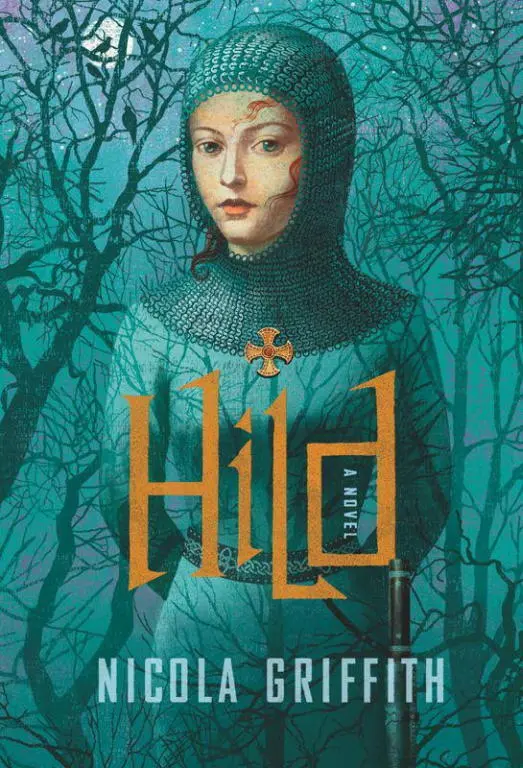
- Название:Hild
- Автор:
- Издательство:Farrar, Straus and Giroux
- Жанр:
- Год:2013
- Город:New York
- ISBN:978-0-374-28087-1
- Рейтинг книги:5 / 5. Голосов: 1
-
Избранное:Добавить в избранное
- Отзывы:
-
Ваша оценка:
Hild: краткое содержание, описание и аннотация
Предлагаем к чтению аннотацию, описание, краткое содержание или предисловие (зависит от того, что написал сам автор книги «Hild»). Если вы не нашли необходимую информацию о книге — напишите в комментариях, мы постараемся отыскать её.
But now she has only the powerful curiosity of a bright child, a will of adamant, and a way of seeing the world—of studying nature, of matching cause with effect, of observing her surroundings closely and predicting what will happen next—that can seem uncanny, even supernatural, to those around her.
Her uncle, Edwin of Northumbria, plots to become overking of the Angles, ruthlessly using every tool at his disposal: blood, bribery, belief. Hild establishes a place for herself at his side as the king’s seer. And she is indispensable—unless she should ever lead the king astray. The stakes are life and death: for Hild, for her family, for her loved ones, and for the increasing numbers who seek the protection of the strange girl who can read the world and see the future.
Hild is a young woman at the heart of the violence, subtlety, and mysticism of the early Middle Ages—all of it brilliantly and accurately evoked by Nicola Griffith’s luminous prose. Working from what little historical record is extant, Griffith has brought a beautiful, brutal world—and one of its most fascinating, pivotal figures, the girl who would become St. Hilda of Whitby—to vivid, absorbing life.
Hild — читать онлайн бесплатно полную книгу (весь текст) целиком
Ниже представлен текст книги, разбитый по страницам. Система сохранения места последней прочитанной страницы, позволяет с удобством читать онлайн бесплатно книгу «Hild», без необходимости каждый раз заново искать на чём Вы остановились. Поставьте закладку, и сможете в любой момент перейти на страницу, на которой закончили чтение.
Интервал:
Закладка:
“Oh, for earth’s sake,” Gwladus said, and took Hild’s face between her hands. “Look at me.” Hild found herself looking straight down Gwladus’s bodice. Gwladus tilted her chin until their eyes met. “Listen to me. Truly: Arddun told me that the queen has ordered that anyone sober enough to walk a straight line tonight will be put in the corner and covered with honey. So drink, look stupid. Better still, be stupid. Look at your mother.” Breguswith’s cheeks were now cherry red, her sleeves undone. “She knows when to let go. You should, too.”
And, later, when the women were kilting up their dresses and setting loose their hair to dance, Hild did, too, and a little while after that she even forgot to think about what she was doing.
Hild squinted in the morning light, glad of the keen wind and low clouds. She didn’t think it would rain. She stood with the other women, pale but tidy, at the north end of the horse path. At least they merely had to cheer while the men rode their horses against one another.
In the first race, one gesith had to vomit from his saddle before he could drink the race toast. He was better off than his race mate, though, who fell off at the first bend and broke his collarbone. Edwin gave the winner a dagger.
More racing, more accidents, more wagers, more straining and shouting and falling in the mud.
Gold, boast, blood, sweat: The crowd shook off its lethargy and grew cheerful.
The only grumbles came when the midday feast—roast ox and heather beer, on benches set under a canopy of branch and reeds—was delayed for the Crow to give thanks to his Christ. Christ wasn’t their god, some muttered, not yet. But most didn’t care. They were happy to eat. They planned to doze on full stomachs for most of the Witganmot and rouse themselves sufficiently to vote as their chief men directed.
Hild watched the looks and nods travel up and down the benches—the king and the Crow, Hunric and Coelfrith, Coifi and Tondhelm—and knew Paulinus would be pleased.
The king and his chief men—the æthelings, Coelfrith, Paulinus, Coifi—sat on a bench at the back of the speaking platform. The men of the kingdom sat in the tiers rising before them. The women sat at ground level to one side, out of the thegns’ direct line of sight; they did not have a voice in the Witganmot. Begu sat next to Hild, nibbling on the bread she’d tucked in her pouch at breakfast. She chattered about this and that as one by one the men—wearing their finest, groaning with gold, moustaches carefully greased—stood and swore their oath to their king, named the tribute they had brought, and numbered the spears they could rally at the king’s word. Many of them got very florid: They liked the sound of their own voices, liked the regard of their fellows.
Many of the women were frank in their assessment of the men, gossiping about which would make a good husband, which good sport. Hild mostly listened to the birds. “… Trum something, I forget what,” Begu said. She was pointing at the man now standing, wearing rich brown embroidered with gold. “Isn’t that a lovely colour? Like a polished acorn—like Cian’s horse. Oh, I was so pleased that he beat Lintlaf today. I bet one of my combs on the race. No, no, not the comb you gave me! I’d never part with that. But anyway I won, so now I have two extra combs, I’ll give you one…”
Hild listened to the hweet of a siffsaff somewhere over the rise and thought perhaps later she’d walk to the west of Ad Gefrin where last year she’d found a throstle’s nest with eight eggs—eight!—bright with their red blotches. But it was probably too early for eggs.
The king’s feet were dancing this way and that, but even the king had to listen when men spoke at Witganmot. Eventually, though, the speeches came to an end, and then the king stood, walked to the front of the platform and the totem, and made his own speech, full of praise for the strength of his men, the wealth of their tithe, the generosities he would visit upon them during the next year in reward for their loyalty. He named a man here, a man there, sometimes joking, sometimes flattering, pleasing everyone with his notice. Then he said he would stop, for there was a fine feast in the making, and once they had made their weighty pronouncement on his question, they could eat until dawn. But for now, he would let the Romish high priest, Bishop Paulinus, speak. Paulinus had words from his god. The god had also spoken to the king in a dream at the court of Æthelberht—they all knew that story, he wouldn’t repeat it here—but they were to understand that Paulinus spoke as with the king’s mouth: His words were the king’s words.
The thegns roared and thumped their benches.
Paulinus took the king’s place. His white robe, embroidered in crimson and yellow, shimmered. The cloth-of-gold stole around his neck must have weighed more than a sucking pig, and the gold-headed crook in his left hand blazed with jewels. When he raised his right hand, his ring flashed like Earendal, the dawn star.
The thegns sat back, enjoying the display of wealth and power, expecting a short, rousing speech about wealth and wyrd, the king’s protection and the Christ god’s cunning, the promise of good weather and better luck, of alliances and strength of arms and honour, larded with flattery.
The Crow began well enough, speaking loudly and clearly, careful of his accent: the bishop of Rome held the king of the Anglisc in high regard, and his power and favour would shine upon the isle as a mark of his blessing and the blessings of God. The Franks would honour them, and the Frisians, and the people of Rome. Their cattle would grow fat, the corn tall, and gesiths would flock to the tufa to make one nation under God. Everyone would know the name of their king, of the Yffings, of Northumbria! They had but to accept Christ as their God, and all those who were in agreement with him would be cleansed in the Fount of Life.
The thegns nodded and murmured among themselves. Fine promises, exactly what you wanted from a god.
Begu whispered to Hild, “We’ll be going into the feast early.” Indeed, one thegn was already standing to make his agreement.
But Paulinus wasn’t finished. He fixed them with his glittering eye—so dark, so foreign—and began to admonish them about Satan, about driving out the wealh priests as his spies, about obeying the will of the one true God, who spoke only through His bishop in Rome. Their king willed it! Their king demanded it! Their new God commanded it!
The thegn next to the one who had stood shouted: Who was this god to command a king? To command thegns in good standing?
Paulinus overrode him in a torrent of words. They had no choice but to obey! If they obeyed their God’s commandments, He would deliver them from their earthly troubles, save them from the everlasting doom of the wicked, and give them a place in His eternal kingdom forever. But they must obey. They must bow their heads.
The rumble of disgruntled thegns drowned out the Crow’s now thickly accented last words.
Bargaining? They were used to that. Persuasion? Yes, of course. Bribes and promises? Naturally. But commands to submit? They didn’t even know this god. What had he done for them? Had there been a battle the god had won for them, a crop he had brought home with unexpected bounty? Yet the priest wanted them to obey . Was he mad?
It was Coifi who stepped in. He sprang onto the platform and strode forward, holding out his arms so his leaf-green cloak billowed. “Hear me! Hear me!”
He stepped in front of Paulinus.
“You know me!”
They couldn’t disagree.
“I am the chief priest of the chief god.”
Even more unarguable.
Читать дальшеИнтервал:
Закладка:
Похожие книги на «Hild»
Представляем Вашему вниманию похожие книги на «Hild» списком для выбора. Мы отобрали схожую по названию и смыслу литературу в надежде предоставить читателям больше вариантов отыскать новые, интересные, ещё непрочитанные произведения.






Обсуждение, отзывы о книге «Hild» и просто собственные мнения читателей. Оставьте ваши комментарии, напишите, что Вы думаете о произведении, его смысле или главных героях. Укажите что конкретно понравилось, а что нет, и почему Вы так считаете.