Nicola Griffith - Hild
Здесь есть возможность читать онлайн «Nicola Griffith - Hild» весь текст электронной книги совершенно бесплатно (целиком полную версию без сокращений). В некоторых случаях можно слушать аудио, скачать через торрент в формате fb2 и присутствует краткое содержание. Город: New York, Год выпуска: 2013, ISBN: 2013, Издательство: Farrar, Straus and Giroux, Жанр: Историческая проза, на английском языке. Описание произведения, (предисловие) а так же отзывы посетителей доступны на портале библиотеки ЛибКат.
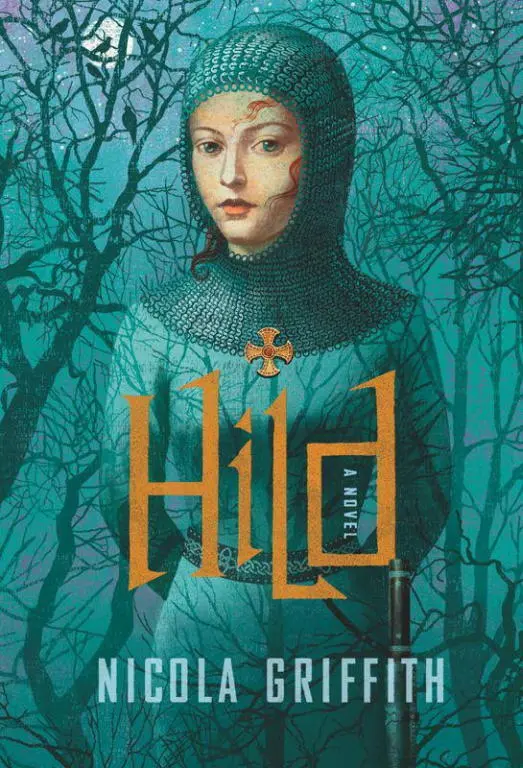
- Название:Hild
- Автор:
- Издательство:Farrar, Straus and Giroux
- Жанр:
- Год:2013
- Город:New York
- ISBN:978-0-374-28087-1
- Рейтинг книги:5 / 5. Голосов: 1
-
Избранное:Добавить в избранное
- Отзывы:
-
Ваша оценка:
Hild: краткое содержание, описание и аннотация
Предлагаем к чтению аннотацию, описание, краткое содержание или предисловие (зависит от того, что написал сам автор книги «Hild»). Если вы не нашли необходимую информацию о книге — напишите в комментариях, мы постараемся отыскать её.
But now she has only the powerful curiosity of a bright child, a will of adamant, and a way of seeing the world—of studying nature, of matching cause with effect, of observing her surroundings closely and predicting what will happen next—that can seem uncanny, even supernatural, to those around her.
Her uncle, Edwin of Northumbria, plots to become overking of the Angles, ruthlessly using every tool at his disposal: blood, bribery, belief. Hild establishes a place for herself at his side as the king’s seer. And she is indispensable—unless she should ever lead the king astray. The stakes are life and death: for Hild, for her family, for her loved ones, and for the increasing numbers who seek the protection of the strange girl who can read the world and see the future.
Hild is a young woman at the heart of the violence, subtlety, and mysticism of the early Middle Ages—all of it brilliantly and accurately evoked by Nicola Griffith’s luminous prose. Working from what little historical record is extant, Griffith has brought a beautiful, brutal world—and one of its most fascinating, pivotal figures, the girl who would become St. Hilda of Whitby—to vivid, absorbing life.
Hild — читать онлайн бесплатно полную книгу (весь текст) целиком
Ниже представлен текст книги, разбитый по страницам. Система сохранения места последней прочитанной страницы, позволяет с удобством читать онлайн бесплатно книгу «Hild», без необходимости каждый раз заново искать на чём Вы остановились. Поставьте закладку, и сможете в любой момент перейти на страницу, на которой закончили чтение.
Интервал:
Закладка:
Cian shouted, “Come down!”
“Come make me!”
He sheathed his sword, threw his shield aside, and jumped for the branch Hild was standing on. She moved to the other side of the trunk.
He scrambled up, clumsy in his war boots, panting, cursing, then stopped. The heel of Hild’s staff was a foot from his nose. He was defenceless.
“I worked out how to beat you.”
“But I don’t have my shield!”
“That’s right. How to win against a gesith with a shield: Make him drop his shield.”
“No, no, no. What if there isn’t a tree?”
“Let’s see,” she said, and dropped lightly to the ground.
She walked with her staff away from the tree and waited near the stream. Cian dropped more heavily, picked up his shield, and they did it all again: him driving, driving, driving her back to the stream.
She jumped in, half waded, half swam to the other side, climbed out. Cian stayed where he was.
“What if there’s no stream?”
“Come over and we’ll find out.”
“My armour!”
“Yes. A pity. It’ll take a lot of work to polish it.”
“As a favour to me. How can I persuade you?”
Hild wrung out her hair, thinking. “When the harp comes around tonight, sing for me. Sing the song of Branwen.”
“Done.”
She waded back across, shivering, walked past him, then turned, so that he was between her and the stream. “Now come at me fast, for I’m freezing.”
And, again, he drove her back and back and back, and she waited until he smiled in anticipation, and then she turned and ran.
He ran after her, but he was wearing armour, and war boots, and his shield was heavy. He fell farther behind. She turned and waggled her hand at him.
“You’re cheating!”
“Indeed I am.”
“I’ll never catch you, unless…” And he dropped his shield and burst out laughing, and they were still laughing, off and on, when they got back to Bebbanburg, and if anyone thought it strange that the seer should find being cold and wet funny, no one mentioned it.
As the weather improved, messages began to come in from all over the isle. Two, from Rheged and from Alt Clut, said the same thing: Eochaid Buide of the Dál Riata was sending an army to aid the Cenél Cruithen against Fiachnae mac Demmáin of the Dál Fiatach, and chief among the Dál Riatan war band were Idings—though the man from Rheged thought two, Oswald and Osric, called the Burnt, while the messenger from Alt Clut thought three, Oswald, Osric the Burnt, and the young Osbald.
In hall the men argued: Wilgar pointed out that everyone knew Oswald didn’t like any of his brothers, except his little half brother, Oswiu; the messages were clearly false. No, said Coifi, it was clear Eochaid was aiming this spear at the heart of the northern Anglisc, that he couldn’t lose: If the Idings fought well, they would attract followers to lead in a swoop upon the Anglisc throne; if they fought badly, they would die. Perhaps, said Paulinus, but the real message was that the men of the north were feeling their strength, and they had on their side Christ, the one true God—even if served by wrongheaded wealh priests. At which point all eyes turned to the king.
Hild, watching silently, as befitted a seer, saw that this speech was prepared, for Edwin nodded at his scop, who struck a chord, and the men quieted.
“The bishop Paulinus is right. He has counselled me well on Elmet and other matters. He brings the promise of the friendship of the greatest priest in middle-earth, the bishop of Rome. It seems to me good that we consider what he says. For that reason I will send messages to Sancton and Derwent, to Goodmanham and Brough, to Lindum and Elmet, and ask my thegns to meet at Yeavering. There we will have it out about this Christ god and we will see if it is good, and if it is, I will accept baptism from the hands of Paulinus in York on Easter Day. Paulinus, who through his foresight has driven out the priestly spies of the men of the north.”
Uproar.
Hild, though, listening past the noise, found no surprise. Edwin had been laying the groundwork since his marriage to the queen. His daughter had been baptised, and a dozen gesiths, and no harm had come of it. Indeed, Elmet was now theirs and with no wealh priests sending their uncanny messages north or west. The word would go out. Men would show up with their kine and their arguments next month as the grass greened and the milk began to flow. They thought this god of no more account than the others.
Morud came to find her. “Lady, the queen wants you.”
Oeric escorted her back to the women’s quarters, where she found the queen and Wilnoð, and her mother and Begu and Gwladus waiting.
The queen handed her a package. It was small and lumpy. “A man came. He said he’d had it from a man wearing East Anglisc buckles. He said it was for the lady Hild, sister to Hereswith.”
Hild’s heart squeezed. She found Begu holding one arm and Gwladus the other, and was glad of it. Gwladus smells different , she thought vaguely. Her mother gave her a stern look: You are Yffing!
The queen was still talking, but Hild concentrated on taking a breath, then another, while Wilnoð, herself as big as a hut now, brought her a stool.
She sat, turned the package over. Waxed linen, sealed. She didn’t recognise the seal, which looked like some kind of duck. She broke it.
Inside was another wrapped lump, the size of a plover’s egg, and a letter. She unrolled it. The letters were clumsily formed and the words badly spelt:
Dearest sister. Æthelric my husband has not put aside his woman. Fursey is here and sends greetings. He says my letters will improve with practice. I am to take baptism. Here, too, is Æthelric’s half brother Sigebert, visiting from Frankia. He already is baptised. I send you a lump of Frank’s incense. I am with child. H.
There was no date. She read it again.
“What does it say?” Begu said.
Hild gave her the letter.
Begu frowned. “Yes, but what does it say?”
Æthelburh gave Eanflæd to Arddun, plucked the letter from Begu’s hand, and read it aloud.
Fursey. Sigebert. Frankincense. With child.
Someone put a hand on her shoulder. Hild looked up: Gwladus, with a cup of mulled ale. Hild sipped gratefully while Æthelburh read the letter again.
“Is that the incense?” Begu said. “I want to see.”
Obediently, Hild unwrapped it. The astonishing smell filled the room. Hereswith, she thought. Hereswith forming her letters under the eye of Fursey. Both safe. And making friends with the Franks, making sure of a refuge.
“Worth more than gold I should think,” Wilnoð said, then clutched at her belly and gasped: The baby was kicking.
The women fussed.
Hild sipped again at her ale. Hereswith. Perhaps as big as Wilnoð. Sitting in a swamp. Perhaps she’d already had the child. Perhaps Hild was an aunt.
Wilnoð gasped again.
Perhaps Hereswith had died in childbirth, as Cwenburh had in these very chambers, in a great sigh of blood.
Hild woke from a dream of Gwladus standing in a pool of blood, an Gwladus the wrong size, the wrong smell.
“Shhh,” said Begu, “it’s just a dream.” She stroked Hild’s head. “Just a dream.”
Hild clung to her.
“What’s wrong? What is it?”
“Hereswith’s having a child.”
“Well, that’s true,” Begu said. “But people have babies all the time.”
“They die all the time, too.”
Begu kissed her forehead. “You dreamt that?”
Hild shook her head. “Talk to me,” Hild said. “Anything. Please.”
Begu sat up, reached over Hild, and pulled open the curtain. The banked light of the fire was enough to show Gwladus already sitting up on her pallet and yawning.
Читать дальшеИнтервал:
Закладка:
Похожие книги на «Hild»
Представляем Вашему вниманию похожие книги на «Hild» списком для выбора. Мы отобрали схожую по названию и смыслу литературу в надежде предоставить читателям больше вариантов отыскать новые, интересные, ещё непрочитанные произведения.









Обсуждение, отзывы о книге «Hild» и просто собственные мнения читателей. Оставьте ваши комментарии, напишите, что Вы думаете о произведении, его смысле или главных героях. Укажите что конкретно понравилось, а что нет, и почему Вы так считаете.